What is Form M? A Simple Guide for First-Time Nigerian Importers
Confused about Form M? This simple guide explains what Form M is, who needs it, how to apply, required documents, and common mistakes to avoid.
GROWING BUSINESSGETTING STARTED
Ugbe Zurishaddai
5/1/20266 min read
If you've ever tried to import goods into Nigeria and hit a wall called "Form M," you're not alone. It's one of the most Googled topics by Nigerian business owners, and one of the most poorly explained.
This guide breaks it down simply. No legal jargon, no unnecessary complexity. Just what Form M is, why you need it, and how to get it done.
What is Form M?
Form M vs PAAR: What's the Difference?
These two terms often confuse first-time importers, but they serve different purposes.
Form M is filed before your goods are shipped. It's your import declaration and approval.
PAAR (Pre-Arrival Assessment Report) is generated after your goods are shipped. Your bank submits your final shipping documents to the NCS, which then calculates your exact duty payment.
In short: Form M opens the door. PAAR tells you what you owe to walk through it.
How Proc360 Simplifies the Process
Navigating Form M, choosing the right bank, managing supplier documents, and coordinating customs clearance is a lot, especially if you're doing it for the first time.
That's where Proc360 comes in.
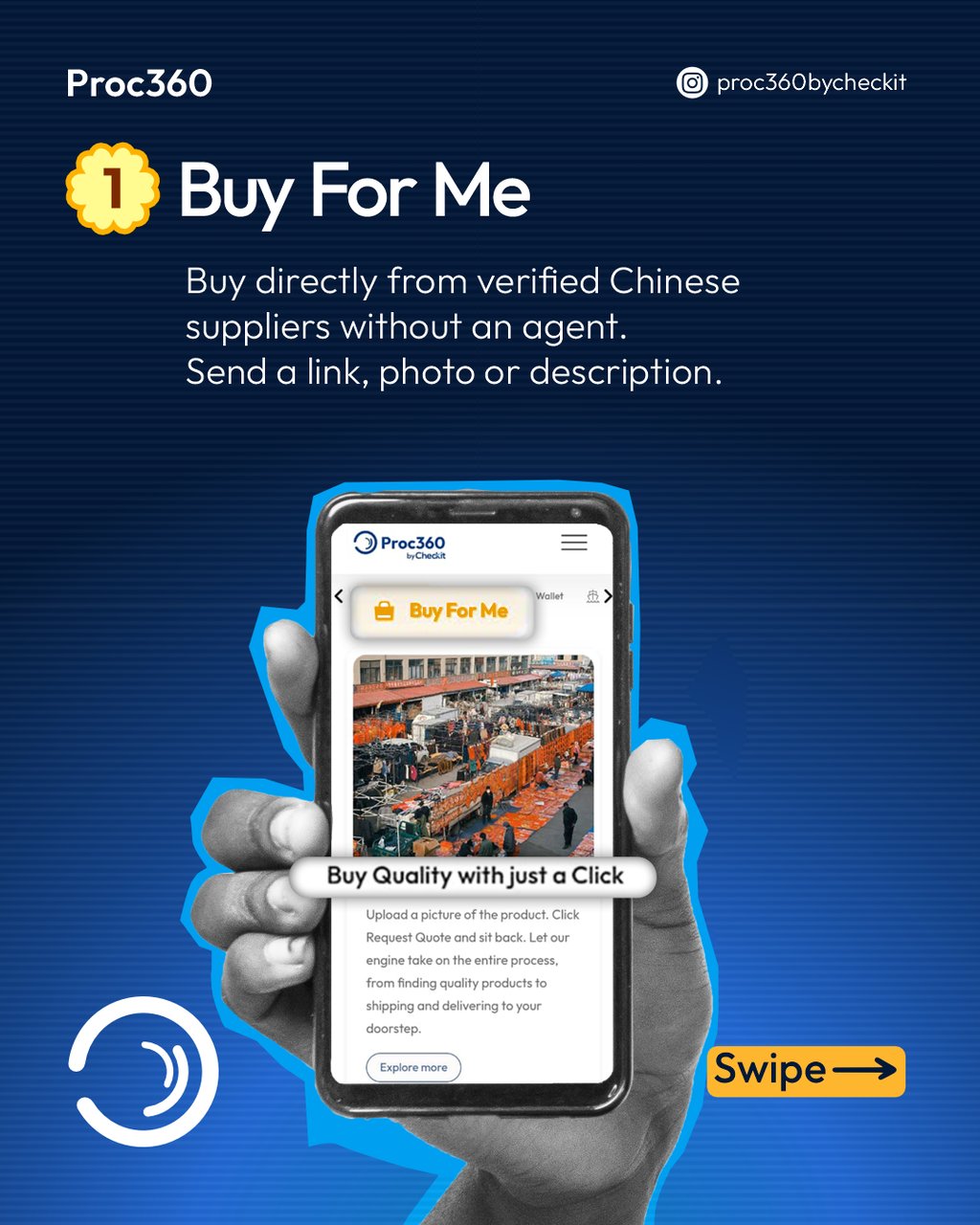
From verifying your supplier and managing your order, to coordinating shipping and customs documentation, the entire import process is made simpler on Proc360.
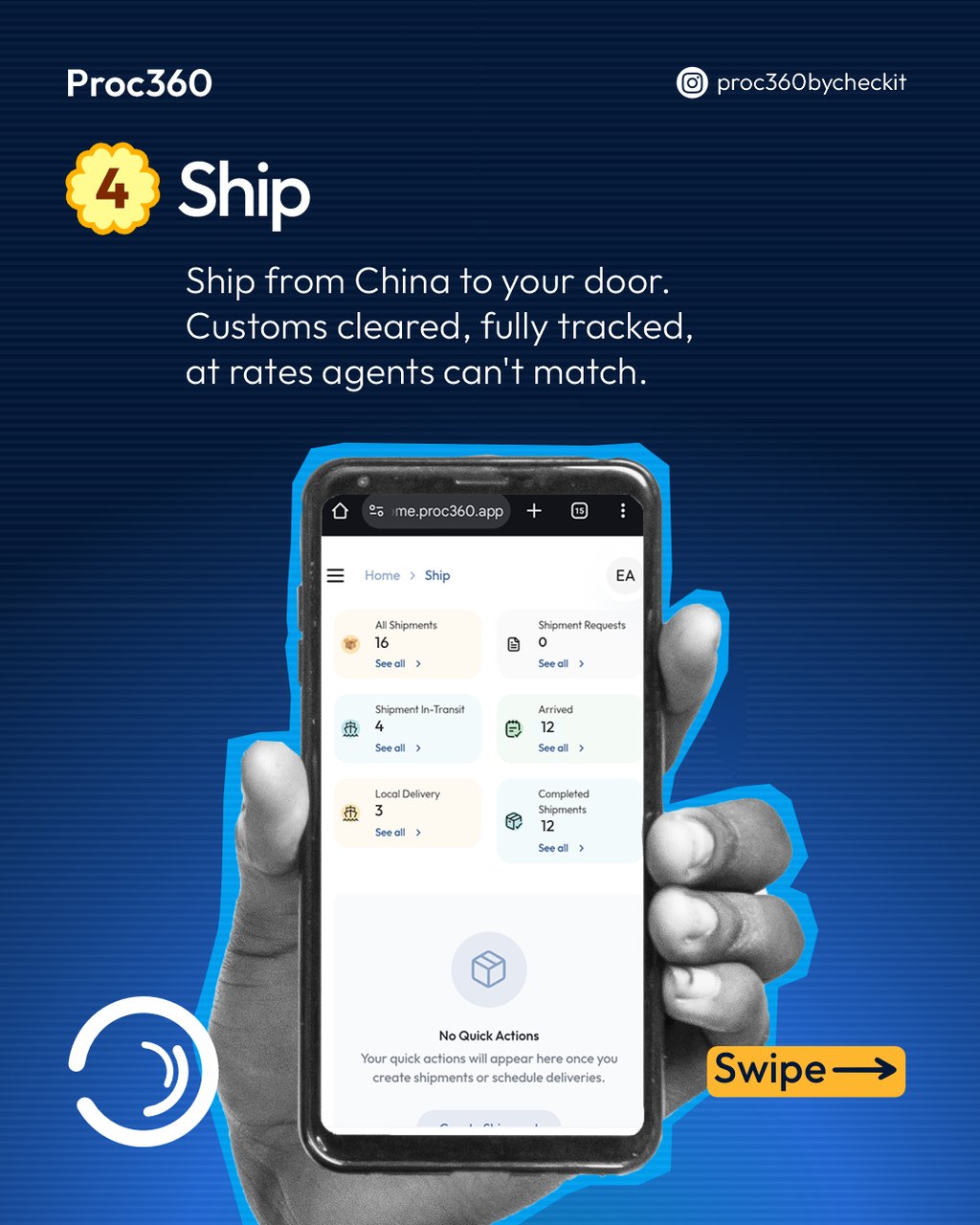
Customs management is included in shipping, so that you don’t have to worry about Form M submission, and other complex documentation.
What Proc360 does for you:
Vendor verification and quality checks
Consolidated shipping to reduce your costs
Assistance with import documentation (including Form M coordination)
End-to-end shipment tracking
Protection against fraud and scams
Ready to import without the headache? Start for free at Proc360
Frequently Asked Questions
Can an individual (not a company) open a Form M? No. Form M requires a registered business with a valid CAC certificate and TIN. You must operate as a registered entity to import commercially into Nigeria.
What happens if I import without a Form M? Your goods will be held at the port, and you could face fines or outright seizure of the shipment. There is no legal way to clear commercial goods into Nigeria without a valid Form M.
How much does it cost to open a Form M? Your Authorized Dealer Bank typically charges a processing fee. The amount varies by bank and transaction value. Ask your bank for their current schedule of charges before starting.
Can I use one Form M for multiple shipments? Generally, each Form M covers a specific order with a specific supplier. Consult your ADB for guidance on your particular situation
Documents You Need to Open a Form M
Before you start the process, gather these documents:
Document: CAC Certificate
Details: Proof your business is registered in Nigeria
Document: Tax Identification Number (TIN)
Details: From the Federal Inland Revenue Service (FIRS)
Document: Proforma Invoice (PFI)
Details: From your overseas supplier, valid for 3 months
Document: Insurance Certificate
Details: Must be from a Nigerian insurance company
Document: Regulatory Permit
Details: NAFDAC, SONCAP, or other depending on goods
Common mistake: Many first-time importers try to use their supplier's insurance (CIF terms). Nigerian law requires you to buy marine insurance locally — from companies like Leadway, AIICO, or AXA Mansard. Using a foreign policy will get your Form M rejected.
Step-by-Step: How to Open a Form M in Nigeria
Step 1: Register Your Business
Before anything else, your company must be registered with the Corporate Affairs Commission (CAC) and have a valid TIN from FIRS. Without these, you cannot access the trade portal.
(Read our article on registering your business with a CAC and TIN)
Step 2: Choose an Authorized Dealer Bank (ADB)
Pick a CBN-authorized commercial bank to handle your Form M. This bank will be your official intermediary throughout the import process. Popular choices include First Bank, GTBank, Zenith Bank, and Access Bank.
Step 3: Prepare Your Documents
Get your Proforma Invoice from your supplier, purchase your Nigerian marine insurance, and gather all required regulatory certificates (e.g., SONCAP for electronics, NAFDAC for food and drugs).
Step 4: File the e-Form M on the Trade Portal
Log in to the CBN Single Window Trade Portal using your TIN. Fill in your supplier's details, the goods description, port of discharge, and the value. Upload all required documents and submit them to your Authorized Dealer Bank.
Note: As of 2025, Nigeria has moved to the B'Odogwu Unified Customs Management System for Form M processing at major ports. Paper submissions are no longer accepted.
Step 5: Bank Review and Validation
Your ADB reviews your documents, runs a Know Your Customer (KYC) check, and if everything is in order, transmits the Form M to the Nigeria Customs Service.
Step 6: NCS Approval
The NCS reviews your application within one working day. If approved, your Form M is officially registered and you can notify your supplier to begin shipment. If rejected, the NCS will state the reason and return the documents for correction.
Step 7: Proceed with Shipment
Once approved, your supplier ships the goods. They'll send you the final invoice, Airway Bill or Bill of Lading, packing list, and SONCAP certificate (for regulated goods). These documents go back to your bank to trigger the PAAR (Pre-Arrival Assessment Report) process.
How Long is Form M Valid?
Final Thoughts
Form M isn't as complicated as it first appears. Just get your business registered, gather your documents, choose a reliable bank, and follow the steps.
Better still, you can import with Proc360 and skip the hassle of customs documentation.
Visit Proc360 now, and import from China the easier, safer way at proc360.app
Form M is a mandatory electronic document that every Nigerian importer must complete before their goods can enter the country.
Think of it as your official "permission slip" to import. It tells the government what you're bringing in, how much it's worth, and how you're paying for it.
The "M" stands for Merchandise, because it covers physical goods, not services.
It is required by two government bodies:
The Central Bank of Nigeria (CBN) — to monitor foreign exchange
The Nigeria Customs Service (NCS) — to calculate and collect import duties
No Form M = no customs clearance. Simple as that.
Who Needs Form M?
Every importer bringing commercial goods into Nigeria needs Form M, regardless of the value and whether you're using official forex or your own funds.
This includes:
Business owners sourcing products from China, the UAE, or the UK
Retailers importing phones, electronics, clothing, or food items
Entrepreneurs buying wholesale goods online (AliExpress, Alibaba, DHgate, etc.)
Even if your transaction does not involve foreign exchange from CBN, you still need to file a Form M.
Why Does the Government Require Form M?
The Nigerian government uses Form M for three main reasons:
1. Foreign Exchange Monitoring: Nigeria manages its foreign currency carefully. Form M helps the CBN track how much forex is leaving the country for imports, and ensures it's being used legitimately.
2. Customs Duty Assessment: The NCS uses your Form M details to calculate exactly how much import duty you owe. Your product description, quantity, and declared value all factor into this.
3. Trade Control: Form M helps the government ensure that prohibited or restricted goods don't enter the country unchecked. It's part of Nigeria's broader trade compliance framework.


Any extension beyond these periods requires direct approval from CBN, so don't let your Form M expire; it creates delays and extra costs.
Common Form M Mistakes to Avoid
Wrong HS Codes: A misclassified product code on your Form M can cause a mismatch at the PAAR stage and delay your clearance significantly. Double-check every code.
Foreign insurance certificate: Always buy your marine insurance from a Nigerian insurer before filing.
Expired Proforma Invoice: Your PFI must be valid (typically 3 months). Submitting an expired one will get your Form M rejected.
Incomplete goods description: Be detailed and accurate. Vague descriptions raise red flags with both your bank and the NCS.