What Customs Officers Look For (And How to Avoid Problems at Nigerian Ports)
Learn what customs officers look for at Nigerian ports. Avoid delays, inspections, and penalties with this complete customs clearance guide.
GROWING BUSINESSGETTING STARTED
Ugbe Zurishaddai
4/1/20266 min read
“Customs clearance is the most stressful part of importing.”
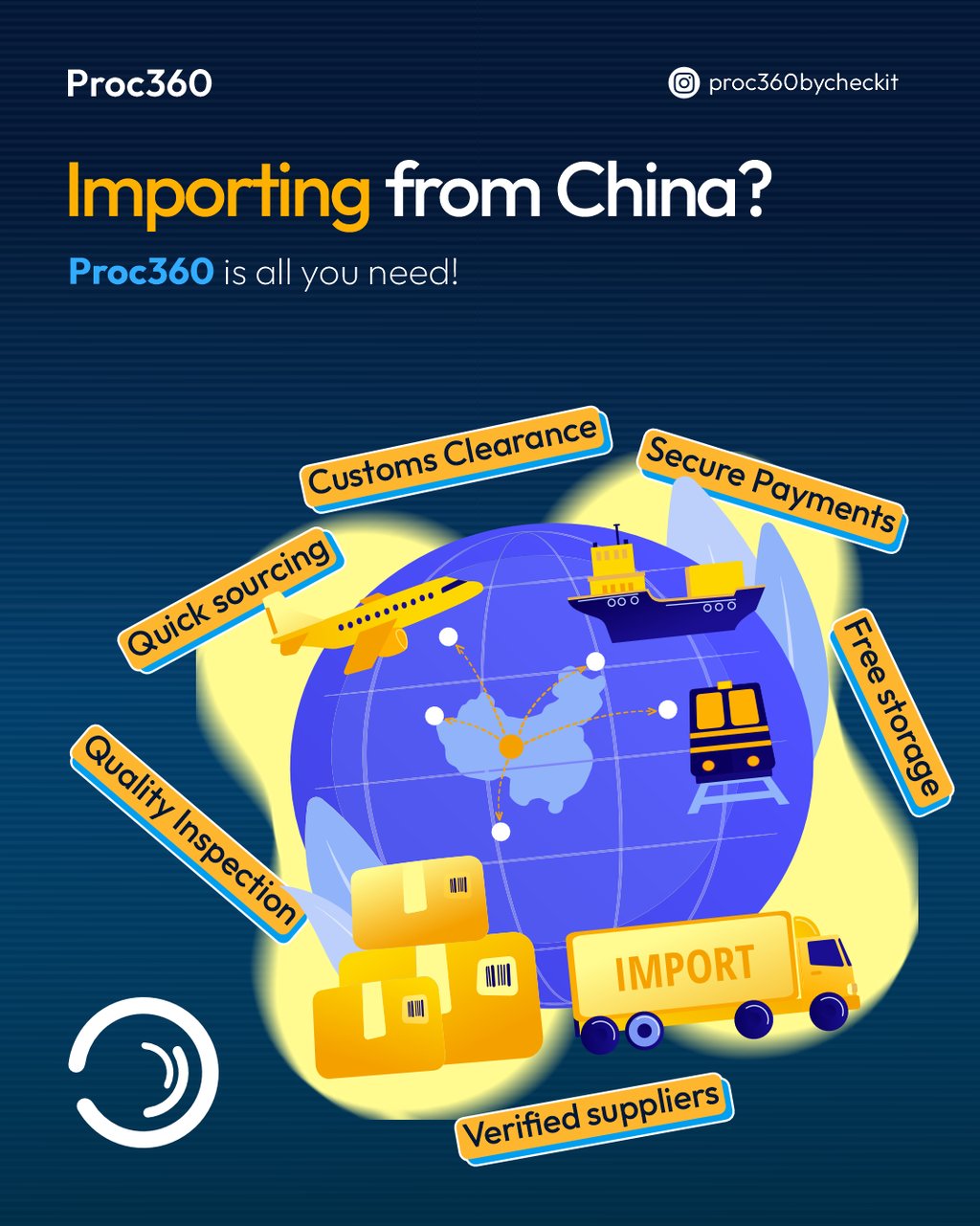
This is only true when you import without having the right structures in place. Some containers clear in 3-5 days. Others sit for weeks. The difference is not luck, it's knowing what customs officers check for and preparing properly, or using the right platforms like Proc360, that work on customs documentation for you.
This guide shows you exactly what triggers customs inspection at Nigerian ports, which documents matter most, and how to avoid delays that cost your business money

What Customs Officers Actually Check
Nigeria Customs Service officers at major ports have specific checkpoints. Understanding these helps you prepare correctly.
Documentation accuracy
Officers compare your paperwork against physical goods:
Form M matches commercial invoice
Packing list matches container contents
Single Goods Declaration (SGD) filled correctly
Bill of Lading matches shipping details
PAAR (Pre-Arrival Assessment Report) is accurate
Any mismatch triggers examination, and your goods can get stuck at the port
Product classification (HS Code)
Your HS code determines duty rate. Officers check your goods to verify if you're using the correct classification.
Wrong HS code = wrong duty calculation = automatic inspection.
Example: Classifying tablets as "computers" (5% duty) instead of "tablets" (20% duty) gets flagged immediately.
Valuation accuracy
Under-invoicing is the biggest red flag. Customs knows market prices.
If you declared 100 smartphones at $5,000 but similar shipments average $15,000, expect inspection.
The PAAR system cross-checks values against global databases.
Prohibited and restricted items
Customs scans for banned goods:
Used clothing (okrika)
Counterfeit products
Weapons and ammunition
Certain pharmaceuticals
Goods without proper licenses
Importing prohibited items guarantees seizure.
Take a look at our guide on restricted, prohibited and banned goods
SON conformity requirements
Electronics, toys, building materials, and other products need Standards Organization of Nigeria (SON) certification.
If you have no SON certificate, your goods get held at the port until you get one.
NAFDAC registration
Food, beverages, cosmetics, and drugs require NAFDAC registration.
Missing NAFDAC number on products = automatic hold.
What Triggers Physical Examination
Not every container gets physically examined. Certain red flags increase chances:
First-time importers
New importers get examined more frequently. Customs doesn't know your track record yet.
Inconsistent declarations
If your current declaration differs significantly from past shipments, it raises questions.
High-risk product categories
Electronics, phones, textiles, and pharmaceuticals get examined more often.
Suspicious documentation
Poorly prepared documents, missing signatures, or obvious errors trigger inspection.
What Happens During Physical Examination
If your container gets selected for examination, here's what happens:
Container positioning
The terminal moves your container to the examination bay. You or your agent must be present.
Opening and inspection
Customs officers open the container. They remove random boxes for inspection, and check products against documentation.
Verification checks
Officers verify if product descriptions match invoice, if quantities are accurate, and the other measures we discussed earlier.
Sampling
For certain products, customs takes samples for testing (especially NAFDAC/SON regulated goods).
Documentation
Officers document their findings and note any discrepancies. They also calculate duty adjustments if needed.
Repacking
After examination, goods are repacked. You pay examination fees and any additional duties.
How to Prepare for Smooth Customs Clearance
Use accurate HS codes
Work with your clearing agent to classify products correctly. Don't guess. Wrong codes cost more than correct duty.
Declare honest values
Use actual purchase prices on invoices. Under-invoicing penalties exceed any duty "savings."
Prepare complete documentation
Have every required document ready before container arrives. Missing papers = delays.
Get SON/NAFDAC certificates early
For regulated products, obtain certifications before shipping. Getting them at port takes weeks.
Maintain consistency
If you import regularly, keep your documentation style consistent. Sudden changes trigger scrutiny.
Pay duties promptly
Delays in duty payment rack up demurrage fees. Pay as soon as PAAR is generated.
Understanding Customs Fees at Nigerian Ports
Beyond import duty, you pay several charges:
Import duty: Based on HS code and CIF value (typically 5-35%)
Surcharge: 7% of import duty
VAT: 7.5% on CIF + duties
CISS: 1% of FOB value
ETLS: 0.5% of CIF (non-ECOWAS goods)
Scanning fee: If container is scanned (₦50,000-120,000)
Examination fee: If physically examined (₦80,000-150,000)
Terminal charges: Storage, handling fees
Demurrage: Daily storage after free period (₦15,000-30,000/day)
Clearing agent fees: Agent's service charge (₦80,000-200,000)
Total customs cost typically adds 30-50% to your product cost.
How Proc360 Simplifies Customs Clearance
Most importers struggle with customs because they don't understand the system. Proc360 is a platform that includes custom documentations right from the start of your import process
Accurate documentation from day one
We prepare all documents correctly before your goods are shipped. No missing papers, no mismatched values.
Proper HS code classification
Our team classifies your products correctly. No penalties, no surprises.
PAAR processing
We file your SGD and generate PAAR with accurate duty calculations, so you’re aware of all costs upfront.
Duty payment management
We manage duty payments and provide full cost breakdowns. No hidden fees.
Fast clearance
Our preparation reduces examination risk. Most shipments clear in 3-5 days.
Door-to-door delivery
Once cleared, we deliver directly to your location. No port visits needed.


Required Documents for Customs Clearance
Having complete, accurate documents is your best defense against delays.
Form M (Import Declaration Form)
Obtained from your bank before shipping. Proves you have foreign exchange approval for the import.
Commercial invoice
From your supplier. Must show accurate product description, quantity, unit price, and total value.
Packing list
Details exactly what's in each box/carton. Must match commercial invoice quantities.
Bill of Lading (B/L)
Shipping documents proving goods were loaded. Original B/L required for customs clearance.
Single Goods Declaration (SGD)
Filled by your clearing agent. Contains HS code, duty calculation, and other import details.
PAAR (Pre-Arrival Assessment Report)
Generated after submitting SGD through Nigeria Customs portal. Shows assessed duty before arrival.
Certificate of Origin
Shows where goods were manufactured. Affects duty rates for ECOWAS vs non-ECOWAS goods.
SON/NAFDAC certificates (if applicable)
Product-specific certifications required for regulated goods.
Insurance certificate
This proves your goods were insured during transit.
Common Mistakes That Cause Customs Problems
Wrong HS code selection: Using incorrect HS codes to reduce duty always backfires. Officers catch it, apply correct code, add penalties.
Under-declaring values: Declaring $10,000 worth of goods as $3,000 seems smart until customs compares with market data.
Penalty: Pay correct duty plus fines plus demurrage for delays.
Incomplete documentation: Missing one document holds up everything. Have all your papers ready before the container arrives.
Poor product descriptions: Writing "electronics" instead of specific product names makes officers suspicious.Be specific: "Bluetooth wireless earphones, model XYZ-100, 500 units"
Mismatched quantities: Invoice says 1,000 units. The packing list says 1,200 units. The container has 900 units. Mismatches like this cause your goods to be held and examined.
Expired Form M: Form M has a validity period. Expired Form M means starting the process over.
The Customs Clearance Process at Nigerian Ports
Understanding the process helps you know what to expect.
Step 1: Pre-arrival documentation (before container arrives)
Submit Form M, commercial invoice, packing list to clearing agent. Agent files SGD through Nigeria Customs portal. PAAR is generated with assessed duty.
Step 2: Container discharge
Ship arrives, container offloaded to terminal. NPA (Nigeria Ports Authority) notifies clearing agent.
Step 3: Document submission
Clearing agent submits a full documentation package to customs. Payment of assessed duty, levies, and charges.
Step 4: Risk assessment
Customs system categorizes your shipment:
Green channel: Clear without examination
Yellow channel: Documentary check only
Red channel: Physical examination required
Step 5: Examination (if selected)
Customs officers physically open the container to verify if the contents match your documents. They also check for prohibited items.
Step 6: Release
Once cleared, customs issues release order. The container moves to the exit gate. Delivery to your location.
Timeline: Green channel: 1-3 days. Yellow channel: 3-5 days. Red channel: 5-14 days (sometimes longer).
Your Customs Clearance Checklist
Before your next shipment:
✅ Obtain Form M from your bank
✅ Get accurate commercial invoice from supplier
✅ Verify packing list matches invoice
✅ Use correct HS codes for all products
✅ Declare honest product values
✅ Secure SON/NAFDAC certificates if needed
✅ Engage licensed clearing agent early
✅ Prepare complete documentation
✅ Budget for full customs costs (duty + fees)
✅ Track container arrival
✅ Pay duties promptly when assessed
Proper preparation prevents problems.
Ready to import without customs headaches?
Sign up with Proc360 and access clear documentation, customs clearance, and smooth delivery.