Proc360 Just Saved Me Millions of Naira” — How Akinwale Versaxe Enterprise Found Structure Over Shady Middlemen
Learn how Akinwale Versaxe Enterprise saved millions by avoiding shady middlemen and using a structured system for importing from China to Nigeria.
GROWING BUSINESSGETTING STARTED
Esther Dada
2/24/20264 min read
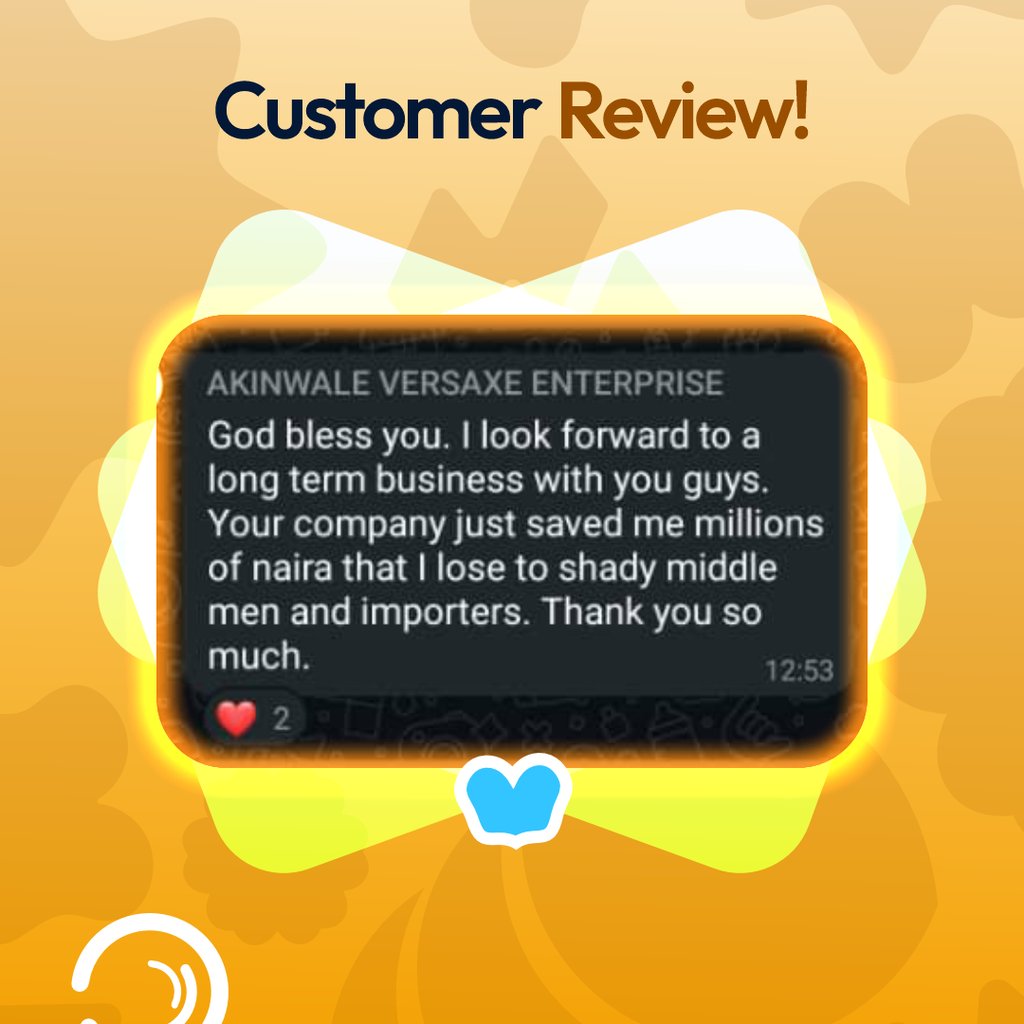
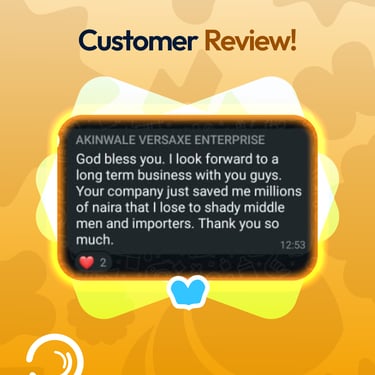
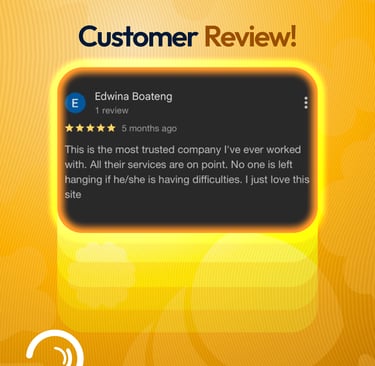
“God bless you. I look forward to a long-term business with you guys. Your company just saved me millions of Naira that I would have lost to shady middlemen and importers. Thank you so much.”
When Akinwale Versaxe Enterprise sent that message, it wasn’t hype.
It was relief.
For many Nigerian entrepreneurs, importing from China to Nigeria begins with optimism but too often, it becomes a lesson in hidden costs, unreliable agents, and preventable losses.
This is not just a testimonial.
It’s a case study in what happens when a business replaces middlemen with structured procurement.
The Reality Akinwale Versaxe Enterprise Faced
Before finding a structured system, Akimwale Versaxe Enterprise operated like many growing Nigerian businesses:
Negotiating directly with overseas suppliers
Using third-party agents for payments
Trusting informal shipping handlers
Managing multiple suppliers without consolidation
On paper, everything looked manageable.
In practice, there were constant risks:
Exchange rate manipulation
Unverified supplier claims
No warehouse inspection in China
Unclear shipping charges
Sudden clearance adjustments
The most dangerous part?
The losses weren’t obvious at first.
They were hidden in small margins, delayed timelines, and “unexpected” charges that quietly eroded profit.
Where the Millions Were Actually Being Lost
When businesses say they’re losing money during mini importation in Nigeria, it’s rarely because the product is bad.
It’s usually because of structural gaps.
Here’s what Akimwale Versaxe Enterprise identified:
1. Inflated RMB Payments
Some intermediaries quietly add margins into exchange rates.
Over multiple shipments, even small rate differences compound into millions of naira.
Without transparent RMB payment processing, it’s impossible to track the true cost of goods.
2. No Pre-Shipment Verification
Before switching to a structured procurement system, there was no proper warehouse inspection.
This meant:
Wrong variants sometimes shipped
Quantity discrepancies went unnoticed
Packaging wasn’t optimized
Shipping costs were higher than necessary
By the time goods arrived in Nigeria, correcting those mistakes was expensive — or impossible.
3. Fragmented Shipping
Shipping from China to Nigeria was handled through separate contacts, without coordination.
No centralized tracking.
No consolidation.
No strategic freight planning.
Air freight was used when sea freight would have saved money.
Multiple small shipments were sent instead of one optimized consolidated load.
Each decision seemed minor.
Together, they were costing millions.
The Turning Point: Choosing Structure Over Shortcuts
The shift happened when Akimwale Versaxe Enterprise decided to stop managing importation as scattered transactions — and start managing it as a supply chain.
Instead of relying on middlemen, the business adopted a system that handled:
China supplier sourcing
Secure RMB payments
China warehouse receiving
Quality inspection
Consolidation
Coordinated sea and air shipping
Final delivery in Nigeria
For the first time, every stage was visible.
Every cost was traceable.
Every shipment was planned — not improvised.
What “Saved Me Millions” Really Means for Nigerian Businesses
It means:
No inflated exchange rates
No surprise warehouse errors
No ghost shipping agents
No fragmented logistics
No undocumented charges
It means visibility.
It means process.
It means control.
And in international trade, control is profit.
The testimonial from Akimwale Versaxe Enterprise is more than gratitude.
It’s proof of a principle:
Importing from China to Nigeria is profitable when it is structured.
Shady middlemen thrive in confusion.
Professional systems thrive in transparency.
And for businesses ready to grow beyond survival mode, structure is no longer optional.
It is the difference between leaking millions and saving them.
Why Structured Procurement Changes Everything
Importing from China to Nigeria is not inherently risky.
Unstructured processes are.
When a company operates with:
Documented supplier agreements
Transparent payment channels
Warehouse confirmation before shipment
Consolidated freight planning
Predictable delivery timelines
Profit becomes predictable too.
That is what “saved millions” truly means.
Not a miracle.
Not a discount.
But eliminating unnecessary leakage.
The Emotional Side of Business Loss
Money loss in business is not just financial.
It’s psychological.
It affects:
Confidence
Decision-making
Risk tolerance
Long-term growth plans
For Akimwale Versaxe Enterprise, the relief expressed in that testimonial wasn’t just about money.
It was about finally having clarity.
When importers move from guesswork to systems, something shifts:
They stop operating defensively.
They start operating strategically.
How Smart Nigerian Importers Avoid Shady Middlemen
The experience of Akimwale Versaxe Enterprise highlights a pattern.
Smart importers:
✔ Separate sourcing from payment
They don’t rely on one informal agent for everything.
✔ Demand warehouse inspection in China
Errors are corrected before goods leave.
✔ Consolidate shipments
Store-and-ship systems reduce volumetric weight and cost.
✔ Choose shipping strategically
Sea shipping from China to Nigeria is used when timelines allow, protecting margins.
✔ Insist on documentation
Every payment and shipment is traceable.
Why Middlemen Continue to Trap Businesses
Shady middlemen succeed because they:
Operate in information gaps
Exploit urgency
Offer “cheap” solutions
Avoid documentation
They position themselves as shortcuts.
But shortcuts in international trade are expensive.
Structured procurement companies operate differently.
They function with:
Defined processes
Accountability
System-based operations
Coordinated logistics
The difference is not branding.
It’s infrastructure.