Importing From Temu for Business: What Nigerian Business Owners Should Actually Know
Can Nigerian businesses use Temu for sourcing? Compare Temu and 1688 for pricing, quality, wholesale orders, and business importing from China.
GROWING BUSINESSGETTING STARTED
Ugbe Zurishaddai
7/23/20266 min read


Temu has become one of the most talked-about apps in Nigeria. It topped the download charts on both Android and Apple app stores within weeks of its advertising blitz starting. People post their orders on Twitter and TikTok, unboxing everything from phone accessories to actual frozen steaks.
The conversation online is split into two camps. One camp is thrilled. They are getting items at prices that feel impossible compared to what they used to pay the traders at Alaba or Balogun markets. The other camp is cautious, sharing stories of items that never arrived, sizes that were wrong, or quality that did not match the photos. Both camps are right, and understanding why is the first step to using Temu properly as a business owner.


The Business Owner's Problem With Temu
Temu was not built for resellers. It has no dropshipping program, no bulk-order tools, and no business account that offers factory pricing at volume. If you are a retailer trying to stock 50 or 100 units of a product, you are still checking out one item at a time, at retail price, in Temu's own-brand packaging.
This creates three real problems for a business owner trying to use Temu as a sourcing channel.
First, the pricing is retail, not wholesale. Temu's low prices already reflect the platform's built-in margin. A wholesale factory price for the same item, ordered directly, is almost always lower when you buy in real quantity. Ordering 50 or 100 units through Temu checkout is not designed for volume the way a wholesale platform is. There is no bulk-discount structure, and there is no direct relationship with the manufacturer.
Second, quality control before goods leave China does not exist for a Temu retail order. You cannot inspect a batch, request a sample run, or confirm a colour and size distribution before the full order ships to Nigeria. What arrives is what arrives.
Third, packaging and branding are locked to Temu. Every parcel comes branded, which is fine for a personal buyer but limits a business owner who wants to build their own storefront and customer relationships rather than reselling something that visibly came from someone else's platform.
Where 1688 Fits In
This is why serious Nigerian importers, the ones stocking shelves at the Trade Fair Complex, Alaba, and Aba Market, still lean heavily on 1688 rather than Temu for actual sourcing.
1688 is a domestic Chinese wholesale platform, also part of the Alibaba family, built for Chinese businesses buying from Chinese factories. Prices are factory-direct because the entire platform serves local Chinese wholesale buyers, not international retail shoppers. The product range is enormous too, covering fashion accessories, solar panels, kitchen gadgets, hair extensions, and electronics far beyond what Temu or any single retail app carries.
The trade-off is real. 1688 is built entirely in Mandarin, most suppliers do not speak English, and the platform assumes you have a Chinese business registration and a Chinese bank account to pay with. None of that exists by default for a business owner sitting in Lagos or Abuja. This is exactly the gap that has historically pushed Nigerian importers toward agents, some reliable and some not, just to get access to 1688 pricing.
So the honest comparison looks like this. Temu is convenient, familiar, and fine for personal shopping or testing whether a product trend is real before committing real money. 1688 is where the actual wholesale pricing lives and where a serious business owner should source stock at any meaningful volume. The savings between the two, at scale, are not small. They are the difference between a comfortable margin and a thin one.


Where Proc360 Comes In
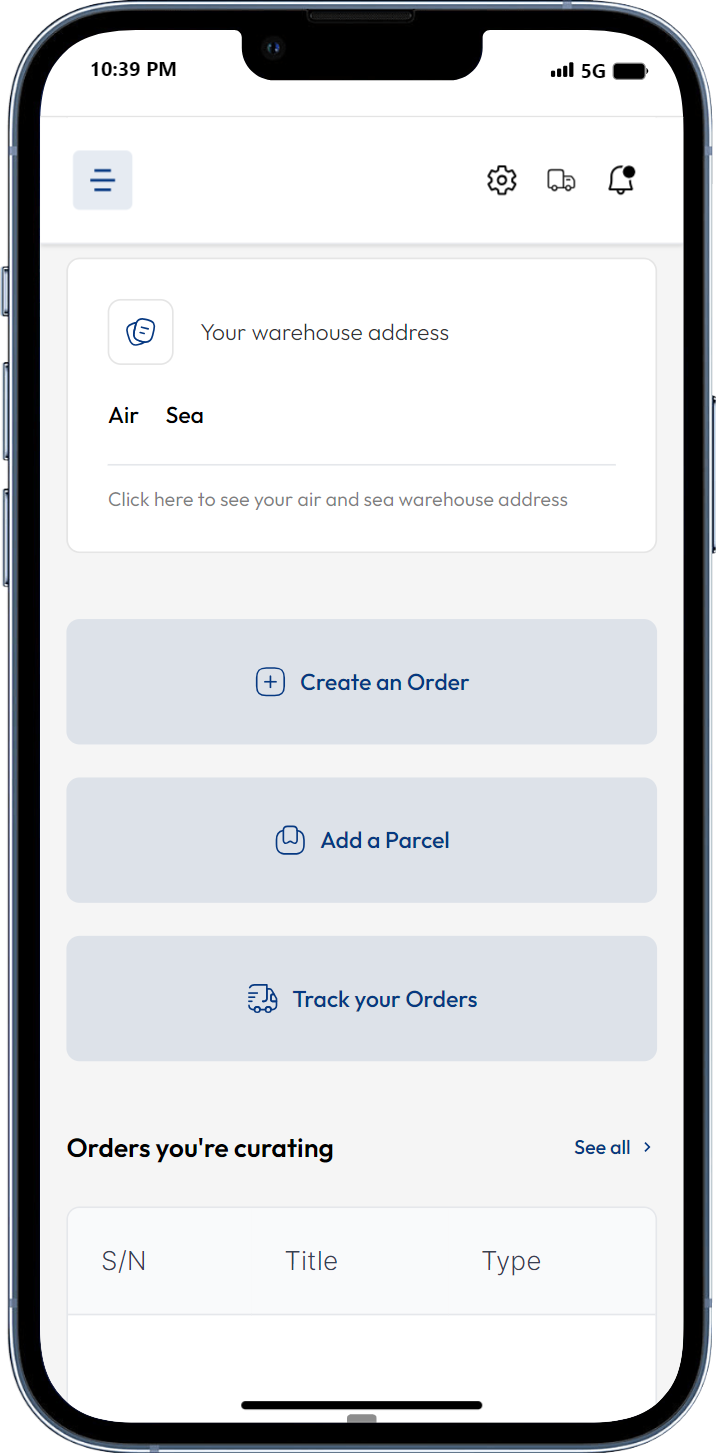
This is the part worth being clear about. Proc360 is not an agent, and it does not place orders on your behalf. You are the one browsing 1688, choosing your products, negotiating with suppliers, and deciding what to buy and how much. Proc360 exists to remove the barriers that prevent a Nigerian business owner from doing that directly, without having to trust a middleman with your money or product decisions.
Proc360 gives you a way to pay suppliers on 1688 directly in RMB, converted instantly from naira, without routing your money through someone else's account. It gives you a warehouse address in China where your own supplier can deliver, so you can inspect and verify what you ordered before it ships, the same quality check step that protects serious importers everywhere. And it gives you real-time visibility into where your shipment actually is, instead of depending on a supplier's WhatsApp message or an agent who goes quiet on weekends.
You stay the one making all the decisions. Which supplier to use, which product to buy, how much to order, when to ship. Proc360 is the tool that lets you act on those decisions yourself at 1688 pricing, with your money under your control the entire time.
Getting The Best Out of Every Platform
Use Temu for what it is good at. Spot trends, test whether a product actually sells before committing real capital, and buy small quantities to see quality with your own eyes. The viral finds and reviews on Twitter and TikTok are genuinely useful market research.
Then move to real sourcing once you know what you want to stock. That means 1688, factory pricing, and quantities that actually make sense for a business. The language barrier and payment friction that used to make this hard are solvable, and solving them yourself with the right tools keeps you in control of your own business rather than handing that control to someone else.
Create a free Proc360 account and start sourcing directly from 1688 with RMB payments, warehouse verification, and shipment tracking, all in your own hands.
Why Temu Feels Different
For years, "China" was shorthand in Nigeria for cheap and low quality. That reputation was never really about China. It was about the long chain of middlemen between a factory in Guangzhou and a trader in Alaba International Market. Every middleman in that chain took a cut, and every cut pushed manufacturers to cut corners to protect their own margin. By the time a product reached the final buyer, it had been optimised to survive that chain cheaply, not to satisfy the person using it.
Temu cuts a lot of that chain out. It is the international arm of PDD Holdings, the company behind Pinduoduo, one of China's largest e-commerce platforms. Because it connects buyers directly to the factory, prices on Temu can be a fraction of what the same item costs on Amazon or in a Lagos market. A knife sharpener that costs ten dollars elsewhere can show up on Temu for under two dollars.
This is genuinely useful information for a business owner. It means the raw manufacturing capability behind cheap and reliable products has not gone away. What has changed is who controls the chain to reach it.
What Twitter and Nairaland Are Actually Saying
Scroll through Nigerian Twitter and Nairaland threads about Temu and a few patterns repeat constantly.
People trust word of mouth before they trust the app. Before ordering, many Nigerians check Twitter, ask in group chats, or look for someone who has already received a similar item. Temu understood this and leaned into micro-influencer reviews early, which is part of why it built trust so fast.
Delivery time complaints are common. Nigerians are used to same-day or next-day delivery from local sellers. Temu shipments from China can take 1 to 3 weeks, depending on the item and shipping option chosen, which can catch first-time buyers off guard.
Quality is inconsistent, and buyers know it. The same product category on Temu can include a version worth buying and one that will disappoint, both sitting side by side in search results. Experienced buyers now sort by review count and rating before adding anything to cart.
There is also a real fraud-risk conversation. Fake Temu emails, cloned checkout pages, and impersonators are a recurring warning in Nigerian online communities. This is a legitimate concern and one every buyer, business or personal, should take seriously.
None of this makes Temu bad. It makes Temu exactly what it is: a retail platform built for individual consumers, not a business sourcing tool. That distinction matters a lot once you are trying to stock a shop rather than buy one item for yourself.