Importing 101: How to Order Custom Made Goods From Chinese Factories
Want to create your own branded products? Learn how to source, customize, and import goods from China with verified factories and full quality control.
GROWING BUSINESSGETTING STARTED
Ugbe Zurishaddai
4/24/20267 min read
Custom manufacturing in China is not just for large corporations. Nigerian SMEs like clothing brands, skincare lines, food businesses, electronics sellers, and much more, are doing it every day at order quantities and budgets that would surprise most people.
The barrier isn't money. It's knowing how the process actually works.
This guide walks you through every stage: understanding your options, finding the right factory, communicating your specs, protecting your product, and getting quality goods delivered.
First, Understand What "Custom" Means in China
Chinese manufacturers work across a spectrum of customisation. Knowing where your request falls tells you what to expect on MOQ, pricing, and lead times.
White label: You buy a product the factory already makes and sells to many buyers. You add your own branding (logo, label, packaging) but change nothing about the product itself. This is the fastest, cheapest entry point to having "your own" product.
Common in cosmetics, supplements, phone accessories, and household goods.
Private label: Similar to white label, but with more control: you may choose the formula, scent, colour, or material from a range the factory offers, then brand it as yours. Still faster than full custom.
Common for skincare, haircare, and food products.
OEM (Original Equipment Manufacturing): You provide the design and specifications; the factory builds to your blueprint. The product is genuinely custom, they're manufacturing something to your exact requirements.
It has Higher MOQ, longer lead time, often requires tooling fees for moulds or dies.
ODM (Original Design Manufacturing): The factory designs and manufactures the product, and you license or buy the right to sell it under your brand.
Sits between private label and full OEM because you're not designing from scratch, but you may be able to modify the factory's existing design.
For most Nigerian SMEs starting out, white label or private label is the practical entry point.
Full OEM makes more sense once you've validated demand, have capital for higher MOQs, and have a clear product specification.
Protecting Your Product: IP, Trademarks, and NDAs
Intellectual property protection in China is real but requires proactive effort. Factories work with many buyers, and without proper agreements, your custom product, formula, or design can end up being sold to other buyers, sometimes in competing markets.
Non-Disclosure Agreement (NDA): Before sharing detailed product specifications, formulas, or designs with any factory, request they sign an NDA.
Many reputable Chinese manufacturers are accustomed to this; it's standard practice in OEM manufacturing. An NDA should cover: what information is confidential, how long the obligation lasts, and what happens in case of breach.
China Trademark Registration: If you are building a brand and not just importing for resale, register your trademark in China as well as in Nigeria.
China operates a first-to-file system, which means if someone else registers your brand name in China before you do, they can legally use it and potentially block your own manufacturing.
Trademark registration in China takes 12–18 months and costs a few hundred USD per class. Start the process early.
Non-compete clauses: In your manufacturing agreement, include a clause preventing the factory from selling your specific custom product (not just a generic version) to competitors in your defined market. This won't prevent everything, but it creates a legal basis for recourse.
Avoid sharing your complete formula or design in the first exchange: Share enough to determine if the factory can produce what you need, then share full details after an NDA is signed.
Understanding MOQ for Custom Manufacturing
Minimum order quantities exist because of tooling costs, setup costs, and the economics of production runs. For custom goods, MOQs are typically higher than for off-the-shelf products, but they're also more negotiable than most first-time importers expect.
For custom packaging and labels only, most suppliers work with quantities from 100 to 500 units.
Private label cosmetics and skincare typically starts at 300 to 1,000 units.
Custom clothing and apparel can begin at 100 to 300 pieces per style.
Custom electronics accessories usually require 500 to 2,000 units.
Full OEM products with custom moulds often start at 1,000 to 5,000 units or more.
Custom supplements typically fall in the 500 to 1,000 unit range.
These are starting points, not fixed rules. Framing your first order as a trial with a clear intention to scale is a legitimate and often effective negotiation approach — factories value long-term buyers over one-time transactions.
If a factory's MOQ is significantly above your current budget, start with white label (lower MOQ, no tooling) while you validate demand, then move to fully custom once volumes justify it. This is the sensible path for most Nigerian brands entering a new product category.
Quality Control for Custom Orders
Custom manufacturing carries higher quality risk than buying standard products, because by definition, you're asking the factory to produce something they may not have made before, or to make changes to a standard process.
Get Quality checks at each stage
Pre-production approval (Before mass production begins)
During production inspection (DPI)
Pre-shipment inspection (PSI)
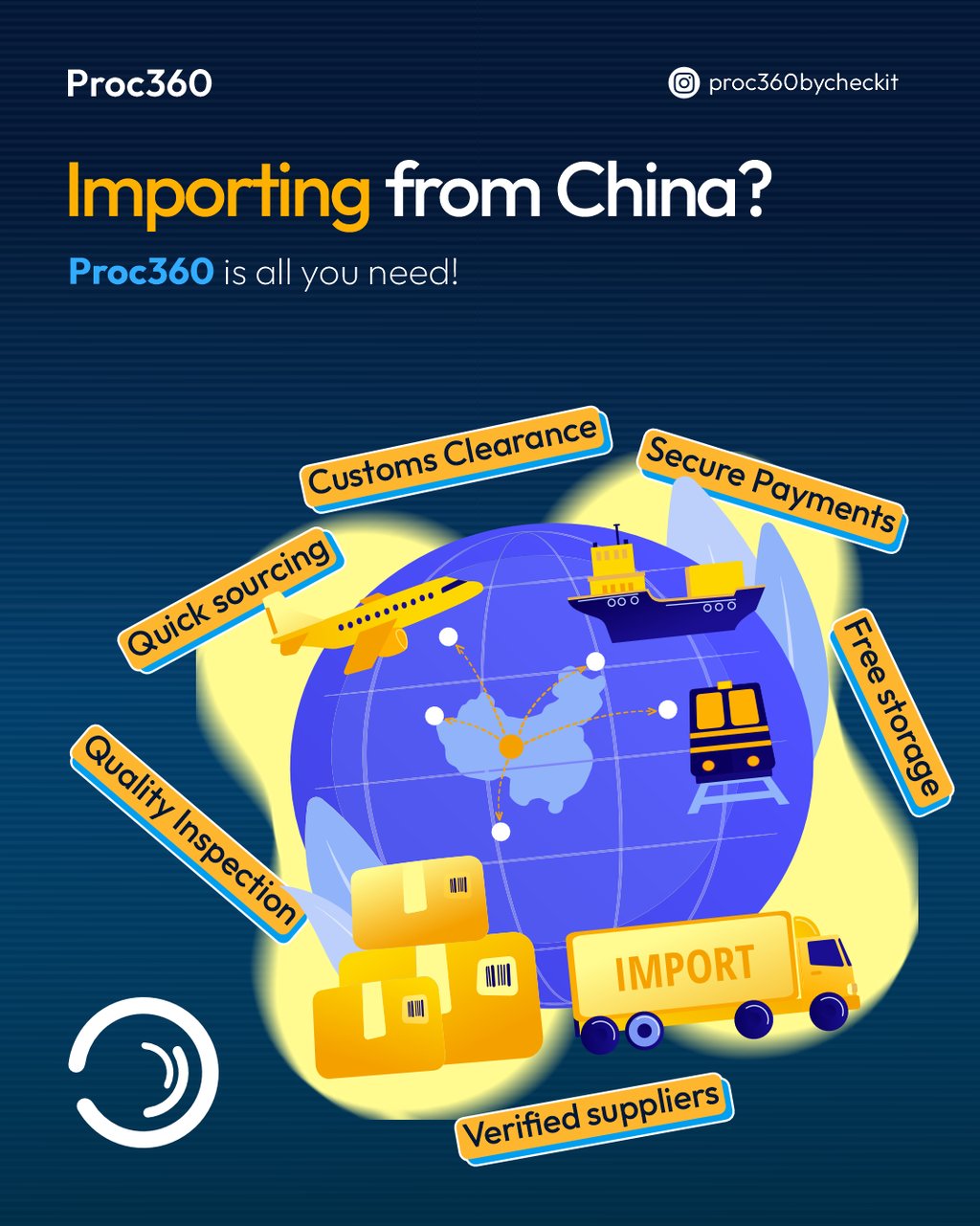
Platforms like Proc360 include quality inspection that you can trust, and costs are included up front. This makes the quality control process easy, safe and stress-free.
Custom Packaging From China
Even if you're not customising the product itself, custom packaging transforms a generic item into a brand. Chinese factories and packaging suppliers can produce custom boxes, labels, polybags, hang tags, tissue paper, and retail display packaging at costs that would be prohibitive to produce locally in Nigeria.
What to specify for custom packaging:
- Dimensions (to fit your product exactly)
- Material (paperboard weight, plastic type, glass thickness)
- Print finish (matte, gloss, foil, embossed)
- Pantone colour codes for consistent colour matching
- Quantity of packaging units (usually higher MOQ for packaging than for the product itself — plan for this)
Production time for custom packaging is typically 2–3 weeks after artwork approval. Factor this into your overall production timeline.
Many first-time custom importers underestimate this timeline significantly. If you need goods for a specific selling season or launch date, work backwards from that date, not forward from when you start the process.
Where to Find Custom Manufacturers in China
Alibaba is an accessible starting point for international buyers. Filter your search for "OEM" or "customization accepted" in the product listing. The Customization badge indicates a supplier actively works with buyers on modified products.
When evaluating suppliers for custom work, go beyond star ratings. Look at years in business, response rate, the number of customised orders in their transaction history, and whether they have in-house design capabilities or outsource.
Made-in-China.com is a strong alternative, with detailed factory profiles and often more direct manufacturers rather than trading companies. It's particularly good for industrial goods, electronics components, and textiles where you want factory-level access.
Sourcing platforms are often the most practical route for Nigerian SME importers who don't speak Mandarin and haven't done custom manufacturing before.
A good platform connects you with factories that have genuine custom capabilities and can oversee production on your behalf.
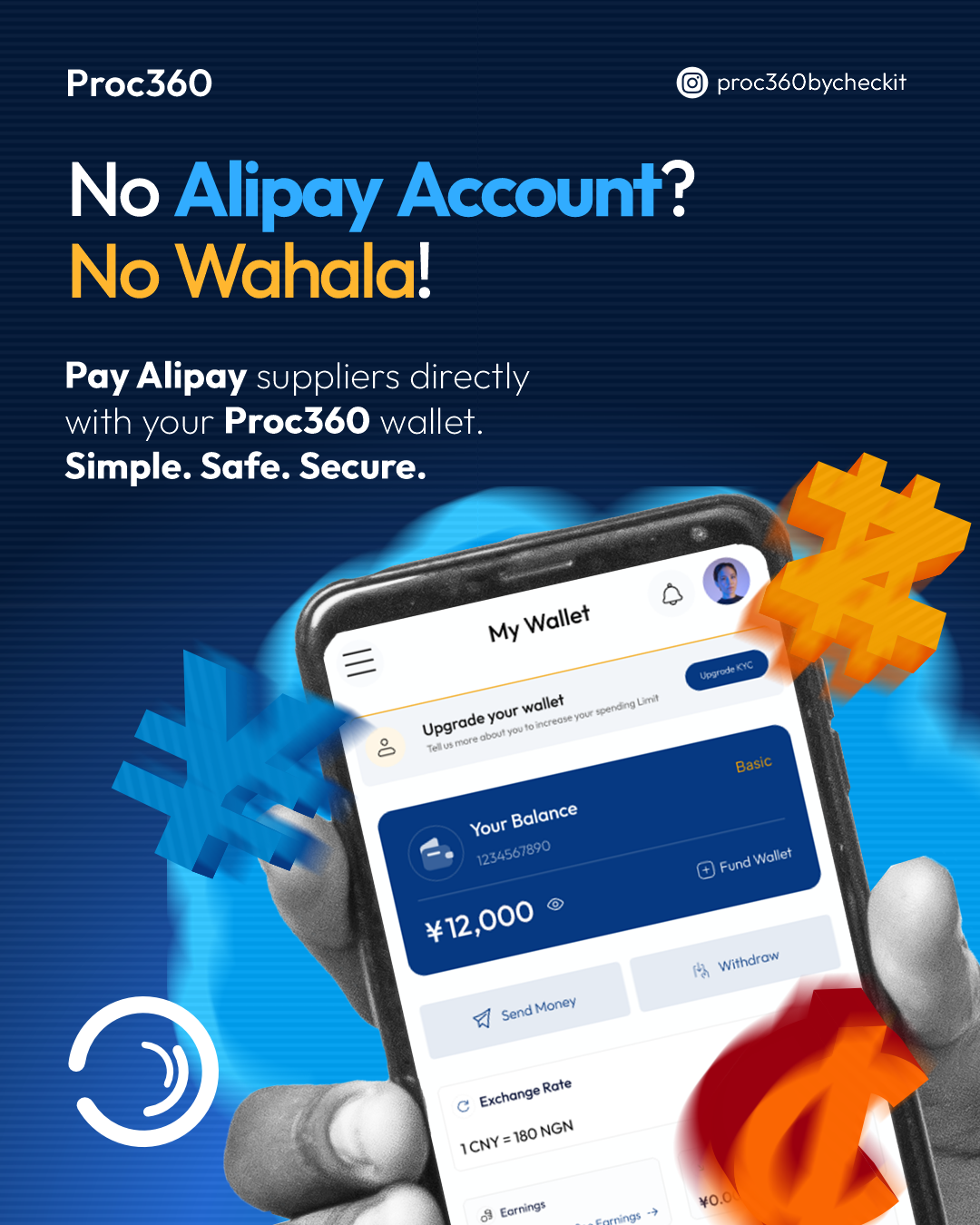
This is exactly what Proc360's Buy For Me service does.
You submit your product requirements — by link, photo, or description — and Proc360's team sources from verified Chinese manufacturers, communicates directly in Chinese with the factory, and simplifies the whole process from order placement to your door in Nigeria.
For SMEs who want the advantages of custom sourcing without navigating Chinese platforms independently, it's the most direct path.
How to Contact Chinese Manufacturers for Custom Work
The first message you send to a factory sets the tone for the entire relationship. Factories receive hundreds of enquiries, many vague, many from non-serious buyers. Stand out by being specific, professional, and realistic.
Your initial enquiry should include:
1. Who you are— company name, location (Nigeria), and what your business does
2. What you want*— a clear product description, not just a category. "Moisturising face cream" is vague. "A water-based moisturizer with SPF 30, 50ml, for African skin tones, in a pump bottle" is specific.
3. Customization requirements— logo on packaging, custom formula, specific colour, or material changes
4. Approximate quantity— be honest. If you want to start with 500 units, say 500. Don't inflate your order to seem larger, then drop to 500 units — factories find out and trust erodes.
5. Target timeline— when you need the goods
Do not ask for price before establishing basic fit. The first exchange is about confirming the factory can do what you need. Price comes after.
Sample message template:
"My name is [Name] from [Company], a Nigerian brand in the skincare sector. We are looking for a manufacturer to produce a private label face serum — water-based, 30ml glass bottle, with our logo and custom label.
Our initial order would be approximately 500–1,000 units, with potential to scale. Could you confirm whether you have capacity for this type of customisation, and share your minimum order quantity and general lead time?
We are ready to discuss specifications in detail and would be happy to receive product samples."
The Sampling Stage: Do Not Skip This
Before placing any production order, get samples. This is non-negotiable for custom goods.
What to expect:
- Most factories charge a sample fee ( typically $30–$150 depending on complexity) which is often refundable if you place a full order
- Sample lead time is usually 7–15 business days for custom products
- Some customisation (like custom moulds for packaging) requires tooling fees before samples can be made, this is normal and necessary for OEM products
What to check in a sample:
- Does it match your specification on dimensions, colour, material, and weight?
- Does the packaging look and feel as expected?
- Is the logo placement and print quality acceptable?
- For consumable products (food, cosmetics): does it meet the performance and sensory standards you need?
Get at least two rounds of samples if the first isn't right. Do not approve a sample under time pressure. Fixing a mistake in sampling costs $50–$150. Fixing it after production costs you almost everything.
Custom manufacturing from China is accessible to Nigerian SMEs at reasonable minimum orders.
The process works when you start at the right level (white label or private label before full OEM), communicate specifications clearly and in writing, get samples before authorising production, protect your brand and IP proactively, and build quality control into the timeline rather than hoping for the best at delivery.
You can make your brand stand out with custom packaging, branding and manufacturing from China. Give it a trial on an easy, safe platform like Proc360 today