Importing 101: How to Consolidate Your Shipments and Save Money on China Imports
A complete guide to shipment consolidation for China imports. Learn how Nigerian SMEs can combine orders and save on shipping and customs.
GROWING BUSINESSGETTING STARTED
Ugbe Zurishaddai
4/17/20266 min read
Shipment consolidation is one of the most consistently underused cost-saving tools in Nigerian importing. Most SMEs learn about it after they've already paid too much, with months of separate air freight bills, multiple customs charges, and per-shipment fees stacking up quietly in the background.
This guide explains exactly how consolidation works, when it makes financial sense, how to set it up, and what mistakes to avoid.




What Is Shipment Consolidation?
Consolidation means combining multiple separate orders (from one supplier or several), into a single shipment that travels together from China to Nigeria under one bill of lading, one customs declaration, and one clearing process.
Instead of shipping five small orders separately and paying five sets of freight, handling, insurance, and customs fees, you wait until your goods accumulate at a warehouse in China, then move everything together as one larger shipment.
There are two main types:
Supplier consolidation: You're buying from multiple suppliers. A freight forwarder or consolidation service receives goods from each supplier at a China warehouse, combines them, and ships everything as one consignment.
Time consolidation: You're buying from one or a few suppliers, but placing orders in batches. Rather than shipping each batch as it's ready, you hold goods at a China warehouse until you've accumulated enough volume to ship cost-effectively.
Both approaches work on the same principle: bigger shipments cost less per unit than smaller ones.
Why Separate Shipments Are More Expensive Than They Look
Most importers focus on the headline freight rate — $/kg for air, $/CBM for sea.
But the real cost of shipping is made up of multiple fixed charges that apply regardless of shipment size. When you ship five small orders separately, you pay these charges five times.

How Shipment Consolidation Works: Step by Step
Step 1: Choose a Consolidation Service or Freight Forwarder with a China Warehouse
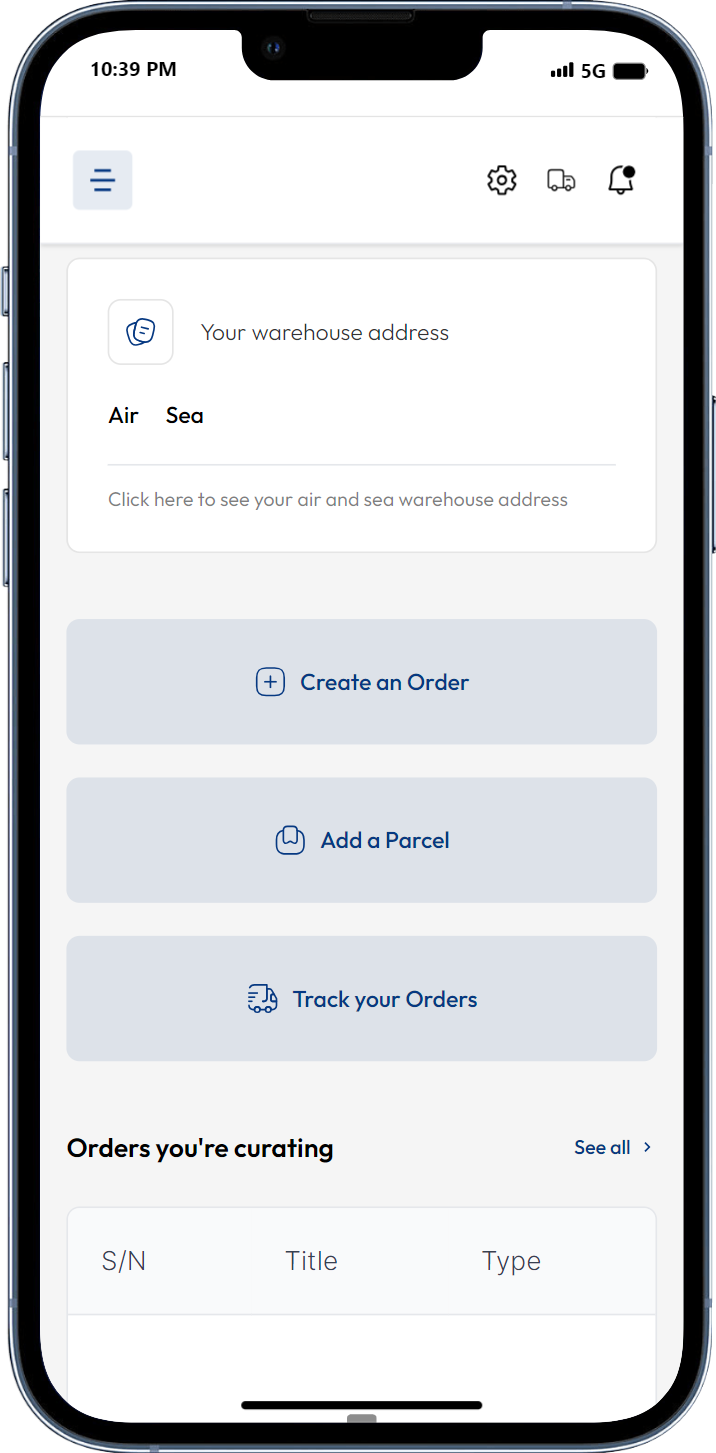
You need a warehouse address in China where your different suppliers can all deliver your goods. This is the central collection point — your "hub" in China before everything ships to Nigeria.
Some options:
- A China-based freight forwarder who offers warehousing and consolidation
- An all-in-one import platform (such as Proc360) that provides a personal China warehouse as part of its service
- A sourcing agent who can receive goods from multiple suppliers on your behalf
What to confirm before committing:
- How long can goods be stored free of charge? (Typically 14 days, with charges after, but Proc360 gives 30 days free storage)
- What storage fees apply after the free period?
- Do they consolidate by weight, by CBM, or both?
- Can they handle goods from suppliers who ship via different carriers (some via 1688 domestic, some via Alibaba logistics)?
Step 2: Share the Warehouse Address With All Your Suppliers
Once you have your China warehouse address, give it to every supplier you're ordering from in that cycle. Each supplier ships their goods to the consolidation warehouse using whatever domestic Chinese carrier they prefer — this is their problem, not yours.
Be specific: Provide the warehouse's full address in Chinese characters if possible, your account/reference number, and any labelling instructions so goods can be identified correctly when they arrive.
Step 3: Confirm Arrival of All Goods at the Warehouse
Reputable consolidation services will notify you when each supplier's shipment arrives at the warehouse. Don't wait passively — follow up with both the warehouse and each supplier using delivery receipts or tracking numbers.
This is also the point where you can request a quality check before goods leave China. A physical inspection at the warehouse costs very little relative to the cost of receiving wrong or damaged goods after a 40-day sea voyage.
Step 4: Confirm Your Consolidation and Choose Shipping Method
Once all goods have arrived at the warehouse, confirm with the consolidation service that you want to ship. At this point, decide:
- Air or sea?
Air if you need goods in 7–10 days. Sea LCL if you can wait 35–50 days and want the cheapest rate.
- Door-to-door or port-to-port?
Door-to-door is more expensive but simpler. Port-to-port requires you to arrange a clearing agent and last-mile delivery on the Nigeria side.
The consolidation service will prepare a single commercial invoice, packing list, and bill of lading covering all the goods (from multiple suppliers) in one document.
Common Mistakes to Avoid
Choosing a warehouse that charges high storage fees.
If your consolidation window stretches to 4–5 weeks, storage fees can erode your savings. Confirm the free storage period upfront.
Not labelling goods clearly.
When multiple suppliers ship to the same warehouse, goods can be mixed up without proper labelling. Give every order a unique reference number and confirm with the warehouse that goods have been correctly identified on arrival.
Consolidating goods with different customs treatment.
Some goods attract import duty exemptions or require specific documentation (NAFDAC registration, SON certification). If you consolidate goods with different requirements into one shipment, the whole shipment may be held while documentation for one product type is resolved. Speak to your clearing agent before mixing regulated and unregulated product categories.
Assuming consolidation always means sea freight.
You can consolidate and ship by air. If you have five separate 10kg orders, consolidating them into one 50kg air shipment still saves you four sets of fixed handling charges.
Waiting too long to ship.
The purpose of consolidation is to reduce fixed costs, not to hold stock in China indefinitely. Set a maximum wait time — typically 2–3 weeks — after which you ship whatever has arrived, rather than waiting indefinitely for a slow supplier.


Fixed costs per shipment typically include:
- Origin handling and documentation fees (China-side)
- Export customs clearance
- Airline or shipping line minimum charges (most LCL sea shipments have a 1 CBM minimum)
- Destination port handling charges at Lagos Apapa or Tin Can Island
- Clearing agent fees for each separate customs entry
- Last-mile delivery per consignment
On a small 50kg air shipment, some of these fixed charges can add $80–$150 per shipment on top of the actual freight rate. Multiply that across four or five separate shipments per month and you're spending ₦300,000–₦600,000 in avoidable fixed costs alone.
Consolidation collapses all of those fixed charges into one.
The Real Cost Comparison: Separate vs Consolidated
Let's use a concrete example. Say you order five different product categories from three different suppliers in Guangzhou over a two-week period. Total weight: 80kg. Total volume: 0.8 CBM.
Shipping separately (at an air rate of $6/kg)
Order 1 18kg ( $108 + $120 fixed charges) =$228
Order 2 12kg ( $72 + $120 fixed charges) = $192
Order 3 22kg ($132 + $120 fixed charges) =$252
Order 4 16kg ($96 + $120 fixed charges) =$216
Order 5 12kg ($72 + $120 fixed charges) = $192
Total: 80kg = $1,080
Shipping consolidated (air, one combined shipment):
80kg = $480 + $120 fixed charges
= $600
Saving: $480 on one cycle of orders.
That's a 44% reduction in shipping cost, without changing suppliers, products, or freight mode. On a monthly basis, for an importer doing this consistently, the savings are substantial.
When Consolidation Makes Sense (and When It Doesn't)
Consolidation isn't always the right move. The main trade-off is time: you're waiting for multiple orders to be ready before shipping, which adds days or weeks to your supply chain cycle.
Consolidation makes sense when:
- You source from multiple suppliers and orders arrive at different times over a 1–3 week window
- Your goods are not urgently needed and you can absorb a 1–2 week hold at the China warehouse
- Fixed per-shipment costs are high relative to your freight volume
- You're on sea freight, and the 1 CBM minimum means small sea shipments are expensive; consolidating to 3–5 CBM dramatically improves your per-unit rate
Consolidation is less useful when:
- You need stock urgently and any delay causes stockouts
- You already meet a full container load (FCL). At that volume, you have your own container and fixed charges are already spread across a large shipment
- Your orders come from one supplier who ships everything at once anyway
A good rule of thumb: if you're placing more than two or three separate orders per month with delivery under 100kg each, you should be considering consolidation.
Consolidation works by replacing multiple small shipment fixed costs with one. You hold goods at a China warehouse, wait for multiple orders to arrive, then ship everything together under one bill of lading. You pay one set of freight charges, one customs entry, and one clearing fee.
The trade-off is time. The savings are real. For any Nigerian importer placing more than two orders per month from China, consolidation should be the default logistics strategy, not an advanced option for later.