How to Start a Successful Pre-order Business in Nigeria
Learn how to start a profitable pre-order business in Nigeria. Discover sourcing, pricing, timelines, and how to import from China with low risk.
GROWING BUSINESSGETTING STARTED
Ugbe Zurishaddai
4/20/20268 min read
The pre-order model is one of the smartest ways to build an import business in Nigeria, but also one of the least understood.
Done right, you get paid before you spend a naira on goods, you know exactly how many units to order, and you eliminate the risk of sitting on dead stock. Done wrong, you're dealing with delayed shipments, angry customers, and a reputation that takes months to rebuild.
This guide explains exactly how the model works, how to set it up around China imports, what products it works best for, and how to protect yourself and your customers when things don't go to plan.
What Is a Pre-order Business?
A pre-order business collects payment from customers for goods that have not yet arrived; sometimes not yet even ordered from the supplier. The customer pays now (or pays a deposit), you use that money to place the order from China, and you deliver when the goods arrive.
It sounds simple. It is simple. But it requires discipline, honest communication, and a clear system, because the moment goods are delayed and customers feel they've been scammed, the damage spreads fast on WhatsApp and Instagram.
The pre-order model works especially well for China imports because of the gap between when you place an order and when goods arrive. That gap ( which can be 3–6 weeks for air freight and 6–10 weeks for sea) is the window where your customers' money funds your stock rather than your own capital.
Why Nigerian Entrepreneurs Use the Pre-order Model
Zero dead stock: You only order what has already been sold. No guessing how many units to buy. No overstocking. No capital tied up in goods that don't move.
Lower starting capital: Instead of needing ₦500,000 to buy and ship a product before you've made a single sale, you collect orders worth ₦500,000 from customers, then use that to fund the purchase. Your capital requirement drops dramatically.
Validated demand: If nobody pre-orders, you haven't lost money on stock. You've learned what your market doesn't want, for free. This is invaluable for anyone testing a new product or entering a new category.
Cash flow advantage: You're cash-flow positive from day one. You receive payment, you pay your supplier and shipping costs, and the difference is your working capital.
Scalability: A pre-order round with 50 customers this month becomes 150 customers next month when you deliver on time and word spreads. Each successful pre-order cycle compounds your reputation and your customer base.
What Products Work Best for Pre-orders from China
Not every product is suitable for the pre-order model. The best pre-order products share certain characteristics:
High interest, easily showcased online: Pre-orders live and die by social media and WhatsApp marketing. Products that photograph well, solve a visible problem, or generate genuine excitement are naturals.
Think: kitchen gadgets, beauty tools, fashion accessories, home organisation products, baby items.
Not urgently needed: A customer who needs a product today won't wait 4–6 weeks for it to arrive from China. Pre-orders work for discretionary purchases where the customer can comfortably wait, not for replacement purchases or emergency items.
Products with clear differentiation: If a customer can buy the same item at Computer Village tomorrow, they won't wait weeks for yours. Pre-order products should have something that makes them worth waiting for. It mat be a specific design, a brand story, custom packaging, a price advantage, or a combination.
Step 5: Collect Payments Properly
Use a business account, not a personal one. This is non-negotiable as your order volume grows, and mixing business and personal funds creates accounting chaos and reduces customer trust.
Step 6: Place Your Order with the Supplier
Once your pre-order window closes, total your orders and place with the supplier immediately. Delays in ordering push your delivery date further back, which strains customer patience.
Confirm with the supplier:
- Exact quantities, variants (sizes, colours), and specifications
- Production/processing time before shipping
- Shipping method (air or sea, depending on your timeline and cost calculation)
- Tracking information once goods are dispatched
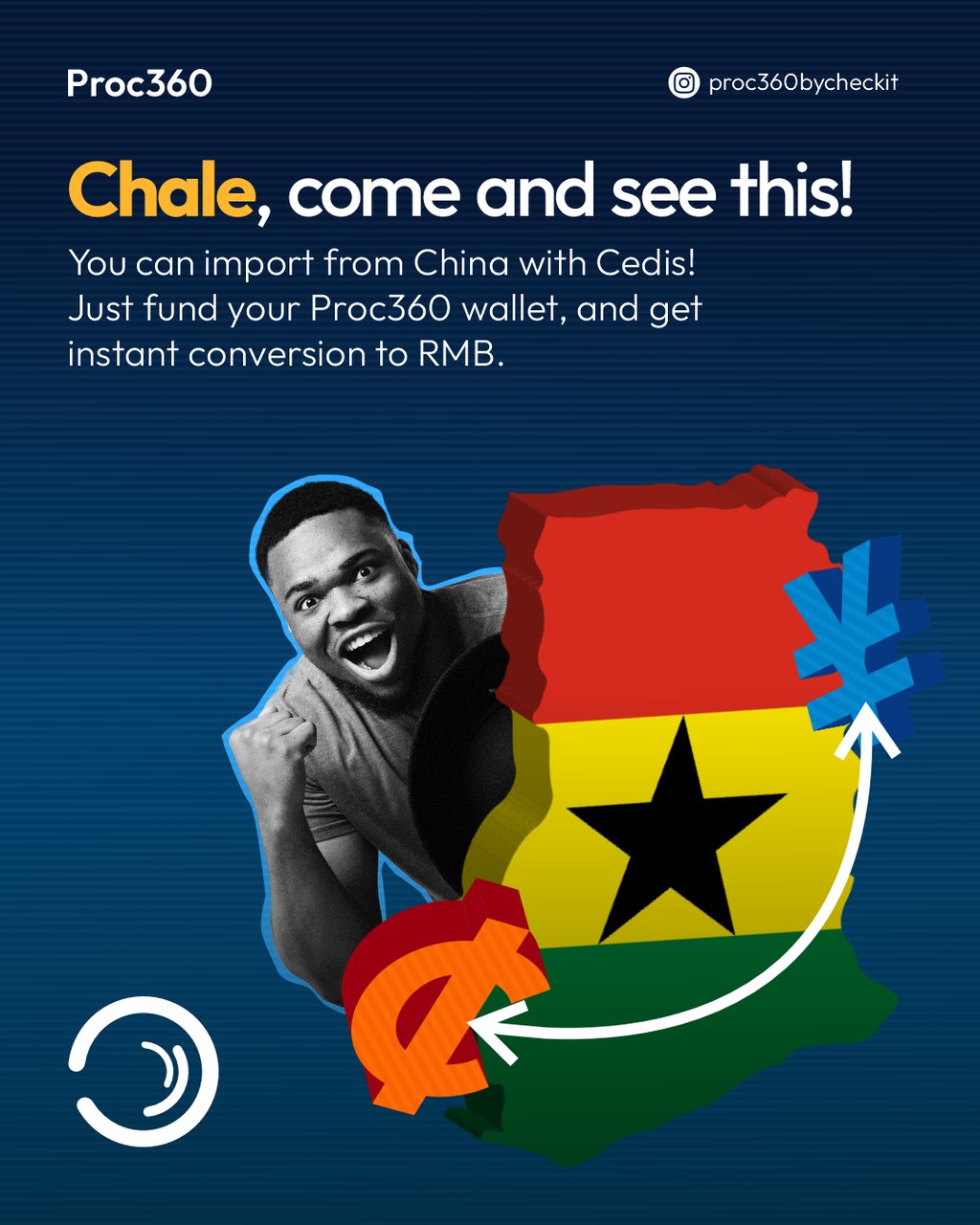
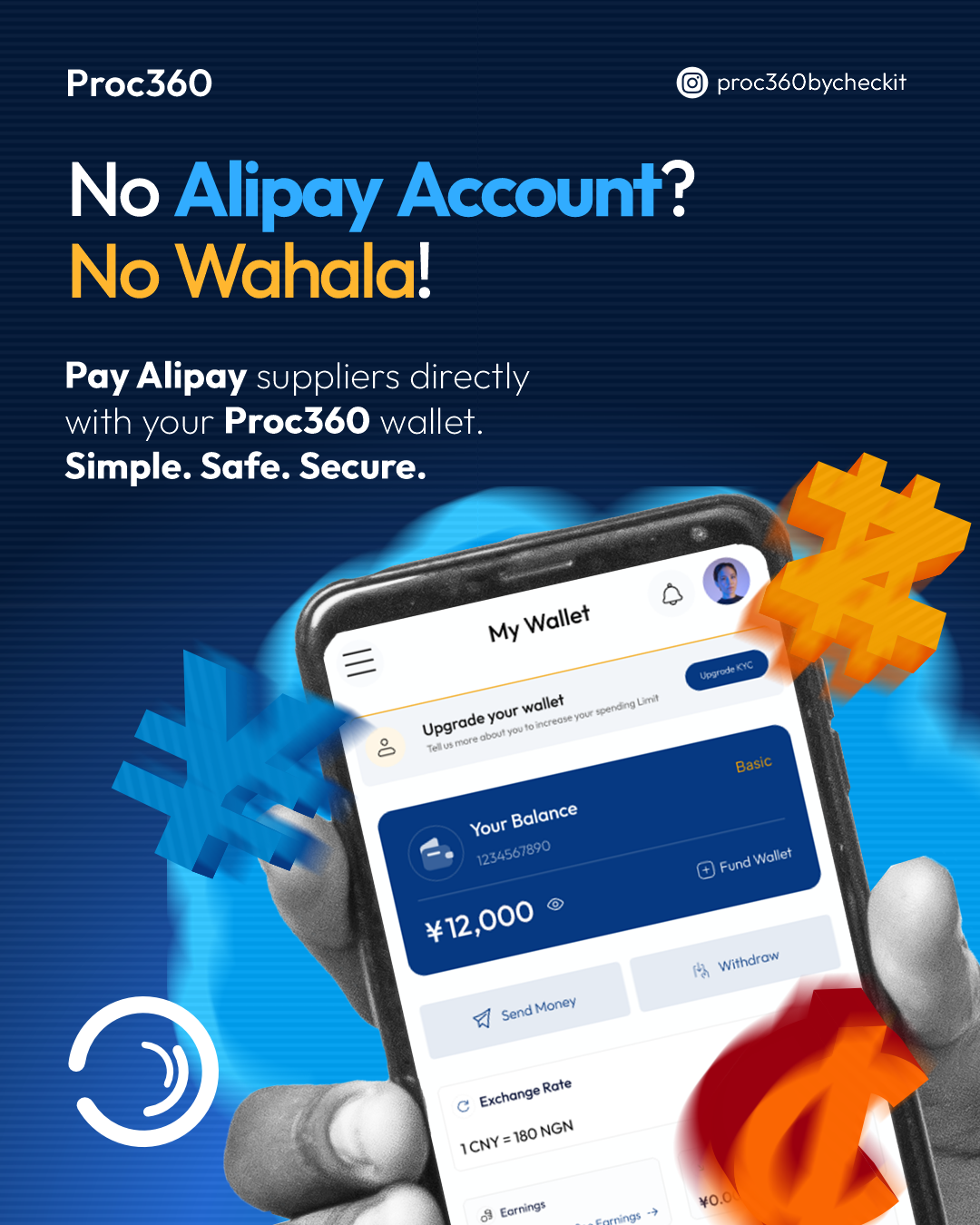
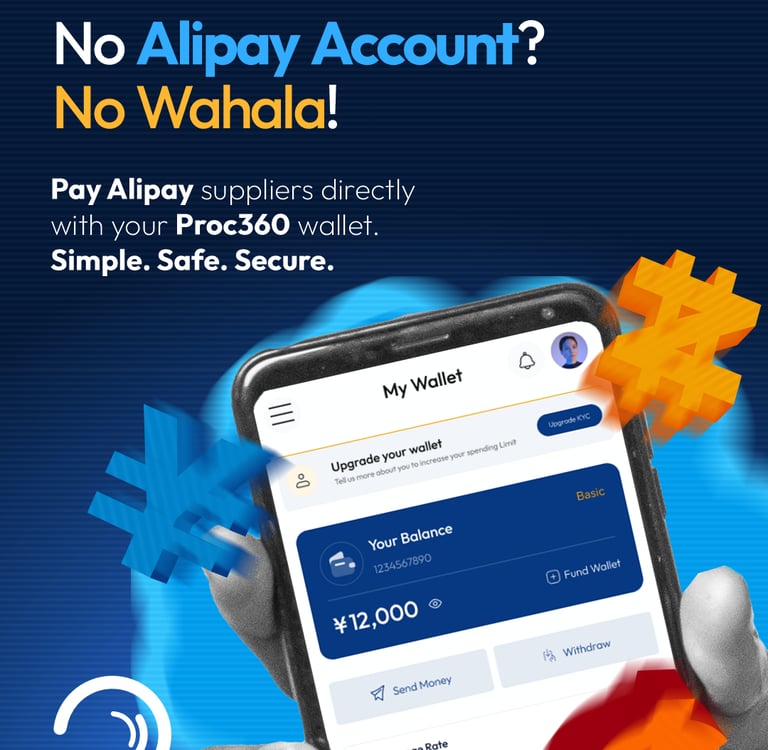
Pay through a secure method like Proc360 wallet, so your funds are safe and easily accessible, no limits, no Alipay wahala.
Step 7: Communicate With Customers Throughout
This is where most pre-order businesses in Nigeria fail. They collect money, go quiet for weeks, and then reappear when goods arrive, leaving customers anxious and suspicious in between.
Send updates at every stage:
- "Your order is confirmed. We've placed the order with our supplier in China."
- "Your goods are now in transit. Expected arrival [date]."
- "Your goods have arrived in Nigeria and are being processed through customs."
- "Your order is ready. Here's how to arrange delivery/pickup."
Each update builds trust. Customers who are kept informed are far more likely to pre-order again, and to refer friends.
Step 8: Deliver and Follow Up
Deliver exactly what was ordered. Check items against orders before dispatching.
After delivery, follow up. A simple WhatsApp message like:
"Hi [Name], I hope your [product] arrived safely. Please let me know if everything is as expected"
It opens a conversation that can become a testimonial, a repeat order, or a referral.
How to Handle Pre-order Problems If They Happen
Shipment delays, customs holds, and goods arriving with minor defects are part of importing. How you handle them determines whether your pre-order business survives them or not
If goods are delayed:
Notify customers as soon as you know, before they start chasing you. Explain what happened and give a revised date. Offer a partial discount on a future order as goodwill, not a refund of the full amount, which may not be possible if supplier funds have already been committed.
If goods arrive damaged or wrong:
Photograph and document everything immediately. Contact the supplier with evidence and request resolution — replacement, partial refund, or credit. For Alibaba Trade Assurance orders, open a dispute through the platform. Communicate transparently with affected customers and offer a solution.
(Read our article on what to do when your goods arrived damaged)
If a customer wants a refund:
Your terms should be clear upfront on when refunds are and aren't possible. After you've placed an order with the supplier, a full refund is genuinely difficult because your money is committed. Be honest about this.
Most customers understand if you've communicated clearly throughout.
Categories that work well for pre-order in Nigeria
- Fashion and clothing (seasonal collections, trending styles)
- Skincare and beauty tools
- Kitchen gadgets and home appliances
- Phone and tech accessories
- Baby and children's products
- Gym and fitness equipment
- Custom and private label products
- Home décor and organisation
How to Structure Your Pre-order: Two Models
Model 1: Full Payment Upfront
Customers pay 100% of the price before you order goods. You use the collected funds to pay the supplier and shipping.
Best for: Established sellers with a loyal customer base who trust you to deliver. Existing communities you've built on WhatsApp or Instagram.
Risk: If goods are delayed or arrive damaged, customers want immediate refunds you may not be able to give, because the money has already been spent with the supplier.
Solution: Keep a small percentage of the collected funds (10–15%) as a buffer for emergencies. Be explicit in your terms that goods are non-refundable after the order is placed with the supplier, except in cases of non-delivery.
Model 2: Deposit + Balance on Arrival
Customers pay a deposit (typically 30–50% of the price) to secure their order. The balance is paid when goods arrive in Nigeria and are ready for pickup or delivery.
Best for: Higher-ticket items, customers new to your business, or situations where the wait time is longer than four weeks.
Risk: Some customers may not pay the balance when goods arrive. This is a real risk, so you may have to add the percentage of expected non-completions into your financial planning.
Solution: Communicate the payment structure clearly upfront. Use written agreements or WhatsApp messages that confirm the deposit terms. Charge a non-refundable deposit so you're covered for the goods you've committed to ordering.
Step-by-Step: Running Your First Pre-order Round
Step 1: Choose and Research Your Product
Before you open a single pre-order, know your numbers completely.
- What does the product cost from your Chinese supplier (FOB price)?
- What are the shipping costs? (Air freight per kg, or sea LCL per CBM)
- What is the estimated import duty on this product category?
- What is your clearing and last-mile delivery cost in Nigeria?
Add all of these up to get your landed cost per unit. Then set your selling price at a margin that makes the business worthwhile: typically 40–100% markup on landed cost, depending on the product and market.
Do not open pre-orders without knowing your full landed cost. Many beginners price based on the China cost alone and are shocked when shipping and duties consume their margin.
Step 2: Source and Verify Your Supplier
For a pre-order business to work, your supplier must be reliable. A delayed or wrong shipment costs you money, and worse still, it destroys the customer trust that makes the next pre-order possible.
- Order a sample before you open pre-orders on any new product. Confirm quality, dimensions, and packaging.
- Use Alibaba Trade Assurance where possible — your payment is protected if goods don't match the description.
- For regular purchases, work with verified suppliers you've used successfully before.
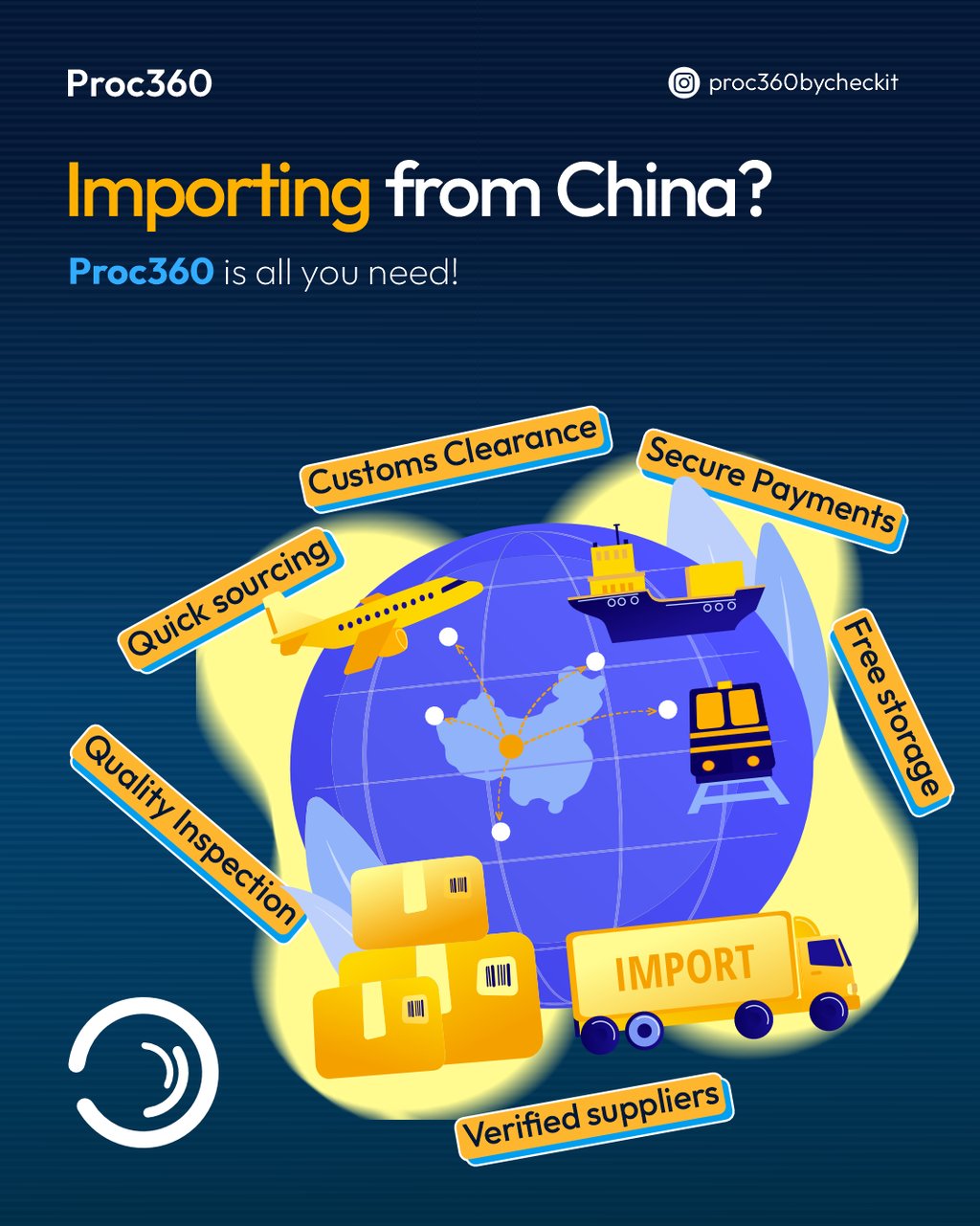
The best way to handle the step is to work with Proc360. The platform gives access to only verified suppliers and the best rates for every product.
Pro Tip: Never open a pre-order for a product you haven't sampled. Customer expectations are built from the photos you post. If the real product is different, the entire experience falls apart.
Step 3: Set Your Pre-order Window and Timeline
A pre-order window is the period during which you accept orders before placing them with the supplier. A typical pre-order round for China goods runs 7–14 days. This is long enough to collect meaningful order volume; short enough that customers don't lose interest or forget they've paid.
Be honest about your timeline. Communicate:
- When the pre-order closes
- When you will place the order with the supplier
- Estimated production/processing time (if applicable)
- Shipping time to Nigeria (air: 7–14 days; sea: 35–50 days)
- When customers can expect delivery
Pro tip: If you think goods will arrive in 4 weeks, tell customers 5–6 weeks.
Under-promise and over-deliver. Arriving early with customers' goods builds more loyalty than any marketing campaign.
Step 4: Market Your Pre-order
Pre-orders are sold on anticipation and trust. Your marketing needs to do both.
Show the product well: High-quality photos or short videos of the sample you received, or the supplier's product images are your sales tool.
Show the product in use. Show packaging. Show details.
Be transparent about the wait: Explain that this is a pre-order, what that means, and why (you're sourcing directly from China to give them better prices). Many customers respond positively to the behind-the-scenes reality of how importing works.
Create real urgency: Pre-orders genuinely have a closing date. Communicate it. "Pre-order closes Friday 6pm. Orders placed after this date will not be included in this shipment." This is not artificial scarcity, it's the reality of how batch ordering works.
Channels that work for pre-orders in Nigeria:
- WhatsApp broadcast lists and communities
- Instagram and TikTok product videos with clear CTA
- Facebook groups relevant to your product category
- Referral incentives for existing customers
Building a Repeat Pre-order Business
A single successful pre-order is a transaction. Ten successful rounds is a business.
Each round, you learn: which products your audience responds to, which marketing messages convert, what timeline expectations your customers actually have, and which aspects of fulfillment you need to improve.
The importers and vendors in Nigeria running pre-order businesses as their primary income aren't doing anything fundamentally different from their first round, they're just doing it with a larger customer base, more refined operations, and stronger supplier relationships built over time.
Start with one product category you understand. Run one round. Deliver on time. Ask customers for feedback. Improve. Repeat.
Above all, use a reliable platform like Proc360 to ensure your business runs smoothly, easily and profitably.