How to Negotiate 20% Lower MOQs with Chinese Suppliers
Struggling with high MOQs? Discover how to negotiate up to 20% lower minimum order quantities with Chinese suppliers—plus scripts you can use today.
GROWING BUSINESSGETTING STARTED
Jacob Ehigie
3/12/20267 min read
You find the perfect product on 1688. The quality is right, the price makes sense, and the supplier looks legit. Then you see it — minimum order quantity: 500 units. Your budget covers 150.
Most importers stop there. They either stretch their budget to hit an MOQ they cannot really afford, or they walk away and settle for a more expensive option. But there is a third move that most people never try: negotiating.
MOQs are not as fixed as suppliers make them appear, and if you approach the conversation correctly, you can bring that number down — sometimes by 20% or more. This guide gives you the exact tactics, timing, and scripts to do it directly, whether you are sourcing on Alibaba, 1688, or through Proc360.


What Is MOQ and Why Does It Exist?
MOQ stands for Minimum Order Quantity — the smallest number of units a supplier is willing to produce or sell in a single order. Suppliers set MOQs to protect their margins. Every production run has fixed costs: machine setup, raw material procurement, labour, and packaging. When a factory quotes an MOQ of 300 units, it is telling you that producing fewer than 300 units at the listed price does not cover those fixed costs profitably.
This is important because it tells you exactly where the flexibility lives. Standardised products with common materials have the most room to negotiate. Custom products with unique components or moulds have the least. Understanding this logic is what separates importers who successfully lower their MOQs from those who just ask and get told no.
A normal MOQ for consumer goods on Alibaba typically ranges from 50 to 500 units depending on the product. On 1688, domestic MOQs can be as low as 10 to 30 units for standard items, but suppliers may quote higher when they realise they are dealing with an international buyer.
When Are Suppliers Most Flexible?
Timing your negotiation matters as much as what you say. Suppliers are significantly more open to lower MOQs in three situations:
Off-peak production seasons. For most Chinese factories, this is the period immediately after Chinese New Year (February to March) and the slower summer months of July and August. Production lines are quieter, orders are fewer, and suppliers are more motivated to fill capacity with smaller orders rather than wait for big ones.
When they have existing stock. Cancelled orders and production overruns leave factories holding inventory they need to move. If you ask — "Do you have any existing stock available for this product?" — you may be able to buy at or below your target quantity immediately, often at a lower per-unit price too.
When you are a new but serious buyer. A supplier who believes in the long-term potential of your business is far more willing to bend on the first order. Your job is to make them believe that before you start talking numbers.
7 Tactics That Actually Work
1. Lead with long-term business, not just your current order.
Before you mention any specific quantity, establish the bigger picture. Tell the supplier this is a test order and that regular orders will follow if quality meets your standards. Suppliers respond to volume and long-term commitment far more than to a single purchase. When they see recurring business on the horizon, lowering the first-order MOQ becomes an investment, not a concession.
2. Offer a higher unit price for a lower quantity.
This is the most direct trade-off and the one suppliers respond to fastest. If the standard MOQ is 500 units at ₦2,500 each, offer 150 units at ₦3,000 each. Your total outlay drops significantly, and the supplier still covers their setup costs. The premium you pay per unit on a smaller order is almost always less than the cost of sitting on unsold inventory if the product does not move as expected.
How Proc360 Helps You Negotiate Better Terms
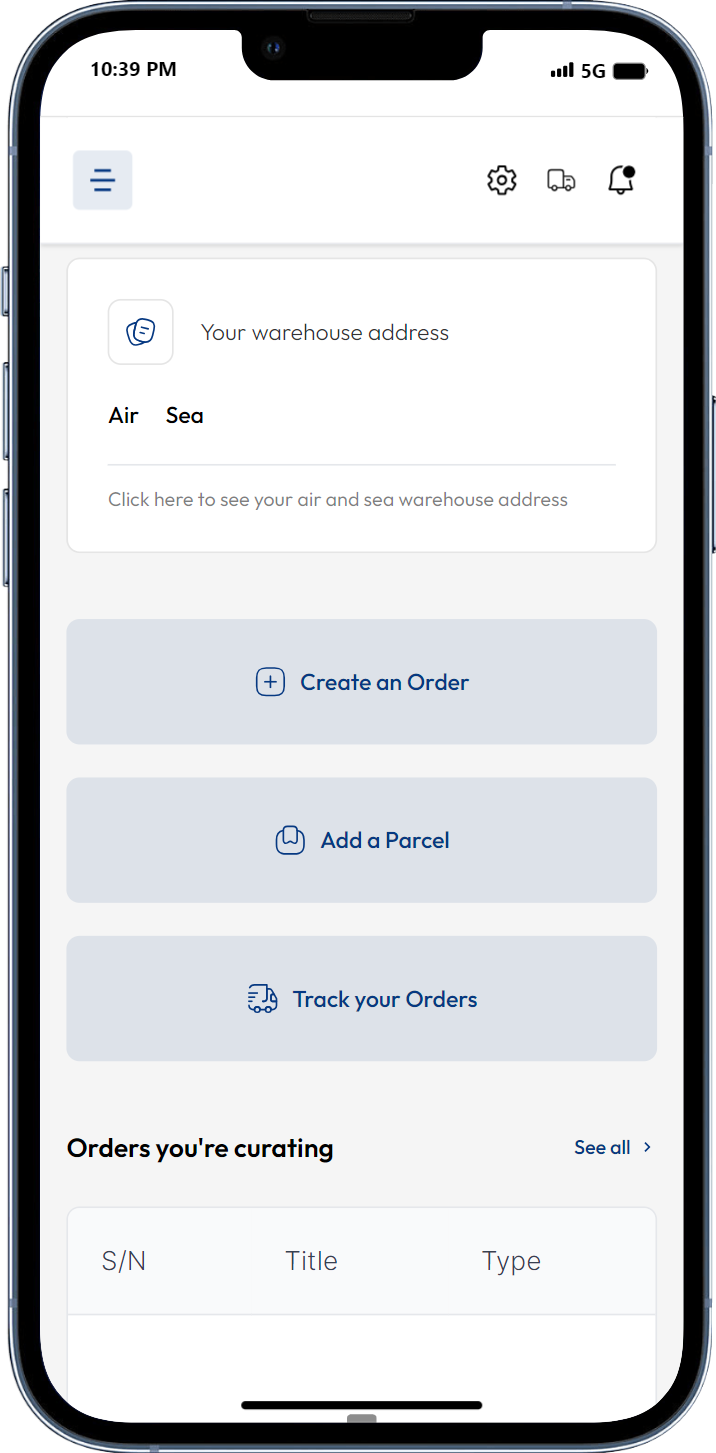
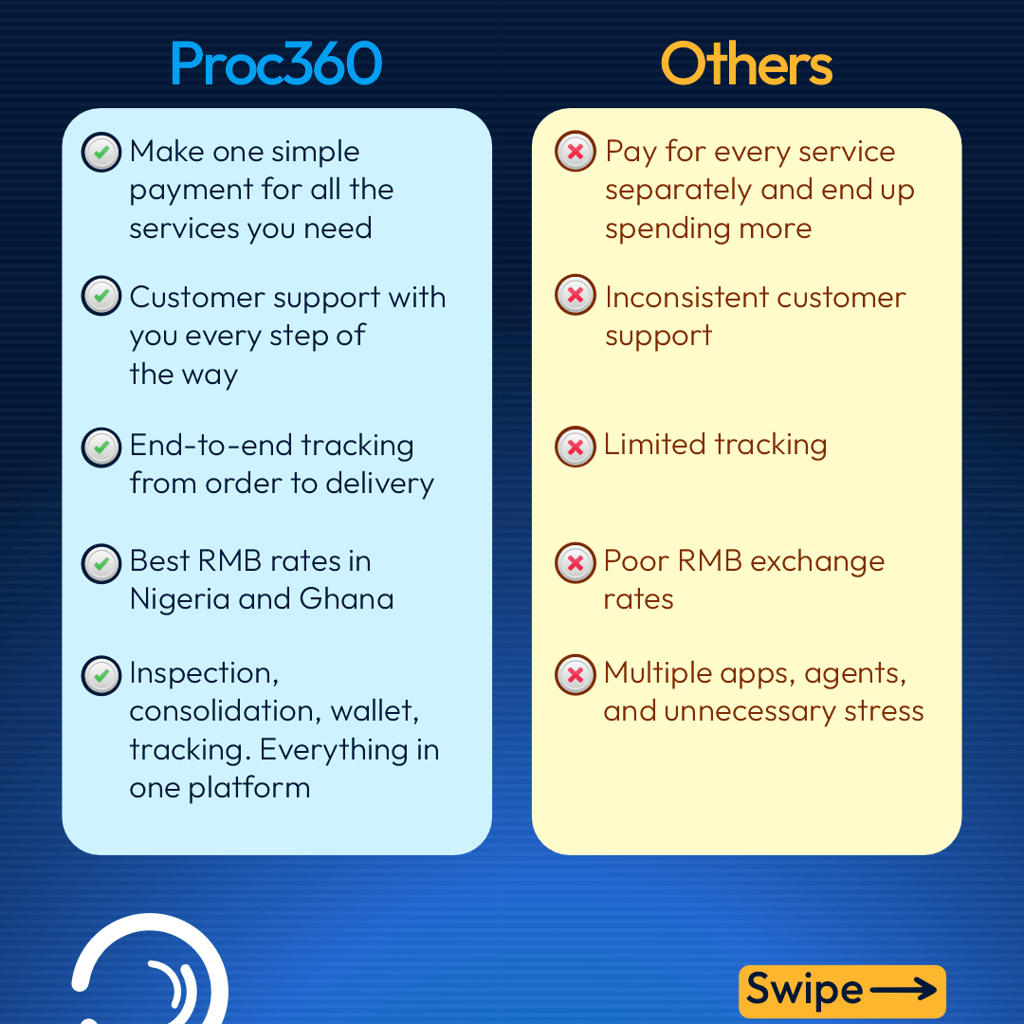
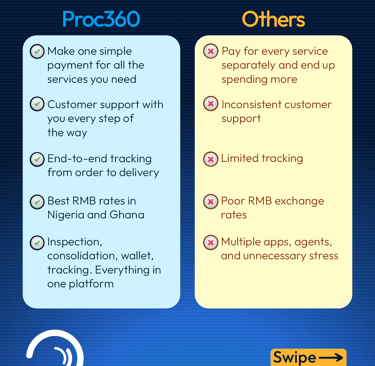
When you source through Proc360's Buy For Me feature, the team communicates with suppliers directly in Chinese — which removes the language barrier that often puts Nigerian importers at a disadvantage during negotiations. You share your product links or descriptions, specify your target quantity, and Proc360 sources from verified suppliers with established export track records who are already accustomed to working with African buyers.
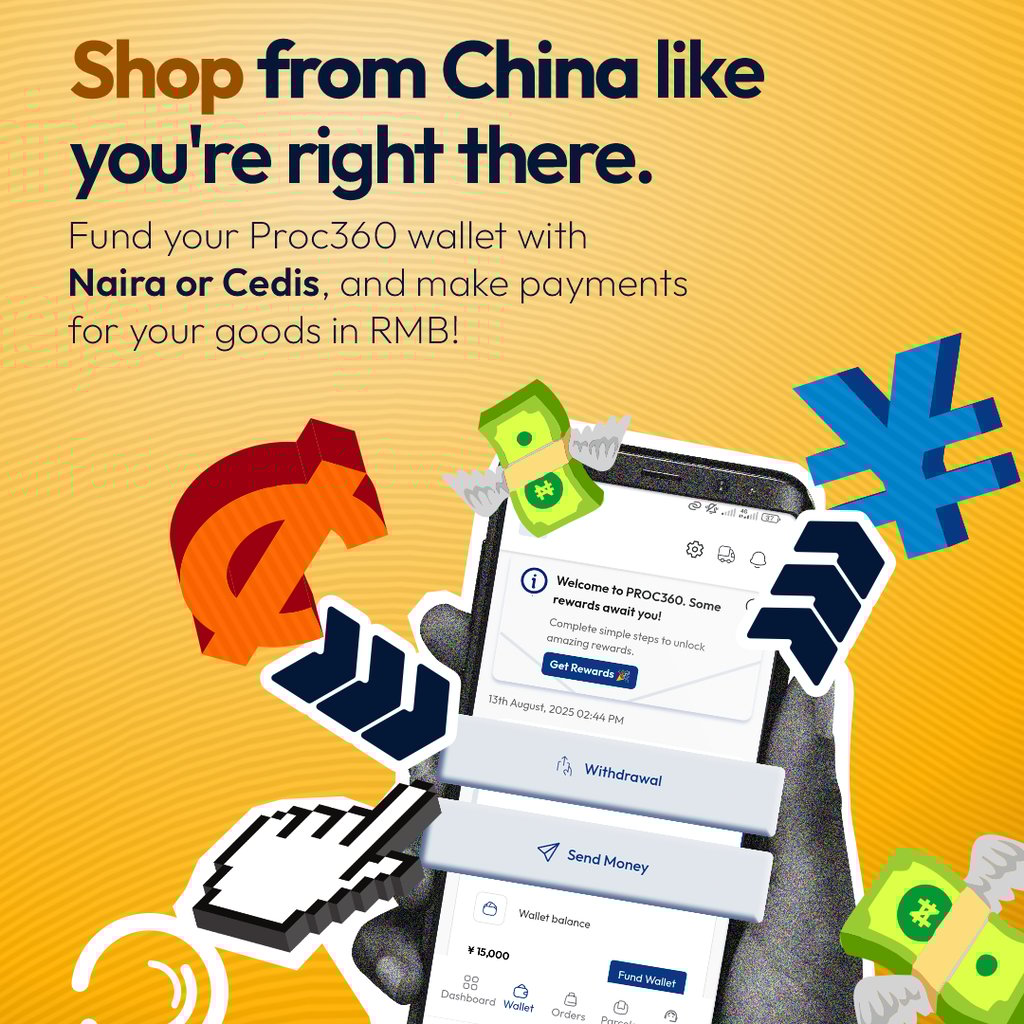
And once you have negotiated your MOQ down, your RMB Wallet lets you pay your supplier directly in Chinese Yuan at live market rates — so the savings you worked hard to negotiate do not get quietly eaten up on the payment side through bad exchange rates or transfer fees.
Ready to start sourcing smarter from China? Sign up on Proc360 and access verified suppliers on 1688 and Alibaba — with RMB payments sorted, quality checks available, and doorstep delivery to Nigeria or Ghana. Your first order is free.
3. Remove or delay customisation.
Custom logos, branded packaging, unique colours, and product modifications all drive MOQs up because they require additional setup. If you can place your first order on a standard, off-the-shelf product and add branding on your second order once you have confirmed demand, do it. You will find the MOQ drops significantly when the factory does not have to reconfigure anything specifically for you.
4. Mix variants to reach their MOQ threshold.
Instead of ordering 300 units of one product, ask if you can order 100 units each of three colour or size variants to reach the same 300-unit total. Many suppliers are happy with this arrangement because their production run still hits the same total, and it gives you the added benefit of testing which variant sells best in your market.
5. Ask about existing inventory before negotiating production.
Many importers go straight into negotiating a new production run without asking the obvious question first: "Do you have any stock of this item already available?" Factories regularly hold unsold inventory from cancelled orders or overproduction. If stock exists, you may be able to buy exactly what you need with no MOQ conversation required at all. Try this message: "Before we discuss a new production run, do you have any existing inventory for this product I can order from?"
6. Target smaller factories.
A factory with 20 workers has different economics from one with 500. Smaller manufacturers need your order more, and a smaller production run is proportionally more meaningful to their capacity. On 1688 and Alibaba, you can filter by company size and focus on small-to-medium workshops first. They are more likely to negotiate, more likely to give you attention, and often just as capable of producing good quality products.
7. Split an order with another importer.
If you are in a WhatsApp importer group, an online community, or the Proc360 community, connect with other importers sourcing similar products. A joint order lets each party get a lower effective MOQ while the supplier still receives their full quantity. Two importers ordering 150 units each hit a 300-unit MOQ without either one carrying more than they need.
Scripts You Can Copy and Send Right Now
These messages are written for WhatsApp or Alibaba/1688 chat. Run them through Google Translate if messaging in Chinese.
Script 1 — First order with future commitment:
"I am interested in [product name]. Your MOQ is [X] units but I would like to start with [Y] units to test the market in Nigeria. If the quality meets my standards, I plan to order [2–3x your first order] every [timeframe]. Can we agree on [Y] units for this first order?"
Script 2 — Higher unit price offer:
"I understand your MOQ is [X] units. I can currently order [Y] units. I am happy to pay a slightly higher unit price to make this work for both of us. What is your best price for [Y] units?"
Script 3 — Existing stock inquiry:
"Before we discuss a production order, do you have any existing inventory for this product? I am looking to place a smaller order and would be happy to buy from current stock."
Script 4 — Mix and match variants:
"Can I order [Y] units in [colour/size A] and [Y] units in [colour/size B] to reach your MOQ total? I want to test both variants in my market."
Is a Lower MOQ Always Better?
Not always. A lower MOQ almost always means a higher unit price, which reduces your margin per item. The question to ask yourself is: what costs you more — paying slightly more per unit on a smaller order, or tying up your capital in 500 units you might not sell within 60 days?
For products you are testing for the first time, a lower MOQ is almost always the smarter move. You protect your cash flow, avoid dead stock, and gather real sales data before committing to bulk. For products you have already validated and know move fast, meeting the full MOQ and getting the better unit price is often worth it.
The real risk of MOQ is not the quantity itself — it is ordering too much of a product before you have confirmed your market wants it. That is the mistake that sets most Nigerian importers back.
What to Do If a Supplier Says No
Not every negotiation will go your way on the first try. If a supplier holds firm, try these moves before walking away:
Counter with a compromise quantity. If their MOQ is 500 and you want 100, do not stop at 100. Counter with 250. Meeting them in the middle shows good faith and often unlocks a deal that a low opening offer could not.
Ask about a setup fee arrangement. Some factories will agree to a lower quantity if you pay a one-time setup fee upfront to cover their fixed production costs. This fee typically does not recur on future orders once you scale up.
Put a purchase order in writing. Sending a formal purchase order document — even before the deal is confirmed — signals seriousness. Suppliers respond differently to a committed buyer with paperwork than to someone chatting informally.
Walk away and try another supplier. Always have two or three backup suppliers researched before entering any negotiation. The moment you have alternatives, you negotiate from a position of strength, not desperation.