How to Navigate 1688.com Without Speaking Chinese (Step-by-Step for Nigerians)
A step-by-step guide for Nigerian importers on using 1688.com without speaking Chinese. Learn how to search, translate, communicate, pay, and ship successfully.
GROWING BUSINESSGETTING STARTED
Ugbe Zurishaddai
6/9/20265 min read


1688.com sells the same products you'll find on Alibaba, often 20-40% cheaper, because it's built for Chinese domestic buyers rather than international ones. The catch: the entire site is in Mandarin, suppliers rarely speak English, and payment runs through Chinese systems that don't recognise a Nigerian bank card. None of that makes it unusable — it just means you need the right workarounds. Here's exactly how to do it.


Step 4: Contact the Supplier the Right Way
1688's built-in chat tool is called WangWang. This is where you'll message suppliers directly to ask about pricing, MOQ, customisation, and availability.
Since most 1688 suppliers don't speak English, write your message in simple, short English sentences first, then run it through Google Translate into Chinese before sending. Avoid idioms, slang, or complex sentence structures — they translate poorly and create confusion. "Can you ship to a freight forwarder in Guangzhou?" translates far more reliably than "Would you be able to sort out shipping to our agent's warehouse?"
Some buyers find that messaging suppliers on WeChat instead of WangWang gets faster, more serious responses. WeChat is the default messaging app for virtually everyone in China, has a strong built-in translation feature, and signals to a supplier that you're a real, prepared buyer rather than someone randomly browsing. If a supplier shares a WeChat ID or QR code, it's worth adding them there for ongoing communication.
Keep your first message specific: what the product is, your target quantity, and your destination (Nigeria, via a freight forwarder in China). Vague messages get ignored or deprioritised — suppliers on 1688 deal with high message volume and respond fastest to buyers who are clearly serious.
Step 5: Understand Pricing and MOQ Without Confusion
Prices on 1688 are listed in RMB (Chinese Yuan), and many listings show tiered pricing — the more units you order, the lower the per-unit price. This is usually displayed as a small table near the price, showing quantity breaks like "2-5 units" at one price and "6-23 units" at a lower price.
The MOQ (minimum order quantity) is shown just under the price, sometimes labelled "Lots" or "Starting Batch." This tells you the smallest quantity a supplier will sell. Some 1688 suppliers offer surprisingly low MOQs — occasionally as low as 1-2 units for testing — which makes the platform genuinely useful for small Nigerian importers sampling new products, not just bulk buyers.
Always convert RMB prices to naira at the actual rate you'll be paying (not the mid-market rate you see on Google), since the gap between displayed and effective rates can meaningfully change whether a product is actually cheaper than your Alibaba alternative.
Step 6: Solve the Payment Problem
This is where most Nigerian buyers get stuck. 1688 is built around Chinese payment rails — Alipay and WeChat Pay — both of which are tied to Chinese bank accounts. A Nigerian debit or credit card generally won't work directly on the platform.
There are a few ways around this. Some cross-border payment services are now authorised to process 1688 payments in foreign currency, converting your payment and routing it to the supplier in RMB. Sourcing agents based in China can also pay suppliers on your behalf using their own Alipay or domestic banking access, then bill you in USD or have you fund a wallet they manage. Whichever route you use, never pay a supplier through an informal, off-platform channel just because they ask for it — this is one of the most common ways foreign buyers get defrauded on Chinese platforms.
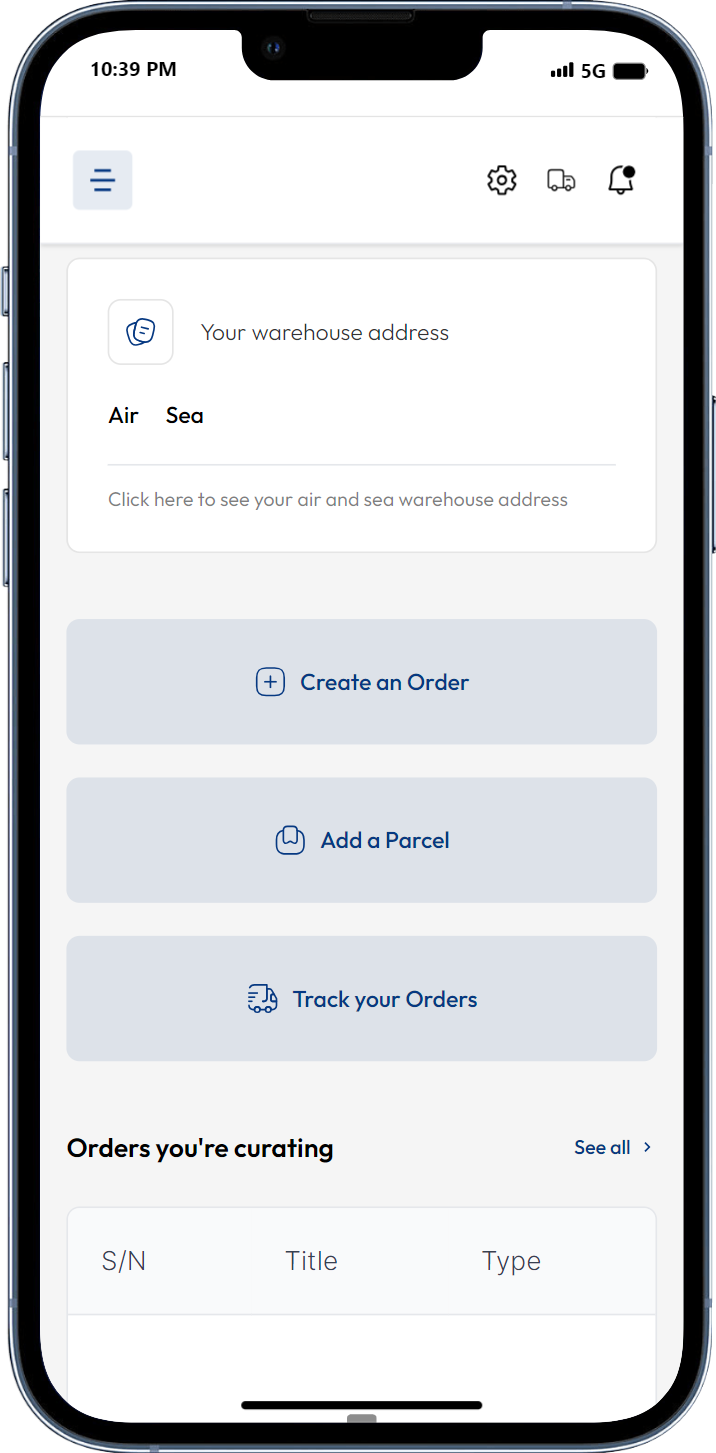
The best and safest way to make payments is actually with the Proc360 Wallet. It's secure and enables you to make payments to verified Chinese Suppliers, including Alibaba suppliers.
Try it out at proc360.app
Step 7: Plan for Shipping (1688 Suppliers Ship Domestically Only)
Most 1688 suppliers are set up to ship within China, not internationally. This means you need a domestic address inside China — typically a freight forwarder's warehouse — where your supplier sends the goods. From there, your forwarder consolidates, packages, and ships everything to Nigeria as one international shipment.
This is also where consolidation becomes valuable if you're sourcing from multiple 1688 suppliers at once. Rather than each supplier separately handling shipment to a warehouse, everything funnels into one address, gets combined into a single shipment, and moves to Nigeria together — saving you the cost of multiple separate freight charges.


Where Proc360 Removes Most of This Friction
Everything above is genuinely doable on your own — but it takes time, patience, and tolerance for the occasional miscommunication. For Nigerian importers who'd rather skip the manual work, you can send in pictures, links or your product description in English to Proc360's Buy For Me tool.
It finds verified suppliers and presents you with quotes that give the best value for your money.
You can also pay suppliers safely through the Proc360 Wallet, or even save your capital there in RMB.
Test it out for yourself at proc360.app!


Step 1: Get a Browser That Translates Automatically
Before anything else, set up your browser to translate Chinese pages automatically. Google Chrome does this natively — open 1688.com, right-click anywhere on the page, and select "Translate to English." The whole page, including product titles, descriptions, and supplier information, converts instantly.
It won't be perfect. Machine translation of Chinese product listings sometimes produces awkward phrasing or misses context. But it's more than good enough to understand what a product is, what it costs, and what the minimum order quantity is — which covers most of what you need at the browsing stage.
One limitation worth knowing: browser translation only works on text. Product specifications embedded inside images — which is common on 1688 — won't translate. If a key detail (material, size chart, certification) is shown as text inside a photo, you'll need to screenshot it and run it through a separate image translation tool, or ask the supplier directly.
Step 2: Search Smart, Even Without Knowing Chinese
You don't need to learn Mandarin to search effectively. Type your search term in English into Google Translate, copy the Chinese characters it gives you, and paste that into 1688's search bar. Chinese-language search terms consistently return better, more relevant results than English search terms typed directly into 1688, because the platform's search engine is built around Chinese keywords.
For product categories you'll search often — phone accessories, skincare bottles, fashion items, electronics — keep a running list of the Chinese terms you've used before so you're not retranslating the same search every time.
Step 3: Read Supplier Credibility Signals (Even in Translation)
Once you find a product, you need to judge whether the supplier is legitimate before going further. Look for the Chengxintong badge (诚信通) — this is 1688's verified, creditworthy supplier programme, roughly equivalent to Alibaba's Gold Supplier status. A supplier with this badge has been on the platform long enough and has a strong enough transaction history to be vetted.
Also check the supplier's years on the platform, their response rate, and the number of completed transactions shown on their profile — all of which usually translate cleanly even with basic browser translation. A supplier with a long history and high transaction volume is a safer starting point than one with no track record, regardless of how attractive their pricing looks.