How to Import iPhones and Phones from China to Nigeria
Learn how to import iPhones and Android phones from China to Nigeria, including sourcing, phone grading, SONCAP requirements, shipping costs, and profit calculations.
GROWING BUSINESSGETTING STARTED
Ugbe Zurishaddai
9/21/20268 min read


Phone importation is one of the most active import categories in Nigeria and one of the highest-risk. Demand is constant — Computer Village in Lagos alone turns over billions of naira in handset transactions weekly — but the margins are thin, the product knowledge required is specific, and the difference between a profitable batch and a loss comes down to grading accuracy, supplier verification, and whether you inspected before you paid.
This guide covers used iPhones and Android phones imported from China: what to buy, how to grade, where to source, what compliance applies, and how to calculate whether a batch is actually worth ordering.


iPhone Grading: What the Letters Actually Mean
There is no universal grading standard in the Chinese phone wholesale market. Grade A from one supplier is Grade B from another. Before you accept any grading claim, request the supplier's written grading standard and confirm each of the following is specified:
Screen: Original Apple display vs aftermarket OLED vs aftermarket LCD. An original Apple screen on a used iPhone retains True Tone and Face ID integration. An aftermarket screen loses True Tone and may have colour accuracy issues. Price difference between original and aftermarket screen units is typically 15–40 per unit depending on the model.
Battery health: This is the single most important resale factor in Nigeria. A battery below 80% will be flagged by iOS and will visibly degrade performance. Request battery health percentage for every unit in a batch, not a batch average. An iPhone 12 at 90%+ battery health is a different product from the same model at 75%.
Parts history: iOS shows a warning in Settings > General > About for non-genuine Apple parts on iPhones (cameras, screens, batteries). A batch labelled "original parts" should have no parts warnings visible in Settings. Always verify this on sample units before buying.
Face ID / Touch ID: Non-functional Face ID or Touch ID is a significant resale problem in Nigeria. Confirm function on sample units directly.
iCloud / activation lock status: An iCloud-locked iPhone cannot be activated and is worthless for resale. Every unit in a batch must be iCloud-clean. Verify by powering on and attempting setup, or checking the IMEI at checkcoverage.apple.com.
Network lock: Confirm whether units are locked to a specific carrier or unlocked. Most foreign used iPhones imported into Nigeria should be unlocked to work on MTN, Airtel, Glo, and 9mobile. A carrier-locked phone significantly limits your resale market.
Housing condition: Grading A typically means no visible scratches or dents. Grade B allows minor scratches on the housing but no screen damage. Grade C allows visible marks. Get photos of actual units, not stock images, and be specific about what is acceptable for your customer base.
Android Phones: Different Risks, Different Checks
For Android phones from Chinese manufacturers — Tecno, Infinix, itel, Xiaomi, Samsung, OPPO — the grading conversation is similar but the technical specifics differ.
Region and network bands matter critically. A phone manufactured for the Chinese domestic market (CN variant) may not support Nigerian 4G bands (Band 3 and Band 20 are the primary ones for MTN and Airtel). Always confirm the model variant is the international version, not a CN-specific release.
Storage and RAM should be confirmed against Nigerian market demand — 128GB storage and 6GB RAM have become the baseline expectation in the Nigerian mid-range market as of 2026.
Charger type has shifted to USB-C across most categories, but confirm this on older batch units where Micro-USB chargers reduce resale value.
Samsung specifically: Samsung phones from the US market (Snapdragon chipset) and international markets (Exynos chipset in some regions) perform differently. Snapdragon variants are generally preferred and command a price premium in Nigeria.
SONCAP: The Compliance Requirement Most Phone Importers Skip
All mobile phones imported into Nigeria from China require a SONCAP Product Certificate (PC) before they can legally clear Nigerian customs. SONCAP certification covers telecommunications equipment under SON's regulated product schedule.
This is not a theoretical risk. NCS enforcement of SONCAP on phone consignments has increased at Apapa and Tin Can Island. A batch of 200 phones arriving without a valid SONCAP PC will be held at the port. Clearance requires obtaining a default SONCAP post-arrival, which is more expensive and slower than getting one pre-shipment in China.
Your SONCAP must be obtained in China before the goods ship, through a SONCAP-approved inspection and certification body. The process involves sampling and testing against the relevant IEC standard for telecommunications equipment. Your sourcing agent or freight forwarder should coordinate this — if they are not raising it proactively, raise it yourself.
Shipping Phones to Nigeria: Air vs Sea
Air freight is the standard shipping method for phone batches because of the value-to-weight ratio and the speed advantage for fast-moving inventory. Air freight from Shenzhen or Guangzhou to Lagos (Murtala Muhammed Airport cargo terminal, NAHCO) takes 5–10 days and costs approximately ₦8,000–₦18,000 (5–11) per kilogram. A batch of 50 iPhones at roughly 7kg (including packaging) costs ₦56,000–₦126,000 (35–79) in air freight — a small fraction of the batch value.
Sea freight makes sense only for very large volumes — 500+ units — where the freight cost saving over air justifies the 35–45 day transit time and the capital tied up in slower-moving inventory.
Lithium batteries, which phones contain, require specific dangerous goods documentation for air freight. Your freight forwarder must submit an MSDS (Material Safety Data Sheet) and UN38.3 certification for the battery cells. Reputable agents handle this routinely — confirm it is included in their service before booking.


New vs Refurbished vs Foreign Used: Define Your Category First
These three categories are sold in China under different conditions, priced differently, and carry different risk profiles. Mixing them in your planning is where most first-time phone importers go wrong.
New, sealed phones are factory-fresh units in original packaging with full manufacturer warranty. Chinese domestic market phones (often labelled CN or A2xxx model numbers for iPhones) are available new from authorised distributors and large trading companies in Shenzhen and Huaqiangbei. Price is close to international retail with minimal margin available for Nigerian importers unless you are buying at significant volume. For iPhones specifically, new units are better sourced through authorised Apple distributor channels in the UAE or UK than from China, where grey market pricing and CN-spec variants create complications with Nigerian buyers expecting international warranty.
Refurbished phones are used devices that have been disassembled, cleaned, repaired where necessary, and repackaged by a refurbishment company. Quality varies enormously — a professionally refurbished iPhone 13 Pro from a Shenzhen-based refurbisher with certified technicians and a genuine Apple screen is very different from a refurbished unit where the screen, battery, and housing have been replaced with aftermarket parts. The grade label (A, B, C) means nothing without a written grading standard from the specific supplier.
Foreign used phones (what the Nigerian market calls "Tokunbo" or "UK used" or "US used") are pre-owned devices collected in Europe, the United States, Japan, or South Korea, aggregated by exporters, and sold in bulk to wholesale buyers in Guangzhou and Shenzhen. These make up the majority of the used iPhone market in China's Huaqiangbei district. They are the most commonly imported phone category into Nigeria, with the widest range of quality and the highest need for rigorous pre-purchase inspection.
Decide which category you are building your business around before you contact a single supplier. The sourcing location, the grading conversation, and the inspection process are different for each.
Where Chinese Phone Wholesale Actually Happens
Huaqiangbei, Shenzhen is the largest electronics wholesale market in the world and the primary sourcing point for used iPhones and Android phones imported into Nigeria. The SEG Electronics Market, Mingtong Digital City, and surrounding streets contain thousands of stalls and wholesale units dealing in used handsets, refurbished devices, spare parts, and accessories. This is where Nigerian importers with buying agents in China get the most competitive pricing on used iPhones.
Alibaba and 1688 list phone wholesalers, but Huaqiangbei pricing accessed through a local agent is generally lower than what Alibaba suppliers can offer, because Alibaba suppliers have platform fees, Trade Assurance costs, and international overhead built into their price. A 1688 search for used iPhone batches (二手iPhone批发) will surface wholesale listings closer to Huaqiangbei pricing, but requires a Chinese-language agent and Alipay payment.
Guazi and Jianadan are Chinese platforms for individual used phone listings, relevant for sourcing specific high-grade units rather than bulk batches.
For most Nigerian importers starting out, a verified buying agent in Shenzhen with Huaqiangbei access is the most practical sourcing route — they physically inspect individual units or batches before purchase, which no online platform can substitute for.
Calculating Whether a Phone Batch Is Actually Profitable
This calculation is where many Nigerian phone importers underestimate their costs. Work through each line before ordering.
Take a batch of 50 used iPhone 13 units, Grade A, original screen, 85%+ battery, iCloud clean, at $180 per unit from a Shenzhen supplier:
Product cost: 50 × $180 = $9,000 (approximately ₦14.4 million)
Air freight (7kg): approximately ₦80,000
SONCAP certification: approximately ₦150,000–₦250,000 per batch
Import duty on phones: 20% of CIF value (confirm current rate with your clearing agent — phone duty classification has shifted)
CISS levy at 1% of CIF
VAT at 7.5%
Clearing agent fee: ₦200,000–₦400,000
Total additional cost estimate: approximately ₦3.5 million–₦4.5 million
Total landed cost per unit: approximately ₦360,000–₦380,000 (225–237)
iPhone 13 current retail price in Computer Village as of mid-2026: ₦420,000–₦480,000 for Grade A, original screen.
Margin per unit: ₦40,000–₦120,000 (25–75), depending on your negotiated purchase price, your grading accuracy, and how quickly the batch moves. Factor in defect allowance — even well-graded batches typically produce 3–8% units requiring return, repair, or price reduction.
The math works only if you negotiate the right purchase price, verify the grading precisely, and move inventory quickly enough that price drops in the Nigerian market do not eat your margin.
Supplier Verification for Phone Imports
Phone wholesale is one of the highest-fraud categories in China sourcing. Specific risks to guard against:
Batch switching — you inspect a sample of 10 units and approve quality; the supplier ships 50 units with the 10 you approved and 40 weaker units from a different stock. Mitigate this by having your agent inspect units against serial numbers or IMEI records from the final batch, not a separate sample set.
Grade misrepresentation — Grade A labels on Grade B stock. A written grading standard agreed before purchase and an inspection tied to that standard is the only protection.
iCloud lock risk — units that pass initial checks but are reported stolen after you have paid. Verify IMEI status on multiple databases (IMEI.info, Swappa, and the Apple coverage site) before releasing payment.
Overstated battery health — battery calibration tools can temporarily display a higher health percentage than the actual cell capacity. Have your agent test battery health after a full charge cycle, not on a freshly powered-on device.
For orders above ₦2 million ($1,250), a formal pre-shipment inspection by your agent — with unit-by-unit IMEI records, battery health screenshots, and parts history checks — is the minimum standard.
Start Importing Now.
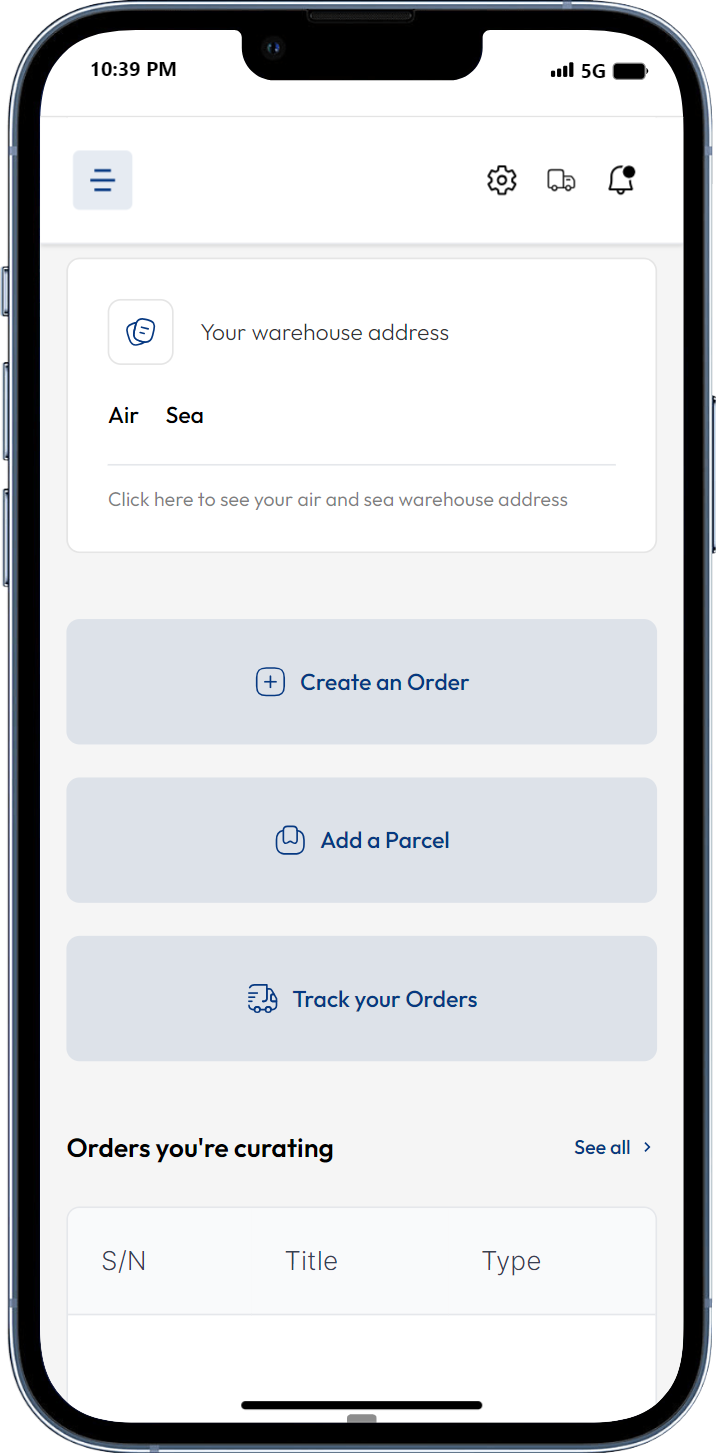
Your Proc360 dashboard gives you a single view of your supplier correspondence, inspection reports, shipping documents, and customs status across every phone batch you import — so your grading records, IMEI lists, and SONCAP certificates are in one place from order to clearance.
Get started for free at proc360.app