How to Find a Reliable Supplier in China from Nigeria in 2026
Learn how to find reliable suppliers in China from Nigeria in 2026. Discover sourcing platforms, supplier verification tips, red flags, and import compliance requirements.
GROWING BUSINESSGETTING STARTED
Ugbe Zurishaddai
9/25/20268 min read


Finding a supplier in China takes twenty minutes. Finding one who delivers what they agreed, at the quality they showed you, on the date they committed to — that takes a deliberate process most Nigerian importers skip because they are in a hurry to place an order.
This guide covers the sourcing channels that actually matter for Nigerian buyers, how to screen suppliers before you pay them a naira, and the specific red flags that have cost Nigerian importers the most money.


How to Screen a Supplier Before You Pay
Contact at least five suppliers with the same product brief. From the responses, shortlist the two or three who answer your specifications precisely and ask intelligent questions about your requirements. Then apply the following checks to each one.
Request and verify their business licence (营业执照)
Ask every supplier for a copy of their Chinese business registration certificate. Check that the company name on the licence matches exactly: the name on their Alibaba or 1688 profile, the name on the proforma invoice they send you, and the bank account name you will be sending money to. Any mismatch is a red flag, not a clerical error.
Also check the business scope section (经营范围). A genuine manufacturer has scope language including manufacturing (制造), production (生产), or processing (加工). A trading company has scope language around wholesale (批发), import and export (进出口), or distribution. There is nothing wrong with buying from a trading company — but knowing which you are dealing with changes your negotiation, your price expectations, and how much quality control the supplier can realistically guarantee.
Determine factory or trading company
Ask directly: "Are you a factory or a trading company?" Follow up with questions only a manufacturer can answer precisely: what is your daily production capacity for this product? What raw material grade do you use and who supplies it? What is your quality control rejection rate? A genuine factory answers these specifically. A trading company deflects or gives vague reassurances.
Request a live video call on the factory floor
Ask for an unscheduled live video walkthrough of the production area — not a pre-recorded tour, not a showroom, not a Zoom call from an office. A real factory will have machinery, materials in process, and workers visible. Anyone without a production floor will stall, send footage that looks rehearsed, or offer the showroom as a substitute.
Send a technical question with a specific measurement or requirement
Before you commit to a sample order, send one detailed technical question. Ask for a specific dimension, a material test result, or a certification document. A supplier who responds with a precise, documented answer and asks a clarifying question of their own is showing you they understand manufacturing. A supplier who sends "yes, no problem, best quality" to a specific technical question has told you how they will respond to every quality issue that follows.
Check IMEI or certification numbers for regulated products
For electronics, confirm that IEC certification documents are genuine by checking the issuing laboratory. For phones, verify sample IMEI numbers at imei.info. For LED products, ask for CE or SAA test reports with the laboratory name, then search the laboratory's website to confirm the report number exists. Certificate fraud is common in electronics categories. Checking takes five minutes and eliminates a category of risk entirely.
The Sample Order: The Only Test That Actually Matters
No amount of verification replaces a paid sample. Request one from every supplier you are seriously considering, and pay for it — a free sample creates a favour dynamic that makes it harder to give honest negative feedback, and a paid sample creates a clean commercial transaction from the start.
Specify the sample exactly. Write a brief list of what you expect: dimensions, material, colour reference, function, packaging, and if relevant, the certification documents that must accompany it. Send this in writing through the platform's messaging system or by email — not by WhatsApp call where there is no record.
When the sample arrives, test it against your brief line by line. Measure what can be measured. Photograph every deviation, including minor ones. Then send your feedback to the supplier — a numbered list of issues, each with the deviation and the required correction. Observe how they respond.
A supplier who acknowledges the issues, asks clarifying questions, and commits to a specific revised sample date is showing you how they will manage your production orders. A supplier who argues, minimises visible defects, or sends reassurances without a specific correction plan is showing you the same thing.
For orders above ₦1.5 million ($940), a third-party pre-shipment inspection through SGS, Bureau Veritas, or QIMA — where an independent inspector visits the factory and checks your bulk order against your approved sample before loading — is the most reliable protection available for what happens between sample approval and shipment.
Red Flags That Should End a Supplier Relationship Immediately
Bank details that change by email after quotation. This is the most common payment fraud targeting Nigerian importers. A supplier sends a quotation, then two days later sends an email — sometimes from a very similar email address, sometimes from the same one if the account is compromised — with new bank details. Always confirm any change of payment details through a second channel: a phone call or video call with the same person you have been speaking to. Never transfer money to new bank details confirmed only by email.
Prices 30–40% below every other supplier for the same specification. In Chinese manufacturing, price reflects material cost and labour. A dramatically lower price means something in the specification, the material grade, or the production process is different. It is not a deal.
Request to pay outside the platform to a personal account. Alibaba Trade Assurance exists specifically to protect buyers. A supplier who pushes you to pay by direct wire transfer before a relationship is established is removing your protection. The reason is always presented as convenience or lower fees — the real reason is that Trade Assurance gives you dispute rights they would rather you not have.
Business licence company name that does not match the invoice. File this alongside the bank detail mismatch. If these three names do not match — licence, invoice, bank account — stop the transaction and ask for an explanation in writing.
Refusal to provide a business licence. A registered Chinese business can produce this document in thirty seconds. Refusal is not an oversight.
Nigerian-Specific Compliance: What Suppliers Will Not Tell You
Chinese suppliers are not responsible for Nigerian import compliance. Most are unaware it exists. Two requirements catch Nigerian importers at the port every month:
SONCAP Product Certificate — required for electronics, electrical goods, phones, solar equipment, toys, and a wide range of manufactured goods before they can clear Nigerian customs. This certificate is obtained in China before shipment through a SONCAP-approved inspection body. Your supplier will not raise this. You must raise it, confirm it is in your shipment documentation, and ensure your agent or freight forwarder coordinates it before loading.
NAFDAC registration — required for food, beverages, cosmetics, drugs, and health products. NAFDAC registration happens after import, but sourcing a product category that requires it without understanding the registration process first is a path to stock sitting in a bonded warehouse while you navigate a compliance process you did not plan for.
Confirm your product's SONCAP and NAFDAC position with your clearing agent before you place the first order, not after the container is at Apapa.


Start With a Product Brief, Not a Platform Search
The most common sourcing mistake is opening Alibaba and typing a product name before you have defined exactly what you want to buy. Vague searches produce vague results. Suppliers quote different specifications, you cannot compare them fairly, and the one who responds fastest tends to win the order — which is not how good sourcing decisions get made.
Before you contact a single Chinese supplier, write a one-page product brief. It should state: the exact product name, materials and grade, dimensions, colours, MOQ you want to start with, your target unit price range, expected annual volume, packaging requirements, and any Nigerian compliance requirements — SONCAP certification for electronics and electrical goods, NAFDAC registration for cosmetics, food, or health products.
Send the same brief to every supplier on your shortlist. This gives you a consistent basis for comparison and filters out suppliers who are not genuinely capable of meeting your requirements — they simply will not respond to specifics they cannot fulfil.
The Sourcing Channels That Matter for Nigerian Buyers
Alibaba
Alibaba remains the most practical starting point for Nigerian importers who are new to China sourcing or establishing a relationship with a supplier for the first time. Prices are quoted in USD, most suppliers have English-speaking sales staff, Trade Assurance protects payments made on the platform, and the dispute resolution system provides recourse that direct bank transfers do not.
The limitation: Alibaba prices carry export overhead — English support, international returns handling, Trade Assurance fees, and the supplier's margin on those costs. You are paying for the infrastructure, not just the product.
This is the domestic Chinese equivalent of Alibaba, where Chinese manufacturers and distributors sell to each other at domestic wholesale prices — typically 15–35% lower than Alibaba for the same product. The platform is in Mandarin, payment requires a Chinese Alipay or bank account, and most sellers have no capacity to communicate in English. Nigerian importers access 1688 through a sourcing agent with a Chinese bank account and the language skills to navigate the platform. The price difference makes this worth it on most orders above ₦500,000 ($300).
Global Sources and Made-in-China
These two platforms are worth checking specifically for electronics, industrial equipment, and technical goods where manufacturer verification is more rigorous than on Alibaba. Global Sources in particular has a stronger concentration of factory-direct listings and is used heavily by electronics buyers sourcing from Shenzhen and Guangzhou manufacturers.
Huaqiangbei (Shenzhen)
For phone accessories, consumer electronics, LED products, and small gadgets, Huaqiangbei — the SEG Electronics Market and surrounding streets in Shenzhen — is where China's wholesale market actually prices these goods. A buying agent with physical access to Huaqiangbei can source at prices no Alibaba listing matches, because the overhead in an Alibaba listing does not exist in a direct Huaqiangbei relationship.
Canton Fair
The Canton Fair, held in Guangzhou twice annually in April-May and October-November, is the world's largest trade fair and one of the fastest ways to establish manufacturer relationships across categories. Since 2020 it has maintained an online component, which means Nigerian buyers can browse exhibitor catalogues, request quotations, and make initial contact without travelling. For buyers who do travel to China, the April session in particular is when factories are most aggressive with pricing and willing to negotiate terms.
Referrals from other Nigerian importers
A supplier recommendation from a Nigerian business owner who has placed multiple orders, received goods that matched what was agreed, and experienced how the supplier responds when something goes wrong — is more valuable than any platform badge. The Nigerian trade community in Alaba International Market, Computer Village, Balogun, and Onitsha has accumulated significant China sourcing knowledge. Tap it before you spend money testing suppliers from scratch.
Use Proc360 Today
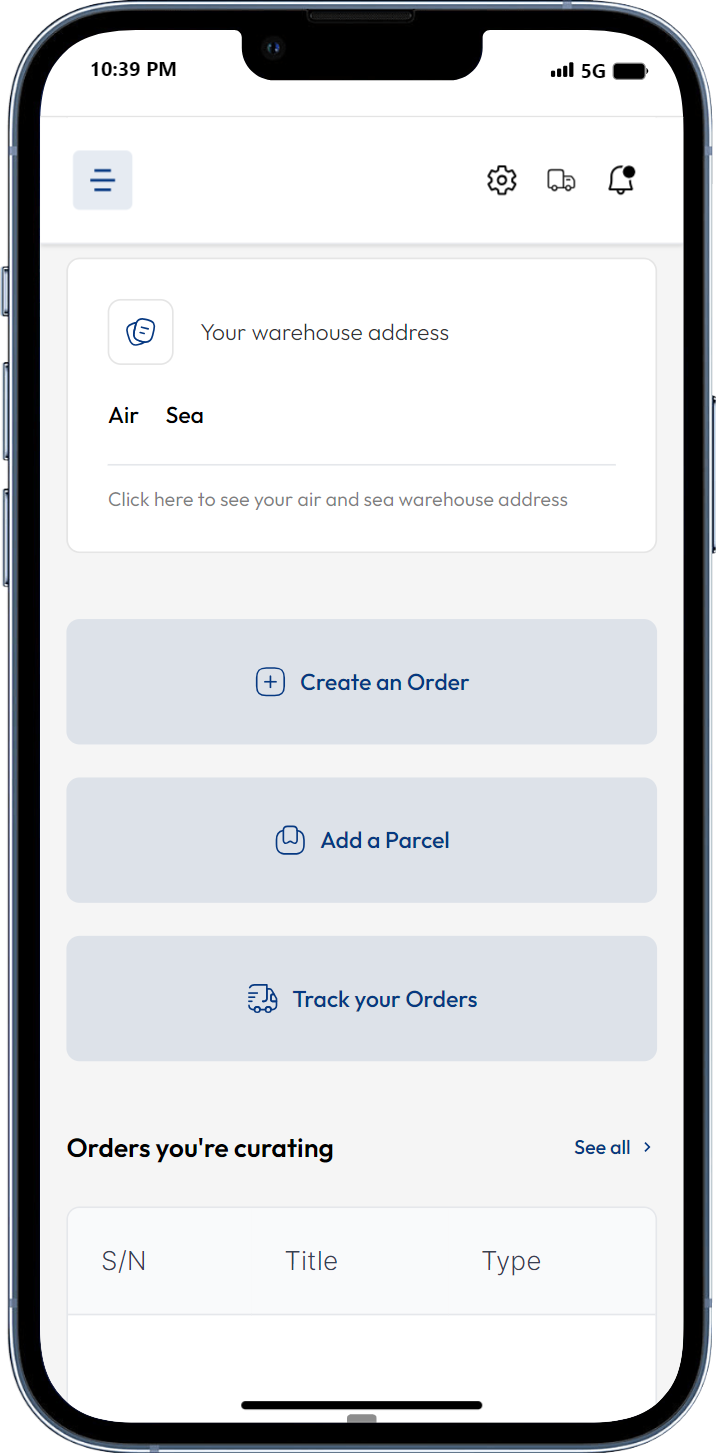
Your Proc360 dashboard gives you a structured record of supplier correspondence, sample approvals, inspection reports, and shipping documentation across every order — so the verification trail you build on a supplier relationship stays accessible from the first sample to the tenth shipment.