How to Buy RMB With Naira From Your Nigerian Bank Account
Everything Nigerian importers need to know about converting naira to yuan, without confusion or hidden fees.
GROWING BUSINESSGETTING STARTED
Ugbe Zurishaddai
4/6/20267 min read
You've found a supplier on Alibaba. The price is right. The samples look good. Then you hit the wall every Nigerian importer knows too well: How do I actually pay this person in China?
Most suppliers want payment in RMB (Chinese yuan, also called Renminbi), but your money is in naira.
When you try to look for solutions, your bank looks at you like you've asked something unreasonable, and everyone online seems to give a different answer.
Look no further, this is exactly what you need. This guide cuts through all the fluff, and by the end, you'll know exactly how the naira-to-RMB conversion works, what your real options are, what each option actually costs, and where to get the best rates for currency conversion.
First, Let's Get the Terminology Right
Before anything else, let's understand the basic terms involved, so there's no confusion.
RMB stands for Renminbi: the official name of China's currency.
Yuan (¥) is the unit of that currency, the same way "pound" is the unit of British sterling.
CNY is the international currency code used for the yuan in global markets.
CNH is the offshore version of the yuan traded outside China (Hong Kong, mostly).
When a Chinese supplier asks to be paid in "RMB" or "yuan," they mean the same thing. When you see exchange rate tables showing CNY to NGN or naira to RMB, they're talking about the same conversion.
What Is the Naira to RMB Exchange Rate Today?
As of April 2026, 1 Chinese yuan (RMB) is worth approximately ₦199–₦201 at the mid-market rate. The best rates are found with Proc360, where 1 Chinese yuan is worth about
That means:
- ¥1,000 RMB ≈ ₦200,000
- ¥10,000 RMB ≈ ₦2,000,000
- ¥50,000 RMB ≈ ₦10,000,000
These are mid-market rates. What you actually pay will be higher. because every bank, fintech, or exchanger adds a margin on top, anywhere from 1% to 8% depending on the channel you use.
The gap between the official CBN rate and what you'll actually get through your bank or through the parallel market can be significant. That spread is one of the biggest cost factors most importers underestimate.
Pro tip: Always convert the total naira cost of any transaction at the rate you'll actually pay, not the mid-market rate you saw on Google. The difference on a ₦5 million transaction can easily be ₦200,000–₦400,000.
Option 4: Alibaba Trade Assurance Payments
If you're buying through Alibaba, Trade Assurance is your built-in payment protection layer. It's an escrow-style system where your payment is held by Alibaba until you confirm the goods have arrived as described.
How to pay via Trade Assurance from Nigeria:
1. Create your order through a supplier who offers Trade Assurance (look for the shield icon).
2. At checkout, you'll see payment options; these typically include credit/debit card, bank transfer, and sometimes Alipay.
3. For Nigerian buyers, the most common route is bank transfer in USD or using a fintech wallet that supports Trade Assurance payments.
Why Trade Assurance matters:
- If goods don't arrive or don't match the description, Alibaba can help you get a refund.
- It protects you without requiring you to trust an unknown supplier completely.
- It's especially valuable for first-time orders with a new supplier.
The limitation: not all Chinese suppliers on Alibaba offer Trade Assurance. Some smaller or newer suppliers may only accept direct bank transfers or Alipay.
Option 5: Alipay (With Realistic Expectations)
Alipay is China's dominant mobile payment app. Tthink of it as the Chinese equivalent of PalmPay or Opay. Many Chinese suppliers prefer to be paid through Alipay because it settles instantly.
The problem for Nigerian importers:
Foreign Alipay accounts (non-Chinese) are severely restricted. As a Nigerian user, you're typically capped at an annual limit of around ¥50,000 (approximately ₦10 million at current rates). That's fine for a small importer but will become a ceiling quickly.
Setting up a foreign Alipay account also requires significant documentation, and accounts can be frozen without warning if activity looks unusual.
WeChat Pay has similar limitations for foreign users.
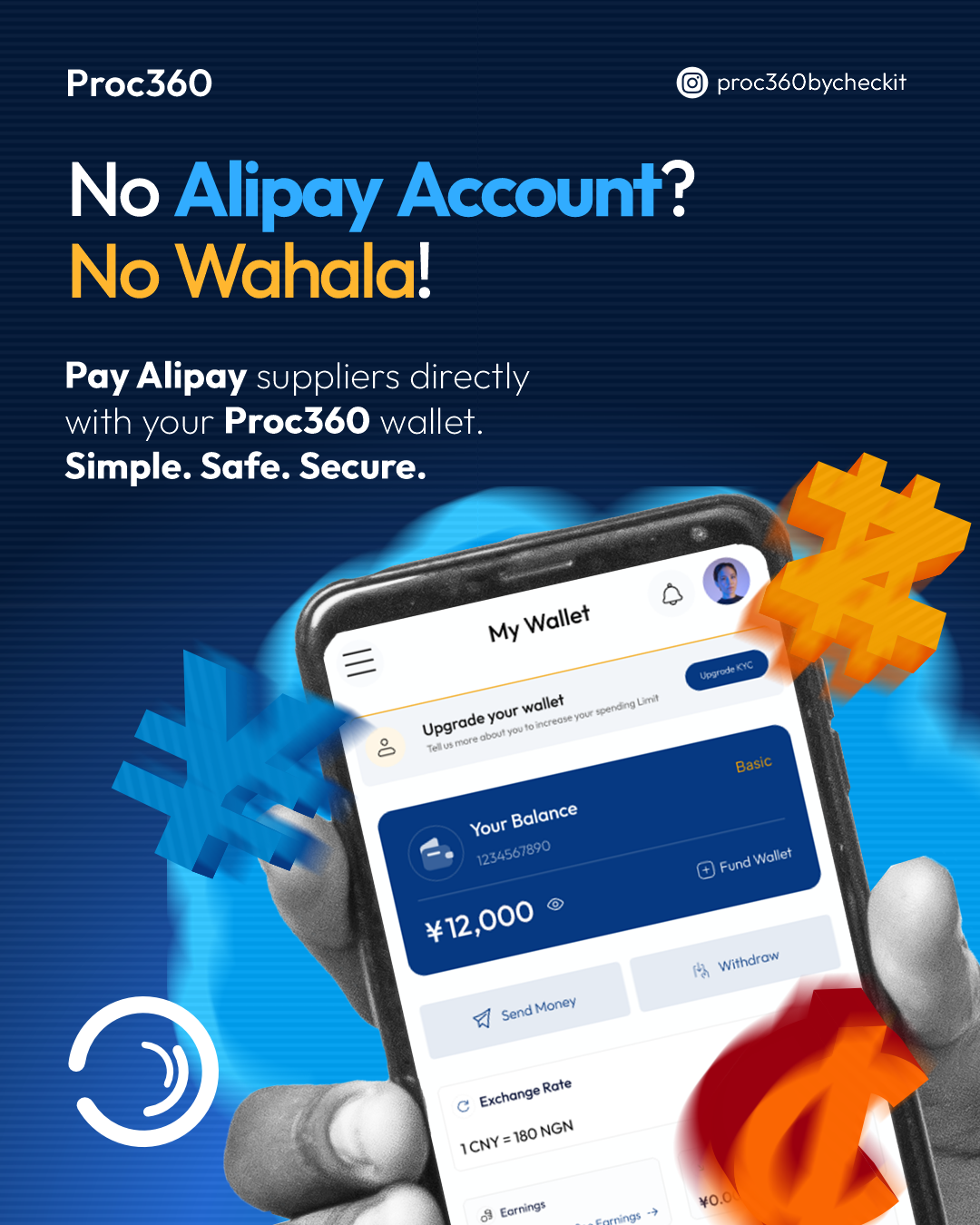
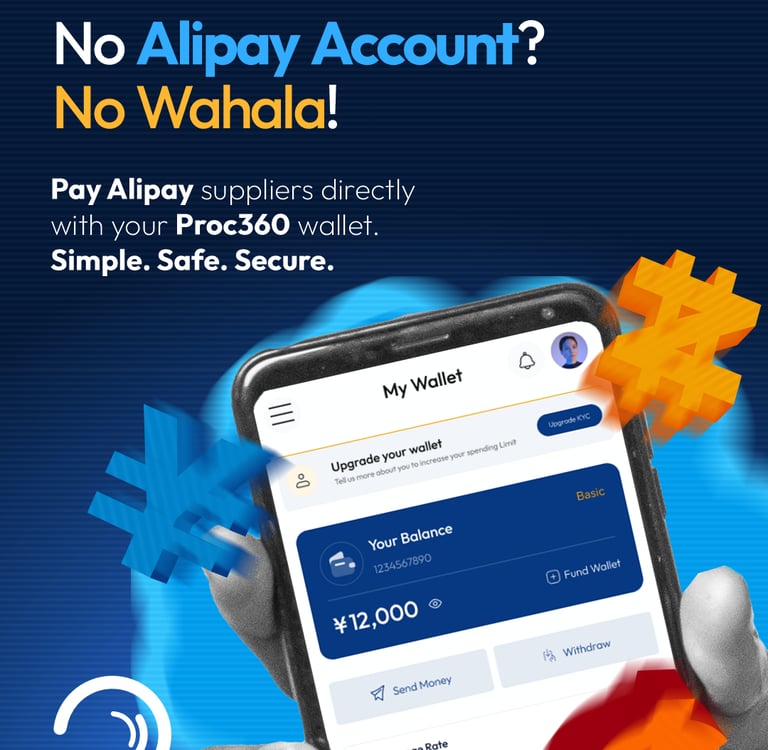
The practical solution most importers use: a platform like Proc360 that helps you pay Alipay suppliers, but without the restrictions and uncertainties.
How to Open an RMB Account in Nigeria
Some Nigerian banks allow you to open a domiciliary account denominated in foreign currencies, including RMB. This lets you hold yuan in Nigeria rather than converting on the spot each time you make a payment.
How to open one:
1. Visit your bank (Zenith Bank and Access Bank are commonly referenced for this).
2. Request a foreign currency domiciliary account — specify RMB/CNY.
3. Provide standard KYC documents: valid ID, BVN, utility bill, passport photographs.
4. Complete any additional forms required by the bank for the specific currency.
Is it worth it?
If you're importing frequently and in volume, it might be.
It gives you the ability to buy RMB when the rate is favourable and hold it for future supplier payments, protecting you from rate volatility between when you place an order and when payment is due.
But there's a smarter, easier option
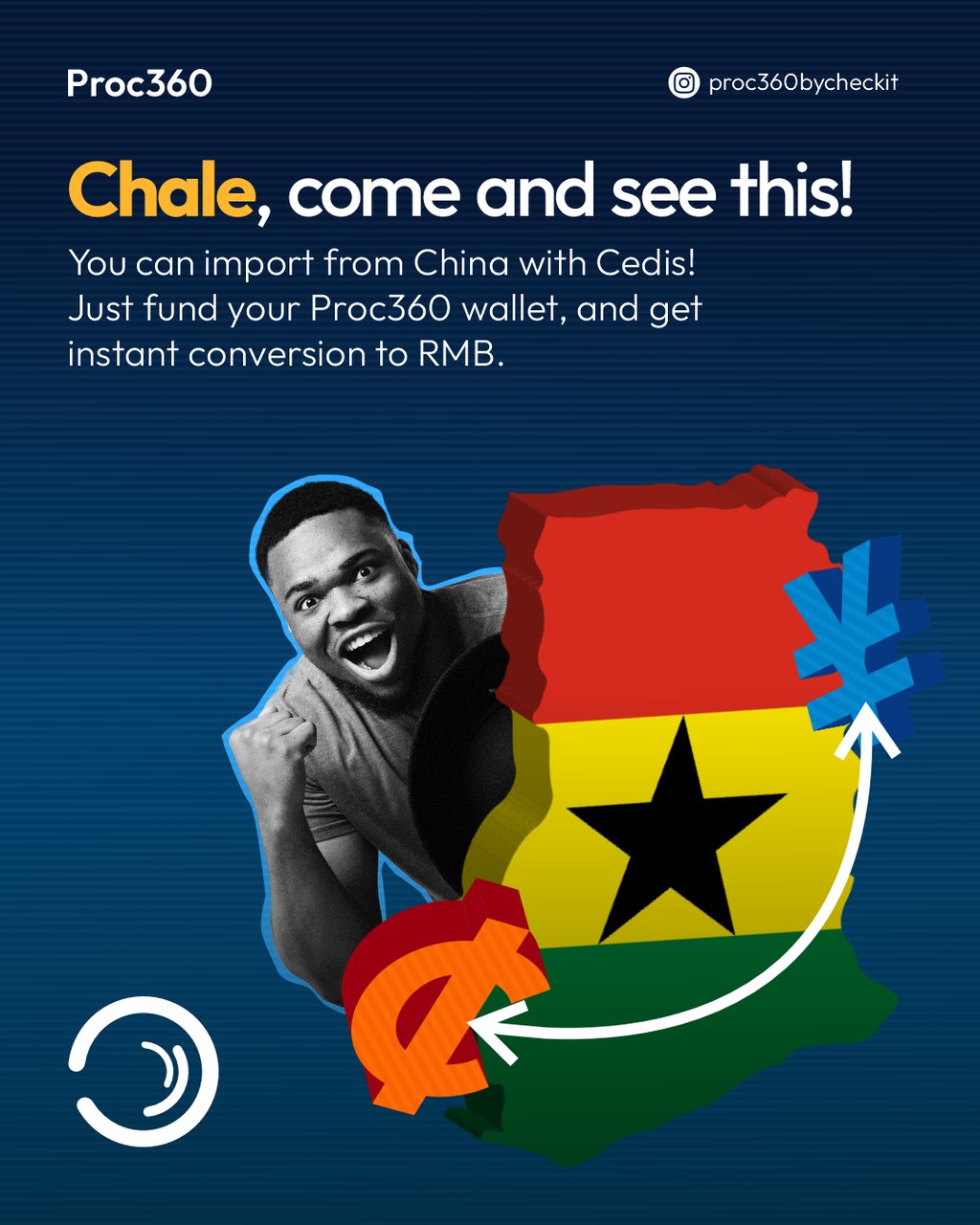
When you use Proc360's wallet, it gives you all the benefits: protection from fluctuations, no restrictions, extra layer of security, and none of the drawbacks. Plus you get bonuses and rewards as you make transactions.
Note that not all banks actively support RMB domiciliary accounts. Call ahead or speak with a trade finance officer before visiting.
Send Money to China from Nigeria: The Compliance Layer You Can't Skip
Whatever method you use, there are CBN regulations you need to be aware of.
Form M: Required for all imports into Nigeria above a certain threshold. Your bank cannot process a SWIFT payment for goods without it. Open your Form M before making payment — not after.
Proforma Invoice: Required to open Form M. Make sure your supplier's invoice includes their full company name, business address, bank details, and signature.
Authorised Dealer Banks: All foreign currency transfers must go through CBN-licensed banks or regulated platforms. Sending money through an unlicensed third party puts you outside the system and creates clearance problems when your goods arrive.
Threshold monitoring: Large transfers are subject to additional scrutiny. Keep your documentation organised and be prepared to show the source of funds for significant transactions.


Where and How Can I Buy RMB?
Option 1: Your Nigerian Bank (SWIFT / Telegraphic Transfer)
This is the most formal route and the one most people try first.
Banks like Zenith Bank, GTBank, Access Bank, First Bank, and UBA all process international wire transfers (SWIFT/telegraphic transfers) to Chinese suppliers. Some can route payments directly in RMB; most default to USD, which then gets converted to RMB on the receiving end.
How it works:
1. Your supplier sends you a Proforma Invoice with their bank details (account number, bank name, SWIFT code).
2. You open a Form M (a CBN-mandated import declaration form) at your bank. This is non-negotiable for imports into Nigeria.
3. You submit the proforma invoice and any required shipping documentation.
4. Your bank initiates the SWIFT transfer.
5. The funds travel through correspondent banks (usually in the US or Europe) before landing in China.
What it costs: Processing fees, correspondent bank charges, and a currency conversion spread. Budget for 3–7 business days for settlement, plus the time it takes to process your Form M.
Pros and Cons
- ✅ Fully compliant and traceable
- ✅ Good for large, formal transactions
- ❌ Paperwork-heavy (Form M, proforma invoice, sometimes additional documentation)
- ❌ Slow. 3–7 business days is common
- ❌ Exchange rates at the bank are typically not competitive
- ❌ Dollar scarcity at some banks can delay the entire process
If you're an SME doing frequent, mid-sized orders, bank SWIFT transfers will work, but they're probably not your most efficient option.
Option 2: Fintech Platforms Built for Nigeria-China Payments
This is where most active importers are moving, and for good reason. Several platforms now let you fund your account in naira, convert to RMB at competitive rates, and pay your Chinese supplier directly, often in 24–48 hours.
Platforms worth knowing:
Proc360 Wallet
Proc360 is built specifically for Nigerian importers sourcing from China.
You fund your wallet in naira (or dollars), and it converts to RMB at real-time market rates. You can then pay suppliers directly via Alipay or bank transfer, all within the platform.
No transaction limits compared to a foreign Alipay account, no account freezes, and no hunting for a vendor.
Other platforms: Clea, Yogupay, BarterFunds, and several others operate in this space. The landscape changes quickly, so always check current rates, supported transfer limits, and CBN compliance status before committing.
What to look for in any fintech platform:
- Transparent exchange rate (not just "competitive")
- Clear fee structure — no hidden charges
- CBN-compliant operations
- Payments sent in your business name (not a third-party account)
- Track record with other Nigerian importers
Option 3: RMB Exchangers in Nigeria
There is an active parallel market for RMB in Nigeria, particularly in major cities like Lagos (Alaba International, Computer Village, trade-heavy areas) and Kano. These are independent currency traders who hold RMB and will sell it to you for naira.
How it typically works:
- You agree on a rate with the exchanger.
- You pay in naira (cash or transfer).
- They send RMB via Alipay or WeChat Pay to your supplier's account, or to your own Alipay wallet.
The parallel market rate is usually worse than what you'd get through a fintech platform, and it comes with real risks:
- No regulatory protection if something goes wrong
- No paper trail for customs or CBN compliance
- Fraud risk, particularly if you're using someone you don't have a personal relationship with
- Rate volatility; the exchanger sets the rate, not the market
That said, for small, urgent transactions where speed matters more than the margin, some importers use this channel. If you go this route, only use someone who has been personally vouched for by a trusted contact.
Buying RMB with naira from Nigeria is not as complicated as it feels the first time — but it does require knowing your options and picking the right one for the size, frequency, and urgency of your transactions.
For most Nigerian importers doing regular China trade, the naira-to-RMB corridor is getting easier to navigate, not harder. New platforms are emerging, and the Nigeria-China payment infrastructure is improving.
With proper structures like Proc360, this part of your import business becomes simple and stress free!.
Need help sourcing products from China and managing the full payment process? Use Proc360 today.