How to Begin a Mini Importation Business in Nigeria (2026 Complete Guide)
Learn how to start a mini importation business in Nigeria in 2026. Discover profitable products, trusted suppliers, shipping methods, and marketing strategies to build a successful import business.
GROWING BUSINESSGETTING STARTED
Jacob Ehigie
2/24/20269 min read
Tolu scrolls through Instagram and sees vendors selling trendy phone accessories for ₦15,000. Out of curiosity, she searches for the same product on AliExpress—₦3,500. The math hits her instantly: if they can do it, why can't she?
Three months later, Tolu's making ₦300,000 monthly profit from her bedroom. No office. No warehouse. Just her phone, smart product choices, and the right import partner.
Is mini importation a good business? Absolutely—if you know what you're doing. With Nigeria's economy pushing more people toward side hustles, mini importation from China to Nigeria has become one of the most accessible ways to earn serious income with minimal capital.
But here's the truth: most beginners fail because they skip critical steps, choose wrong products, or fall for scam suppliers. This guide shows you exactly how to start a mini importation business in nigeria the right way in 2026—from finding profitable products to securing trusted suppliers and making your first sale.
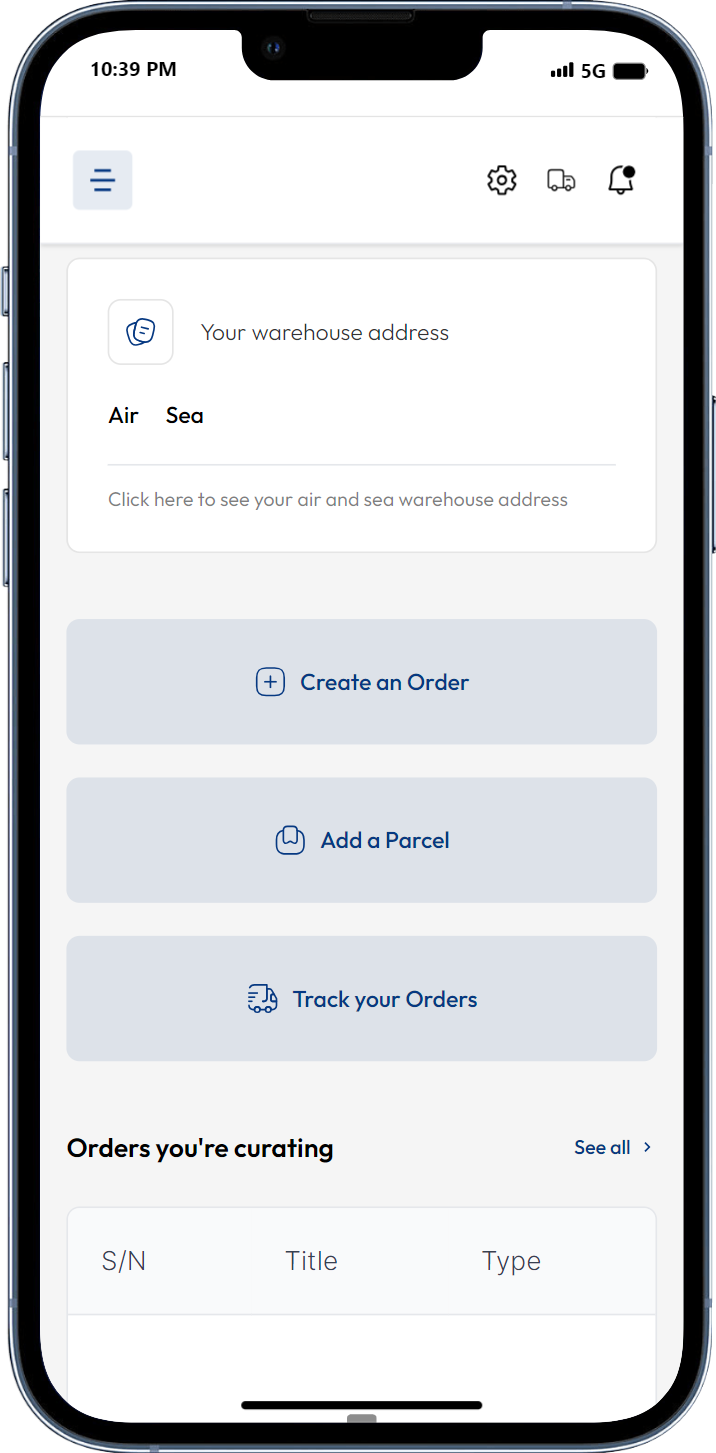
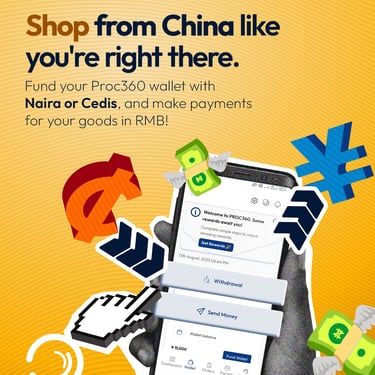
And if you want to skip the headaches of supplier scams and payment stress, platforms like Proc360 handle supplier verification, RMB payments, and shipping—so you can focus on selling. Let's dive in.

Step 5: Market Your Products Like a Pro
Where to Sell (Best Platforms)
Instagram (Primary Channel)
Best for: Fashion, beauty, gadgets, accessories
Post 1-2 times daily with quality photos
Use stories for engagement
Run giveaways to build following
Cost: Free organic + ₦5,000-₦20,000/month for ads
Facebook Marketplace
List products for free
Local buyers see your items
Built-in messaging
No commission fees
WhatsApp Business
Direct customer communication
Catalog feature for product display
Status updates for promotions
Broadcast lists for repeat customers
TikTok Shop (Growing Fast)
Create product videos
Behind-the-scenes content
Unboxing videos
High engagement from younger audience
Jumia/Konga (Optional)
Established trust
Higher traffic
Downside: 15-20% commission + strict policies
Marketing Tactics That Actually Work
✅ Pre-launch hype: Post "coming soon" teasers 2 weeks before goods arrive ✅ First-customer discount: Offer 20% off to first 20 buyers ✅ Bundle deals: "Buy 2, get 1 free" or "3 for ₦20,000" ✅ Urgency tactics: "Limited stock, only 15 units left" ✅ Social proof: Post customer testimonials + unboxing videos ✅ Giveaways: "Follow, like, tag 3 friends to win" ✅ Before/after content: Especially for beauty/fitness products ✅ Micro-influencer partnerships: Pay ₦10,000-₦30,000 for shoutouts
Pricing Formula
(Product cost + Shipping + Customs + Packaging) × 2.5 to 4 = Selling Price
Example:
Product: ₦2,000
Shipping: ₦800
Customs/clearing: ₦700
Packaging: ₦200
Total cost: ₦3,700
Selling price: ₦9,000-₦15,000 (2.4x-4x markup)
Pricing psychology:
₦9,900 looks cheaper than ₦10,000
Avoid pricing at exact thousands (₦12,000 feels more negotiable than ₦11,500)
Premium positioning: Price slightly higher than competitors but emphasize quality
Step 6: Deliver and Build Repeat Customers
Delivery Options
Personal Delivery (Lagos/Nearby)
Meet customers at agreed locations
Builds trust and relationship
Best for first 20-30 sales
Logistics Companies
GIG Logistics: ₦1,500-₦3,500 (Lagos)
Kwik Delivery: ₦1,000-₦2,500 (same-day Lagos)
Red Star Express: ₦2,000-₦5,000 (interstate)
DHL/FedEx: ₦3,500-₦8,000 (premium, trackable)
Cash-on-Delivery (COD)
Builds trust with new customers
Reduces payment friction
Downside: 20-30% non-collection rate
Tip: Charge ₦500-₦1,000 extra for COD
How to Get Repeat Customers
✅ Quality packaging: Use branded packaging, thank-you cards ✅ Follow-up message: "Your order arrived safely? How do you like it?" ✅ Loyalty rewards: "Every 5th purchase gets 20% off" ✅ VIP WhatsApp group: Exclusive previews for repeat buyers ✅ Fast response time: Reply within 30 minutes during business hours ✅ Solve problems quickly: Handle complaints professionally, offer replacements ✅ Birthday/holiday bonuses: Track customer birthdays, send discount codes
Lifetime value example: One satisfied customer buys ₦50,000 worth of products over 6 months, refers 3 friends who buy ₦30,000 each. One customer = ₦140,000 in revenue.
How to Start Mini Importation with No Money
How to start a mini importation business with no money (realistic strategies):
1. Pre-Order Model
Post product photos from supplier (with permission)
Collect payments first
Order after hitting minimum target (e.g., 20 orders)
Pros: Zero capital risk
Cons: Requires high trust, longer wait time for customers
2. Partnership Deal
Find someone with capital (₦100,000-₦500,000)
You handle sourcing, marketing, operations
Split profits 50/50 or 60/40
Contract: Put agreement in writing
3. Start Ultra-Small
Buy just 5-10 units (₦10,000-₦20,000 total)
Borrow from family/friends with clear repayment
Sell quickly, return borrowed amount
Reinvest all profit into next batch
4. Dropshipping (Higher Risk)
List products without buying inventory
When customer orders, buy from supplier, ship direct
Pros: Zero inventory cost
Cons: No quality control, longer delivery, lower trust
Reality check: Starting with even ₦50,000 gives you 10x better control, quality, speed, and customer trust than zero-capital methods.
Common Mistakes That Kill Mini Import Businesses
❌ Ordering without samples: Always test quality first (costs ₦5,000-₦10,000, saves ₦100,000+ in returns) ❌ Choosing oversaturated products: Everyone sells power banks; find unique variations or niches ❌ Underpricing from fear: Calculate costs properly; don't undersell just to compete ❌ Ignoring shipping timelines: Sea freight takes 30-45 days; plan inventory accordingly ❌ Poor product photos: Invest in good lighting or hire photographer (₦5,000-₦10,000) ❌ No marketing budget: Set aside 10-20% of capital for ads/promotions ❌ Slow customer replies: Respond within 1 hour during business hours or lose sales ❌ No clear return policy: State your terms upfront to avoid disputes
What Is Mini Importation Business in Nigeria?
Mini importation business in nigeria means buying small quantities of products from international suppliers (mostly China) at wholesale prices and reselling them locally for 2x-5x profit.
Unlike traditional importation requiring containers and warehouses, mini importation lets you start with as little as ₦50,000, operate from your phone, and scale at your own pace.
Why it works:
Nigerians trust imported goods quality
Local shops mark up 3x-5x on the same products
You cut out middlemen and keep the profit
Low barrier to entry—no office or warehouse needed
Flexible—run it as side hustle or full-time business
Real example: A power bank that costs ₦2,000 from China sells for ₦8,000-₦12,000 in Lagos. Order 50 units (₦100,000 capital), sell at ₦9,000 each, make ₦350,000 profit on one product.
How Much Do I Need to Start Mini Importation?
How much do i need to start mini importation? Here's the realistic breakdown for 2026:
Minimum Startup (₦50,000-₦100,000)
Product cost: ₦30,000-₦60,000 (10-30 units depending on product)
Shipping: ₦10,000-₦25,000 (air freight for small quantities)
Marketing/ads: ₦5,000-₦10,000 (Facebook/Instagram ads)
Miscellaneous: ₦5,000 (packaging, airtime, transport)
What you can buy with ₦100,000:
50 phone accessories (power banks, earbuds)
20-30 fashion accessories (watches, sunglasses)
15-25 beauty tools (LED masks, hair clippers)
Comfortable Start (₦200,000-₦500,000)
Allows larger inventory (50-100+ units)
Mix of air and sea freight options
Better marketing budget for faster sales
Room for testing 2-3 different products
Buffer for unexpected costs
Serious Launch (₦500,000-₦1,000,000)
Multiple product categories
Bulk orders qualify for better pricing
Professional branding and packaging
Hire virtual assistant for customer service
Faster path to ₦1M+ monthly revenue
Can you start with zero capital?
Yes, through:
Pre-orders: Post products, collect payments, then order (requires high trust)
Partnership: Find capital partner, split profits 50/50 or 60/40
Start ultra-small: 5-10 units for ₦15,000-₦25,000
Reality check: Starting with zero is harder and riskier. Even ₦50,000 gives you better control, faster growth, and professional credibility.
Step 1: Choose Your Winning Products
What is the most profitable import business? The one selling products people actually want and searching for.
Hot-Selling Categories in Nigeria 2026
1. Phone Accessories (Highest Demand)
Power banks (₦2,000 → sell ₦8,000)
Wireless earbuds (₦3,000 → sell ₦12,000)
Phone cases (₦500 → sell ₦2,500)
Fast chargers (₦1,500 → sell ₦6,000)
Phone holders/stands (₦800 → sell ₦3,500)
2. Beauty & Personal Care
LED face masks (₦5,000 → sell ₦20,000)
Hair clippers/trimmers (₦4,000 → sell ₦15,000)
Makeup brushes sets (₦2,000 → sell ₦8,000)
Facial steamers (₦3,500 → sell ₦12,000)
3. Fashion Accessories
Luxury-look watches (₦3,000 → sell ₦12,000)
Sunglasses (₦1,500 → sell ₦5,000)
Handbags (₦4,000 → sell ₦15,000)
Jewelry sets (₦2,000 → sell ₦8,000)
4. Smart Home Gadgets
LED strip lights (₦2,500 → sell ₦10,000)
Bluetooth speakers (₦3,000 → sell ₦12,000)
Mini projectors (₦8,000 → sell ₦30,000)
Smart plugs (₦2,000 → sell ₦7,000)
5. Fitness & Wellness
Resistance bands (₦1,500 → sell ₦6,000)
Waist trainers (₦2,000 → sell ₦8,000)
Yoga mats (₦2,500 → sell ₦9,000)
Smart scales (₦3,500 → sell ₦12,000)
How to Validate Product Demand
✅ Instagram/TikTok test: Search product name + "Nigeria" — if vendors are actively selling it, there's demand ✅ Jumia/Konga check: Browse bestsellers in each category — see what's ranking #1-#20 ✅ Facebook group research: Join "Nigeria Online Vendors" groups — note what people request most ✅ Google Trends: Compare product search volumes over past 12 months ✅ Competition analysis: If 5+ vendors sell it successfully, market is proven
Products to AVOID
❌ High-value electronics: Laptops, phones (high risk, customs issues, returns costly) ❌ Perishables: Food, cosmetics with expiry dates ❌ Oversized items: Furniture, large appliances (shipping kills margins) ❌ Highly regulated: Drugs, supplements (NAFDAC complications) ❌ Extremely cheap items: Under ₦500 selling price (not worth effort per sale)
How Proc360 Makes Mini Importation 10x Easier
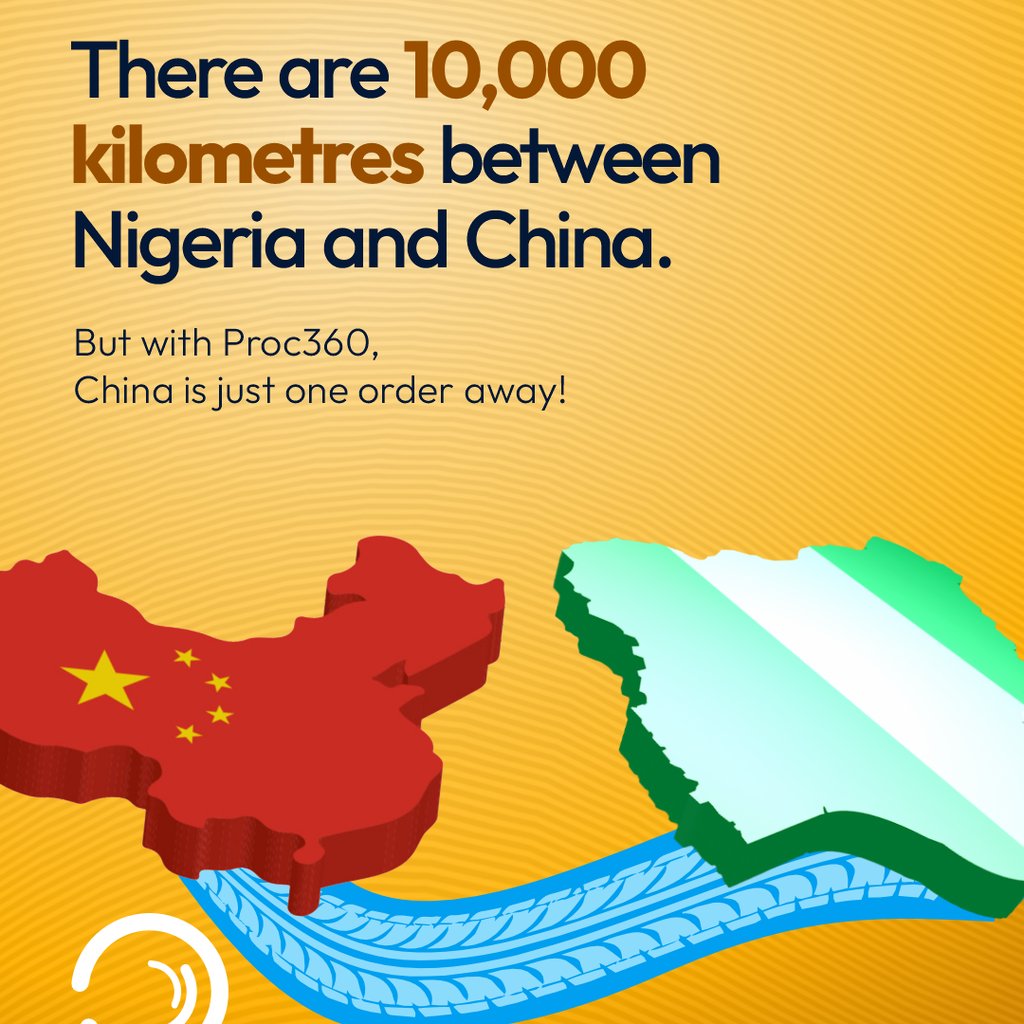
Here's the truth: mini importation from china to nigeria has friction points at every stage—supplier verification, payments, shipping, customs. Most beginners quit because they get stuck or scammed.
Proc360 eliminates every headache:
✅ Verified Suppliers: We pre-vet all suppliers—you never worry about scams ✅ RMB Wallet: Pay in Chinese Yuan, save 5-8% on every order vs bank conversions ✅ Free Consolidation: Buy from 5 suppliers, we combine into one shipment—save on freight ✅ Real-Time Tracking: See exactly where your goods are from China warehouse to Lagos ✅ Customs Support: We handle Form M, SONCAP, clearance—you avoid port headaches ✅ One Platform: Source, pay, ship, track—everything in one dashboard ✅ Transparent Pricing: No hidden fees, know exact costs upfront
Stop wasting time and money learning the hard way. Thousands of Nigerian importers trust Proc360 because we handle the complex parts while you focus on selling and making profit.
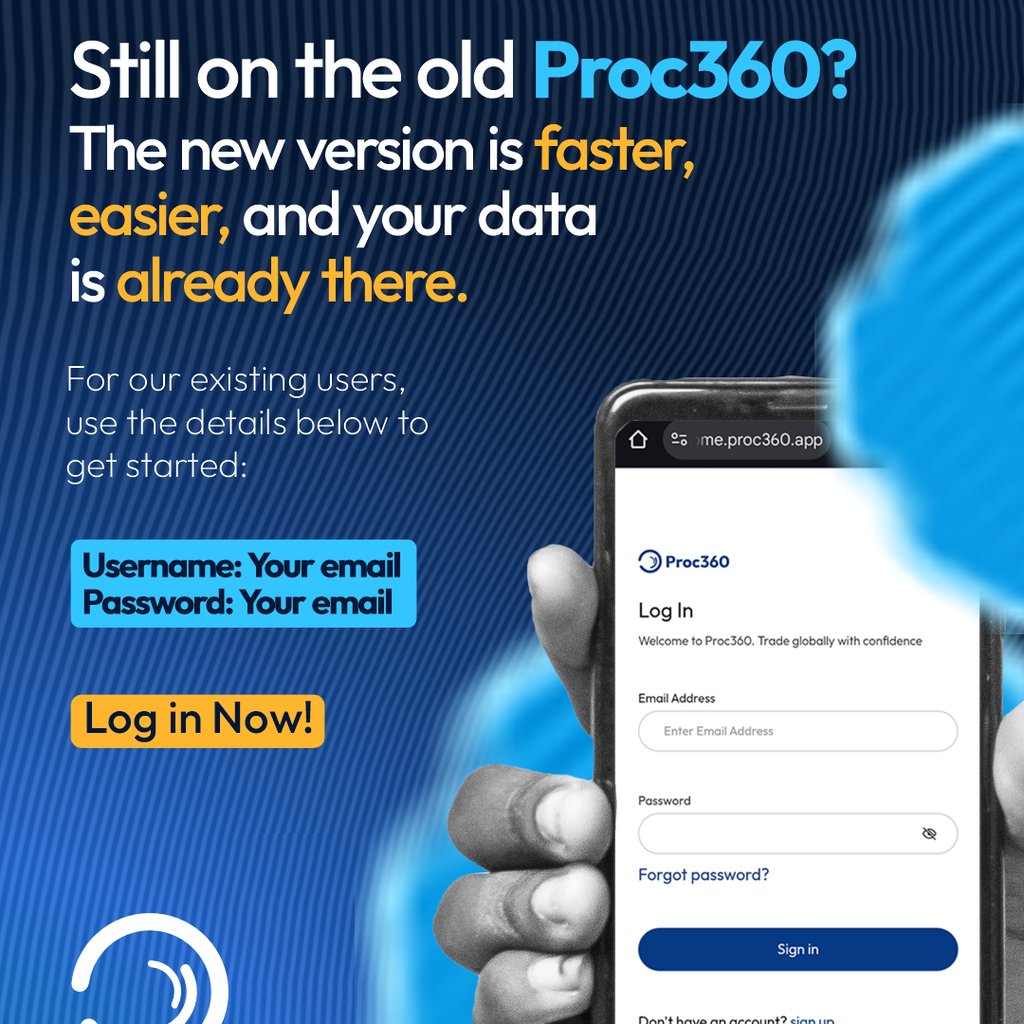
Ready to start your mini importation business the smart way? Sign up with Proc360 today and get your first order moving within 48 hours.
Step 2: Find Trusted Suppliers
How to find a trusted supplier is THE most critical step. This is where most beginners lose money.
Best Platforms for Sourcing
1. 1688.com (Best Prices, Chinese Only)
Cheapest wholesale prices in China
Requires Chinese language (use Google Translate or agents)
Minimum orders: Usually 5-20 units
Best for experienced importers
2. AliExpress (Beginner-Friendly)
English interface, supports small orders (even 1 unit)
Built-in buyer protection
Slightly higher prices than 1688
Perfect for testing products
3. Alibaba (Bulk Orders)
Better for 50+ units
Lower per-unit pricing
More negotiation required
Trade assurance protection available
How to Choose the Right Supplier for Your Business
✅ Check ratings: 4.5+ stars minimum with 500+ transactions ✅ Read reviews carefully: Look for "verified purchase" + photo reviews ✅ Check response time: Message 3-5 suppliers, choose fastest responders ✅ Order samples first: Never order bulk without testing quality (invest ₦5,000-₦10,000) ✅ Verify business license: On Alibaba, check for "Gold Supplier" badge ✅ Test communication: Reliable suppliers reply within 24 hours ✅ Compare prices: Get quotes from 3-5 suppliers, avoid suspiciously cheap prices (usually fake) ✅ Check delivery time: Confirm production time + shipping estimates
Red Flags to Watch For
❌ Prices 50%+ lower than other suppliers (too good to be true) ❌ No reviews or ratings ❌ Refuses to send samples ❌ Pressure tactics ("order today or price increases") ❌ Poor English communication (on English platforms) ❌ No clear return/refund policy
The easier way: Use Proc360—we've already vetted reliable suppliers, handle all negotiations in Chinese, and ensure product quality before shipping. You avoid scams entirely.
Step 3: Set Up Your Business Infrastructure
Do You Need CAC Registration?
Not mandatory for mini importation, but increasingly helpful:
Benefits of registration:
Open business bank accounts
Get TIN (required under 2026 tax laws for ₦100M+ turnover)
Build customer trust and credibility
Access certain payment platforms
Qualify for business loans/funding
Cost: ₦10,000-₦15,000 (business name) or ₦35,000-₦50,000 (limited company)
When to register: After making first ₦500,000 in sales, or if planning to scale big.
Essential Business Setup
What you absolutely need:
✅ Smartphone or laptop: For browsing suppliers and managing orders ✅ Reliable internet: MTN/Airtel data plan (₦5,000-₦10,000/month) ✅ Business WhatsApp account: Separate from personal number ✅ Instagram Business account: Primary sales channel ✅ Payment collection: Bank account + Paystack/Flutterwave for card payments ✅ Delivery address: Home address or pickup location for shipments
Optional but valuable:
✅ Professional logo (₦5,000-₦20,000 on Fiverr) ✅ Business cards (₦3,000-₦5,000) ✅ Custom packaging materials (₦10,000-₦30,000) ✅ Inventory tracking spreadsheet (free Google Sheets template)
Step 4: Place Your First Order
Payment Options for Chinese Suppliers
1. Virtual Dollar Cards
GTBank Dollar Card
Kuda Dollar Card
Geegpay Virtual Card
Fees: 2-4% transaction fees + exchange rate markup
2. PayPal/Payoneer
Widely accepted on AliExpress/Alibaba
Fees: 3-5% transaction fees
3. RMB Payment Through Agents
Pay suppliers directly in Chinese Yuan
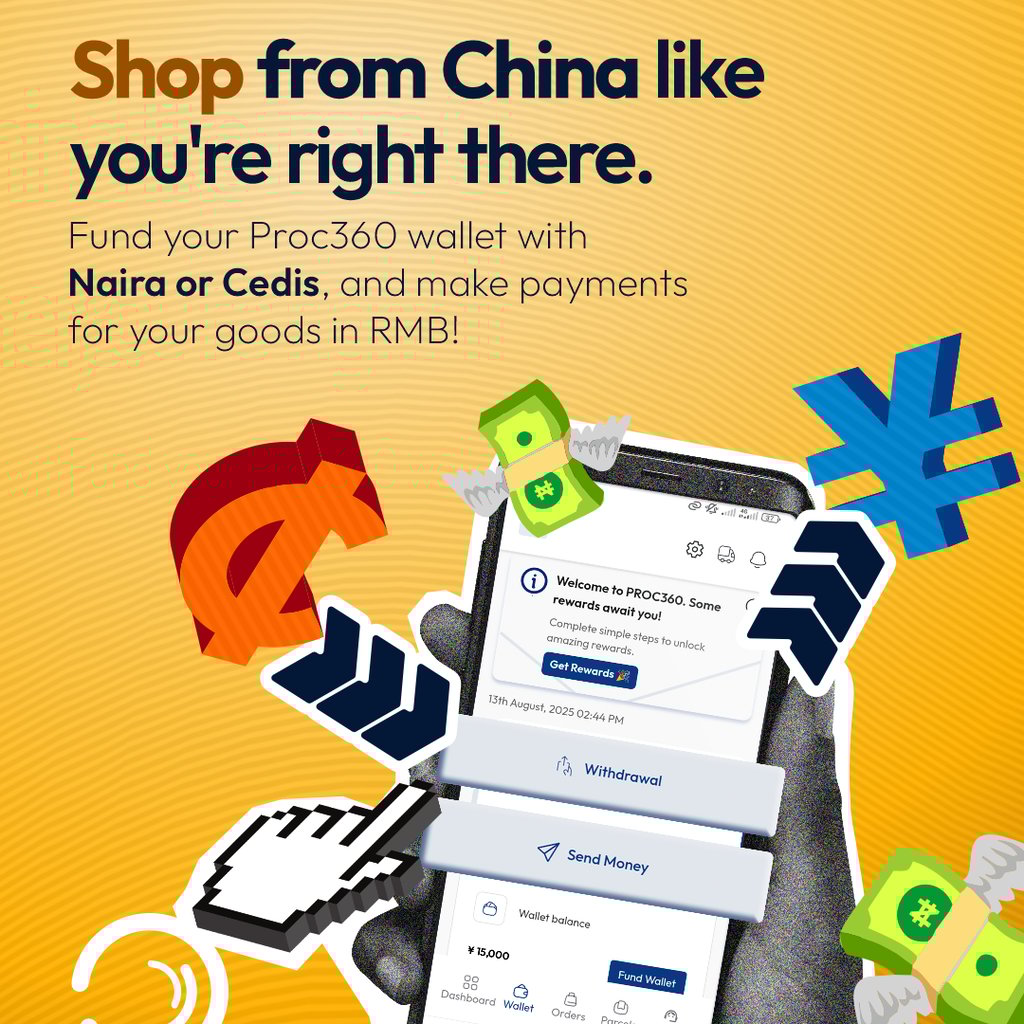
Proc360 advantage: Our RMB Wallet saves you 5-8% on every order compared to bank conversions
Example savings:
₦100,000 order through bank: Loses ₦5,000-₦8,000 in conversion fees
₦100,000 order through Proc360 RMB Wallet: Real exchange rate, save ₦5,000-₦8,000
Shipping Methods Explained
Sea Freight (30-45 days)
Cost: ₦500-₦800 per kg
Best for: Bulk orders (20kg+), non-urgent restocks
Minimum: Usually 20kg or 0.5 CBM
Pros: Cheapest option
Cons: Longest wait time
Air Freight (7-14 days)
Cost: ₦2,500-₦4,000 per kg
Best for: Small orders (5-20kg), moderate urgency
Pros: Balance of speed and cost
Cons: More expensive than sea
Express Courier (3-5 days)
Cost: ₦5,000-₦8,000 per kg
Best for: Sample orders, urgent restocks
Pros: Fastest delivery
Cons: Most expensive option
Smart strategy:
First order: Air freight (10-15kg) to test market quickly
Restock: 70% sea freight + 30% air freight for flexibility
Samples: Always use express for speed
Hidden Costs to Budget For
Most beginners forget these:
Customs duty: 5-20% of product value (varies by category)
VAT: 7.5% on CIF value
Clearing fees: ₦15,000-₦50,000 (depends on shipment size)
Local delivery: ₦3,000-₦15,000 (from port to your location)
Packaging materials: ₦5,000-₦20,000
Storage (if needed): ₦10,000-₦30,000/month
Total hidden costs: Add 25-35% to your product + shipping cost
Example calculation:
Product cost: ₦50,000
Shipping: ₦20,000
Subtotal: ₦70,000
Hidden costs (30%): ₦21,000
Total landed cost: ₦91,000