How Much Money Do You Need to Start Mini Importation? (2026 Realistic Budget)
Wondering how much money do you need to start mini importation in 2026? See the realistic budget breakdown, hidden costs, and how Nigerians start profitably with ₦50k to ₦1M.
GROWING BUSINESSGETTING STARTED
Jacob Ehigie
2/6/20268 min read
Biodun saw a TikTok video: "I started mini importation with just ₦20,000 and made ₦500,000 in one month!" Excited, he transferred his last ₦25,000 to a supplier, ordered 10 phone accessories, and waited.
Two months later, his goods finally arrived. After shipping (₦12,000), customs clearing (₦8,000), and local delivery (₦3,000), he'd spent ₦48,000 total. He sold all 10 items for ₦45,000. He lost money.
How much do I need to start mini importation is the wrong question. The right question is: "How much do I need to start, make profit, and avoid losing money on hidden costs?"
Because it's not just about product cost—it's about the FULL picture: shipping, customs, marketing, and unexpected expenses that YouTube tutorials conveniently skip.
If you're asking "is mini importation business profitable?" or wondering whether you can realistically start with ₦20,000—this guide gives you brutally honest answers with real numbers for 2026.
And if you want to maximize limited capital, platforms like Proc360 help you avoid hidden costs with transparent pricing, free consolidation, and RMB payment options that save 5-8% on every order.
Let's break down exactly how much to start mini importation at different budget levels—and which one matches your situation.
How to Start Mini Importation with No Money in Nigeria
How to start mini importation with no money in nigeria is possible—but harder and riskier.
Zero-Capital Strategies
1. Pre-Order / Crowdfunding Model
Post product images (from supplier with permission)
Collect payments from buyers first
Order only after hitting minimum target (e.g., 20 pre-orders)
Ship when goods arrive
Pros: Zero capital risk Cons: Requires high trust, longer wait times frustrate customers
2. Partnership Deal
Find capital partner (friend, family, investor)
You handle operations (sourcing, marketing, sales)
Split profits 50/50 or 60/40
Example: Partner provides ₦500k, you do the work, each takes ₦250k profit.
3. Start Micro (₦10,000-₦20,000)
Borrow small amount from trusted source
Buy 5-10 units of fast-selling item
Sell within 7-14 days
Return borrowed amount + small interest
Reinvest profit
4. Dropshipping (High Risk)
List products without buying inventory
When customer orders, buy from supplier and ship direct
Markup 2x-3x
Pros: Zero inventory cost Cons: No quality control, long delivery times, customer complaints
Reality check: These methods work but grow SLOWER than starting with proper capital (₦50k-₦100k).
Common Capital Mistakes Beginners Make
❌ Spending 100% on products, keeping nothing for shipping → Solution: Budget 60% products, 40% shipping/costs
❌ Not testing with samples first → Solution: Spend ₦10k-₦15k on samples before bulk order
❌ Underestimating customs/clearing fees → Solution: Add 25-30% buffer for hidden costs
❌ No marketing budget → Solution: Reserve 10-15% for ads and promotion
❌ Ordering oversized/heavy items (shipping kills margins) → Solution: Stick to lightweight products under 2kg per unit
❌ Starting with too many product categories → Solution: Master 1-2 categories first, expand later
❌ Using entire savings/emergency fund → Solution: Only invest money you can afford to lose
How Much Should YOU Start With?
Use this decision framework:
Start with ₦50,000-₦100,000 if:
This is your first time importing
You're risk-averse
You want to test the business model
You have a side job/income source
Start with ₦200,000-₦350,000 if:
You've researched thoroughly
You have validated product ideas
You're committed to making this work
You want faster growth
Start with ₦500,000-₦1,000,000 if:
You've already done 1-2 successful test orders
You're transitioning to full-time importing
You want professional operations from day one
You have proven sales channels
Wait and save more if:
You have under ₦50,000
This is your last ₦50,000 (emergency fund)
You haven't researched products/suppliers yet
You're not ready to commit 2-3 months
Is Mini Importation a Good Business in 2026?
Short answer: Yes—IF you have realistic expectations and proper capital.
Is mini importation business profitable? Here's the reality:
✅ Potential profit margins: 2x-5x your cost (₦3,000 product → sell ₦9,000-₦15,000) ✅ Low barrier to entry: No office, warehouse, or employees needed ✅ Flexible operations: Run it part-time or full-time ✅ Scalable: Start with ₦50k, grow to ₦5M+ monthly revenue
❌ But challenges exist:
30-45 day wait for sea freight shipments
Hidden costs eat profits if you don't budget properly
Supplier scams are common (especially on cheap platforms)
Competition is high in popular product categories
How lucrative is the mini importation business?
Conservative estimate:
Start with ₦200,000 capital
Make ₦100,000-₦150,000 profit per cycle (45-60 days)
Reinvest profits
Reach ₦500,000-₦1M monthly revenue by month 6
Reality check: Most beginners make ₦50,000-₦80,000 profit on their first order due to learning curve mistakes.
The Brutal Truth: Can You Start with ₦20,000?
Technically, mini importation—but barely.
Here's what ₦20,000 actually buys:
Product cost: ₦12,000-₦15,000 (5-8 small items like phone cases)
Shipping: ₦5,000-₦7,000 (air freight, small package)
Total: ₦17,000-₦22,000
What's missing: ❌ No budget for customs/clearing fees ❌ No marketing money ❌ No buffer for unexpected costs ❌ Can't afford quality samples first
Verdict: ₦20,000 is extremely tight. You CAN start, but one mistake wipes you out. Better to save ₦50,000-₦100,000 for realistic success.
Capital Tier Breakdown: What Each Budget Level Gets You
Tier 1: Survival Start (₦50,000-₦100,000)
Who this is for: Absolute beginners testing the waters, side hustlers
What you can buy:
Products: ₦30,000-₦60,000 (10-30 units depending on item)
Shipping (air freight): ₦12,000-₦25,000
Marketing: ₦3,000-₦5,000 (Facebook/Instagram ads)
Miscellaneous: ₦5,000 (packaging, transport, airtime)
Example product orders:
20 wireless earbuds at ₦3,000 each = ₦60,000
30 phone cases at ₦1,500 each = ₦45,000
15 power banks at ₦3,500 each = ₦52,500
Expected profit:
Sell earbuds at ₦12,000 each = ₦240,000 revenue
Total cost: ₦90,000
Net profit: ₦150,000 (167% ROI)
Reality adjustment: First-timers usually make ₦80,000-₦100,000 due to slower sales and learning mistakes.
Pros: ✅ Low-risk way to test mini importation ✅ Small enough to recover from mistakes ✅ Can complete full cycle in 60 days
Cons: ❌ Limited product variety ❌ No room for error ❌ Must sell everything to break even ❌ Can't afford samples first
Tier 2: Smart Start (₦200,000-₦350,000)
Who this is for: Serious beginners ready to commit, those with proven product ideas
What you can buy:
Products: ₦120,000-₦220,000 (50-100 units)
Shipping (mix of air/sea): ₦40,000-₦70,000
Marketing: ₦15,000-₦25,000
Samples first: ₦10,000-₦15,000
Buffer: ₦15,000-₦20,000
Example multi-product order:
30 wireless earbuds (₦90,000)
40 phone accessories (₦60,000)
15 smart watches (₦52,500)
Total product: ₦202,500
Expected profit:
Total revenue: ₦650,000-₦800,000
Total cost: ₦300,000
Net profit: ₦350,000-₦500,000 (117-167% ROI)
Pros: ✅ Can afford samples to test quality first ✅ Diversify across 2-3 product categories ✅ Room for marketing and customer acquisition ✅ Buffer for unexpected costs
Cons: ❌ Still can't do full sea freight container ❌ Limited testing capacity
How Proc360 Maximizes Your Limited Capital
Whether you're starting with ₦50k or ₦1M, Proc360 helps you stretch every naira:
✅ 5-8% savings on every order with RMB Wallet (vs bank conversions) ✅ Free consolidation = 30-40% savings on shipping ✅ No scam risk = protect your limited capital with verified suppliers ✅ Transparent pricing = know exact costs before ordering ✅ Real-time tracking = no surprises, no lost shipments ✅ Documentation support = avoid costly customs delays
Example savings:
₦200,000 order through bank: Lose ₦15,000 in conversion + ₦60,000 shipping
₦200,000 order through Proc360: Save ₦15,000 conversion + ₦25,000 consolidation
Total savings: ₦40,000 (20% of your capital back!)
That ₦40,000 could buy 15 more products or fund your next marketing campaign.
Stop wasting money learning the hard way. Sign up with Proc360 today and make your limited capital work harder.
Tier 3: Professional Launch (₦500,000-₦1,000,000)
Who this is for: Those scaling from small wins, entrepreneurs going full-time
What you can buy:
Products: ₦300,000-₦600,000 (100-300 units)
Shipping (sea freight bulk): ₦100,000-₦180,000
Marketing: ₦50,000-₦80,000
Professional branding: ₦30,000-₦50,000
Virtual assistant: ₦20,000-₦40,000/month
Buffer: ₦50,000
Example large order:
100 wireless earbuds (₦300,000)
80 smart watches (₦280,000)
50 Bluetooth speakers (₦175,000)
Total product: ₦755,000
Expected profit:
Total revenue: ₦2.5M-₦3.5M
Total cost: ₦1M
Net profit: ₦1.5M-₦2.5M (150-250% ROI)
Pros: ✅ Qualify for sea freight bulk discounts ✅ Can hire help for operations ✅ Professional branding builds trust ✅ Test multiple niches simultaneously ✅ Strong marketing budget for faster sales
Cons: ❌ Higher capital risk if products don't sell ❌ Longer sales cycle (need 60-90 days to clear inventory)
Tier 4: Scale Mode (₦2,000,000+)
Who this is for: Established importers scaling aggressively, transitioning from side hustle to full business
What this enables:
Full container shipments (20ft/40ft)
Multiple product categories
Warehousing and inventory management
Team hiring (sales, customer service, logistics)
Physical store or showroom
Influencer marketing campaigns
Expected profit: ₦5M-₦15M+ per quarter depending on execution
Complete Cost Breakdown: What People Forget to Budget
Most beginners only calculate product cost, forgetting these expenses:
Hidden Costs That Kill Profits
1. Shipping (20-40% of total cost)
Air freight: ₦2,500-₦4,000 per kg
Sea freight: ₦600-₦900 per kg (minimum 20kg usually)
Express courier: ₦5,000-₦8,000 per kg
2. Customs Duty & VAT (15-25% of CIF value)
Import duty: 5-20% (varies by product)
VAT: 7.5%
Clearing agent fees: ₦15,000-₦50,000
3. Documentation Fees (₦10,000-₦40,000)
Form M processing
SONCAP certificate (for electronics): $200-$500
Tax Clearance Certificate
4. Local Delivery (₦3,000-₦15,000)
Port to your location
Last-mile delivery to customers
5. Marketing (10-20% of capital)
Facebook/Instagram ads: ₦5,000-₦50,000
Influencer shoutouts: ₦10,000-₦30,000
Content creation: ₦5,000-₦20,000
6. Packaging (₦200-₦500 per item)
Branded bags/boxes
Thank-you cards
Protective wrapping
7. Business Operations (₦10,000-₦50,000/month)
Phone/internet: ₦10,000
Transportation: ₦15,000-₦30,000
Miscellaneous: ₦10,000
Total hidden costs: Add 30-40% to your product + shipping cost
Example:
Product + shipping: ₦100,000
Hidden costs (35%): ₦35,000
Actual total: ₦135,000
This is why ₦20,000 doesn't work—hidden costs consume your capital.
Platform Comparison: 1688 vs AliExpress vs Alibaba
Which platform should you use? Depends on your budget and experience.
1688 (Cheapest Prices)
Best for: Experienced importers, those with ₦200k+ budget
Pros: ✅ Lowest wholesale prices (30-50% cheaper than AliExpress) ✅ True factory-direct sourcing ✅ Huge product variety
Cons: ❌ Chinese language only (use Google Translate or agents) ❌ Minimum orders usually 5-20 units ❌ No buyer protection like AliExpress ❌ Complex payment (Alipay, agents)
When to use: After you've proven products work on AliExpress, source from 1688 for better margins.
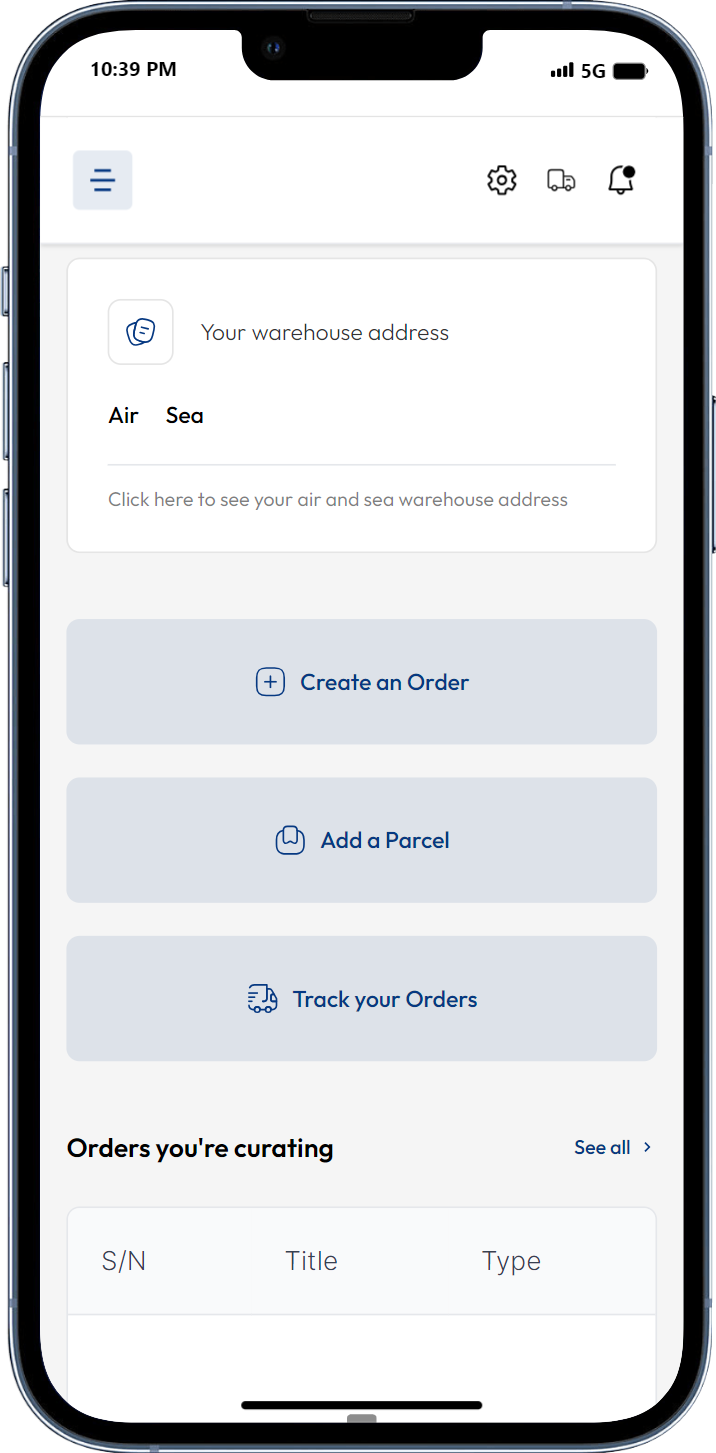
Proc360 advantage: You source from 1688 directly through the app—no language barrier, no guesswork. See factory prices, compare suppliers, and place orders yourself.
AliExpress (Beginner-Friendly)
Best for: First-timers, testing products, budgets under ₦100k
Pros: ✅ English interface ✅ Buy 1 unit (test without commitment) ✅ Buyer protection (refunds if scammed) ✅ Credit card payment accepted
Cons: ❌ Prices 30-50% higher than 1688 ❌ Longer shipping times (dropshipping model) ❌ Product quality varies widely
When to use: Testing new product ideas with samples before bulk ordering.
Alibaba (Bulk Orders)
Best for: Orders of 50+ units, budgets ₦500k+
Pros: ✅ Factory-direct contact ✅ Negotiable pricing (bulk discounts) ✅ Trade Assurance protection ✅ Better for customization/branding
Cons: ❌ High minimum order quantities (MOQs) ❌ Requires more capital upfront ❌ Longer production times
When to use: When you've validated demand and ready to scale with bulk orders.
Proc360 (Self-Serve Platform)
Best for: Importers who want to control their own sourcing with full transparency
What YOU can do with Proc360: ✅ Source from 1688/Alibaba directly through the app—see factory prices yourself, no markup ✅ Browse Chinese suppliers without language barriers—app translates product listings for you ✅ Pay suppliers directly through your RMB Wallet—save 5-8% on conversion fees ✅ Combine orders from multiple suppliers—free consolidation cuts your shipping costs ✅ Choose from verified suppliers only—you avoid scam risk entirely ✅ Track your shipment in real-time—from China warehouse to Lagos/Abuja, you see every step ✅ Access all import documentation in one place—invoices, customs forms, tracking on the app
When to use: Whether you're starting with ₦50k or scaling to ₦5M—Proc360 puts the tools in your hands.