How to Order from Multiple Chinese Suppliers and Combine Into One Shipment
Learn how Nigerian importers can combine goods from multiple Chinese suppliers into one shipment, reduce freight costs, simplify logistics, and save money.
GROWING BUSINESSGETTING STARTED
Ugbe Zurishaddai
7/1/20266 min read


Picture this. You run an import business in Lagos. You source leather bags from Guangzhou, phone accessories from Shenzhen, and home goods from Yiwu. You have three different suppliers, three separate invoices, and if you are not careful, three separate freight bills that together can eat all your profits before you even start selling.
This is one of the most expensive mistakes business owners make when importing from China. Shipping each supplier's goods separately feels logical on the surface, until you actually do the numbers. A single Less-than-Container-Load shipment from China to Nigeria can cost anywhere from $200 to $600 per cubic metre, depending on the route and the freight forwarder. Multiply that across three separate consignments, and you are handing away thousands of dollars you did not have to spend.
The solution is shipment consolidation. Understanding how it works, and how to manage it properly, is one of the most commercially valuable things any serious importer can learn.




Quality Checks Protect Everything
The warehouse stage is the most important quality control moment in the entire consolidation process. This is the point where you can still do something about a problem. Once goods are loaded, sealed into a container, and on a vessel for 35 days, your practical options for addressing a defect shrink dramatically. By the time a defective shipment reaches Lagos and clears customs, you have already paid for the goods, paid for freight, and paid duty on the full declared value. Your leverage is close to zero.
At the warehouse stage, you still have leverage. If a supplier has sent the wrong colour, short quantities, damaged units, or a quality standard that does not match your agreed sample, you can catch it here. You can go back to the supplier with evidence while the goods are still in China and a correction or replacement is still logistically possible.
This is why treating the warehouse as a quality checkpoint, not just a logistics stop, protects the commercial value of your entire import strategy. Proc360 gives business owners exactly this capability. You can direct multiple suppliers to Proc360's China warehouse, use the platform's built-in quality check to verify goods on arrival against what you ordered, and consolidate everything into one shipment to Nigeria within the same system you are already using to manage supplier communications and payments. You stay in control of every step. No agent is making decisions on your behalf, and no middleman is standing between you and your own shipment.
Timing: The Risk That Catches Most Importers
Timing is the biggest operational risk in consolidation, but it is almost entirely within your control when you plan for it properly.
Chinese public holidays are the most predictable disruption most importers fail to account for. Chinese New Year, which falls in January or February depending on the lunar calendar, shuts factories and logistics operations across China for two to four weeks. Freight volumes spike aggressively in the weeks before the holiday as businesses rush to move goods before the shutdown, causing port congestion and vessel space shortages that ripple for weeks after factories reopen. Golden Week in October creates a similar but shorter disruption.
If your consolidation window overlaps with either of these periods, add three to four weeks to your expected timeline, not as a worst-case scenario but as a realistic operating assumption.
The other timing risk is documentation. Errors in supplier invoices, packing lists, or HS code declarations can hold your consolidated shipment at Nigerian customs long after it arrives. A packing list that does not reconcile with the commercial invoice triggers a customs examination. An incorrect HS code raises a duty dispute. Both cost time and money at the port that you could have avoided by checking documents before the vessel departed.


What to Have Ready Before Goods Move
Before you direct any supplier to a consolidation warehouse, these documents need to be ready and verified:
A complete packing list from each supplier, showing product descriptions, quantities, weights, and dimensions per carton.
Commercial invoices from each supplier, accurately reflecting the goods being shipped and their values.
Confirmed HS codes for each product category, because these determine duty rates when your shipment clears in Nigeria.
And your Form M, which needs to be in place before goods arrive at the port.
Getting documentation right before goods move is one of the clearest competitive advantages a serious importer can have. It is also one of the most consistently overlooked.
The Importers Who Do This Well
The businesses that import most efficiently in Nigeria are rarely the ones managing eight small separate consignments a month. They are the ones who plan their product mix in advance, coordinate supplier timelines with built-in buffers, and move volume in properly documented, properly checked consolidated shipments.
Consolidation is not a workaround or a trick. It is the standard operating model for any business importing from multiple suppliers at meaningful volume. The savings on freight alone justify the planning effort. The quality-control benefit at the warehouse stage adds another layer of protection that paying separately for multiple shipments does not provide.
Get the warehouse setup right, coordinate your supplier timelines carefully, check goods before they are loaded, and your consolidated shipment will arrive in Lagos at a significantly lower cost per unit than the same goods would have cost you shipping separately.


What Consolidation Actually Means
Consolidation is simple in principle. Instead of shipping each supplier's goods directly from their individual factory, you direct all your suppliers to send goods to a single warehouse in China first. Once everything arrives, the goods are verified, packed together, and shipped to Nigeria as one combined consignment.
This way, you’re paying only one freight bill, one customs clearance, and one delivery to your doorstep.
The savings are significant. A business importing $100,000 worth of goods across four suppliers could save $4,000 to $7,000 on freight costs alone by consolidating rather than shipping separately. Do that consistently across six shipments a year and you are talking about real money that stays in your business instead of going to freight invoices.
Beyond cost, consolidation also simplifies your import operation considerably. Instead of tracking four separate shipments through Chinese ports, on four different vessels, with four different arrival dates at Apapa, you are managing just one set of documents, one customs clearance process, and one clearing agent bill.
How To Start Consolidating: The Warehouse Is Everything
The foundation of any consolidation arrangement is a warehouse address in China that all your suppliers can deliver to. Without a central collection point, nothing else works. This warehouse is where goods from different suppliers arrive, are verified, packed together, and eventually loaded onto a vessel bound for Nigeria or Ghana.
Once you have that warehouse address confirmed, share it with every supplier involved in that shipment cycle. Be specific. Give them the full address, the contact person at the warehouse, and the delivery window you expect them to meet. Each supplier is responsible for delivering their goods to that address independently, within the window you set.
Your job is to coordinate those delivery timelines so that everything arrives at the warehouse within a reasonable window of each other. While this sounds straightforward, it is usually at this part that most consolidation arrangements break down.
A supplier arriving three weeks after the others forces a painful choice. Either you ship early without their goods, which defeats the purpose of consolidating, or you hold everything and delay your shipment, which pushes your arrival in Lagos back by weeks and can cost you a selling season or a client commitment you cannot move.
The fix is simple but requires discipline.
Give every supplier the same target delivery date at the warehouse. Make it earlier than you actually need. Build in a buffer of at least seven to ten working days between the latest acceptable supplier delivery and your planned vessel departure. Chinese suppliers are consistently optimistic about lead times, so you need to plan around realistic delivery dates, not the promised ones.
Ready to consolidate your next imports?
The safest and most profitable way to import from China is with proc360.app
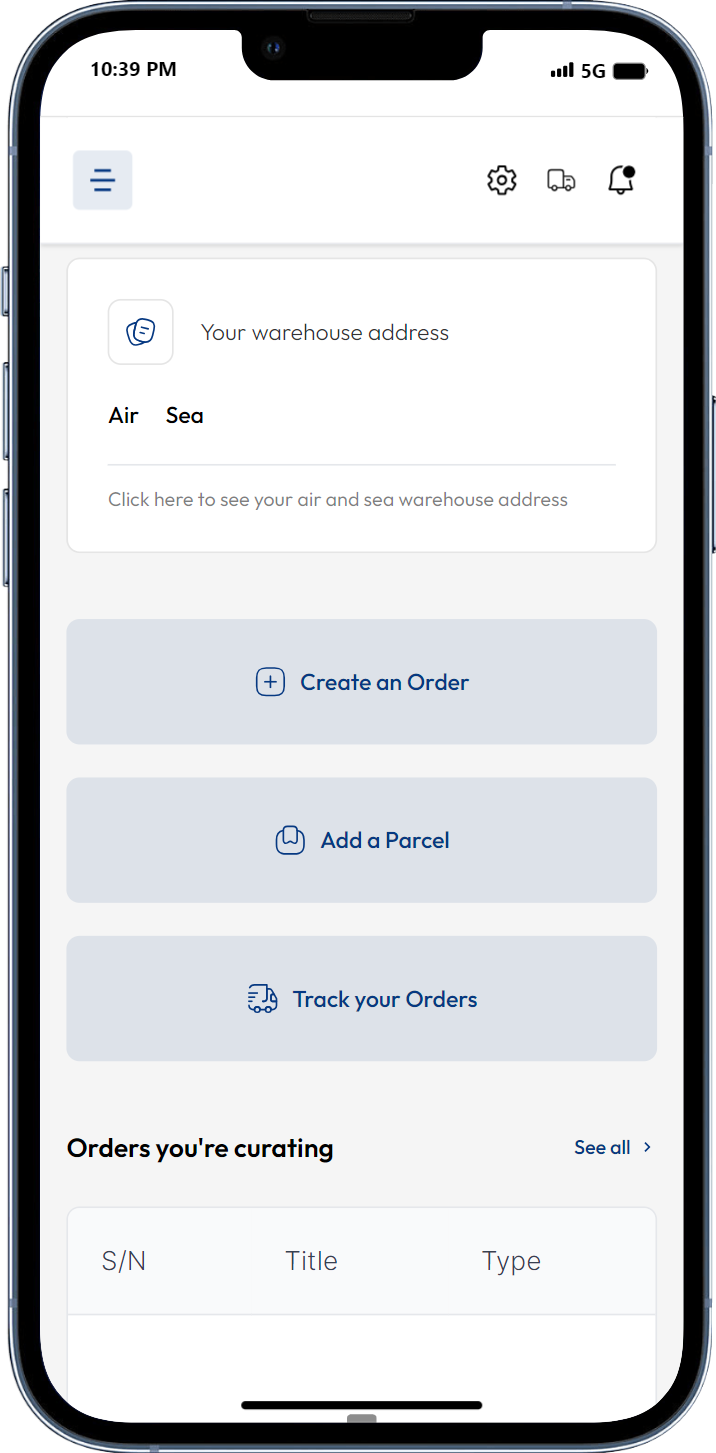
The platform is structured in such a way that you can manage all your shipments, send them to a clear warehouse address, and also enjoy thorough inspections and quality checks.
Plus, storage at the warehouse facility is completely FREE for up to 30 days.
Try ir for yourself the next time you import from China, your first import on the platform is free of service charges too.