Can You Still Ship Power Banks and Lithium Batteries from China? (2026 Export Update)
Can you still import power banks from China in 2026? Learn current lithium battery export rules, 3C requirements, and how to stay compliant before regulations change.
GROWING BUSINESSGETTING STARTED
Jacob Ehigie
3/2/20267 min read
Breaking: China suspended export controls on lithium batteries in November 2025—but only until November 2026. If you're importing power banks, wireless earbuds, smartwatches, or any electronics with lithium batteries from China, you need to understand what's happening right now.
Here's what changed:
October 9, 2025: China announced strict export controls on lithium-ion batteries, rare earth materials, and super-hard materials (diamonds, synthetic materials).
November 7, 2025: China SUSPENDED those controls—but only temporarily until November 10, 2026.
What this means for mini importers: You can still ship lithium battery products from China right now, but you need to verify eligibility yourself and have backup plans ready before November 2026.
With Proc360, you source directly from verified suppliers who know current export regulations, track shipments in real-time, and pivot quickly if restrictions change again. Here's how to check if YOUR products are affected.
What to Do If November 2026 Controls Return
The current suspension expires November 10, 2026. China may:
Option 1: Extend the suspension (most likely for consumer products)
Option 2: Reimpose full controls on lithium batteries and rare earths
Option 3: Modify controls (e.g., stricter on industrial batteries, lenient on consumer batteries)
If Controls Return, Here's Your Action Plan:
For Power Banks/Battery Products:
Option 1: Verify if YOUR specific product requires a license
High-capacity industrial batteries: Likely need licenses
Standard consumer power banks under 100Wh: Probably exempt
Option 2: Ask if your supplier can obtain export licenses
Many established suppliers can apply for MOFCOM licenses
Process takes 2-4 weeks, adds cost
Option 3: Switch to non-battery alternatives
Solar-powered chargers
Wired accessories instead of wireless
USB cables, phone cases, screen protectors (no batteries)
Using Proc360: If restrictions return, you search alternative products directly in the app, compare suppliers, and place sample orders—all without switching platforms.
Common Myths About China Export Bans (Debunked)
❌ Myth: "All power banks are banned from China." ✅ Reality: Consumer power banks under 100Wh with 3C certification CAN be exported (as of March 2026).
❌ Myth: "If my supplier ships it, it's automatically legal." ✅ Reality: YOU need to verify compliance yourself. Some suppliers may not know about recent regulatory changes.
❌ Myth: "Electronics are too risky to import from China now." ✅ Reality: Finished consumer electronics are generally fine. Controls target industrial components and manufacturing technology.
❌ Myth: "Once I place an order, I'm safe from new bans." ✅ Reality: China can impose controls even after you've paid. Goods could be held at Chinese customs before shipping.
Real Impact: What Happened to Importers in October-November 2025
When China announced export controls in October 2025, mini importers faced:
Week 1 (Oct 9-15): Panic—many thought ALL lithium products were banned Week 2 (Oct 16-31): Confusion—unclear if consumer products were affected Week 3 (Nov 1-7): Relief—controls suspended before they took full effect
Lesson: Importers who verified regulations themselves and had backup products ready didn't panic. Those who relied solely on suppliers scrambled.
How to Stay Informed About Future Changes
1. Monitor MOFCOM Announcements
Bookmark: http://www.mofcom.gov.cn/
Check monthly for new export control announcements
Use Google Translate if needed
2. Follow Trade News
Subscribe to: China Briefing, China Law Blog, CSET Georgetown
Set Google Alerts for "China export control" + "lithium battery"
3. Join Importer Communities
Facebook groups: "Nigeria/Ghana China Importers"
WhatsApp groups focused on mini importation
Share regulatory updates with peers
4. Use Proc360's Platform When you source through Proc360, supplier verification includes export compliance checks. If regulations change, you can pivot quickly with real-time tracking and direct supplier communication.
What Items Can't Be Exported from China? (Current Status 2026)
The most common question mini importers ask: "What products are restricted from China?"
Here's what's currently suspended (meaning you CAN export these until November 2026, but restrictions may return):
1. Lithium-Ion Batteries and Related Materials
Temporarily suspended controls cover:
High-energy-density lithium-ion batteries (≥300Wh/kg)
Lithium iron phosphate (LFP) batteries
Battery cathode and anode materials
Battery manufacturing equipment and technology
What YOU can still ship (for now): ✅ Power banks under 100Wh (most consumer power banks) ✅ Phone batteries, earbud batteries, smartwatch batteries ✅ Consumer electronics with built-in lithium batteries ✅ E-bike batteries under 160Wh
Critical note: China's Civil Aviation Administration (CAAC) banned power banks WITHOUT China Compulsory Certification (3C mark) on flights starting June 28, 2025. If you're importing power banks, they MUST have the 3C certification mark to ship via air freight.
Action step: Ask your supplier: "Does this power bank have 3C certification?" If they say no, find a different supplier.
2. Rare Earth Materials
Temporarily suspended controls on:
Gallium, germanium, antimony
Synthetic diamond micropowder and monocrystals
Super-hard materials (grinding wheels, wire saws)
Are mini importers affected? Unlikely—unless you're importing industrial materials or raw rare earths. Consumer electronics containing trace rare earths are NOT affected.
3. Drone Components and Batteries
What changed: In October 2024, China banned specific companies (like Skydio) from sourcing drone batteries. Broader drone component restrictions followed in late 2025 but were also suspended in November.
Can you still import drones? ✅ YES—consumer camera drones under $500 ✅ YES—toy drones, hobby drones ❌ MAYBE—professional-grade drones with advanced imaging or military-grade capabilities (check with supplier)
Action step: If importing drones, verify with your supplier that they can export to Nigeria/Ghana specifically. Some companies face individual restrictions even if general bans are suspended.
How Proc360 Keeps YOU Ahead of Export Changes
When you're importing yourself, staying compliant with China's export regulations is YOUR responsibility. Proc360 gives you the tools to do it right:
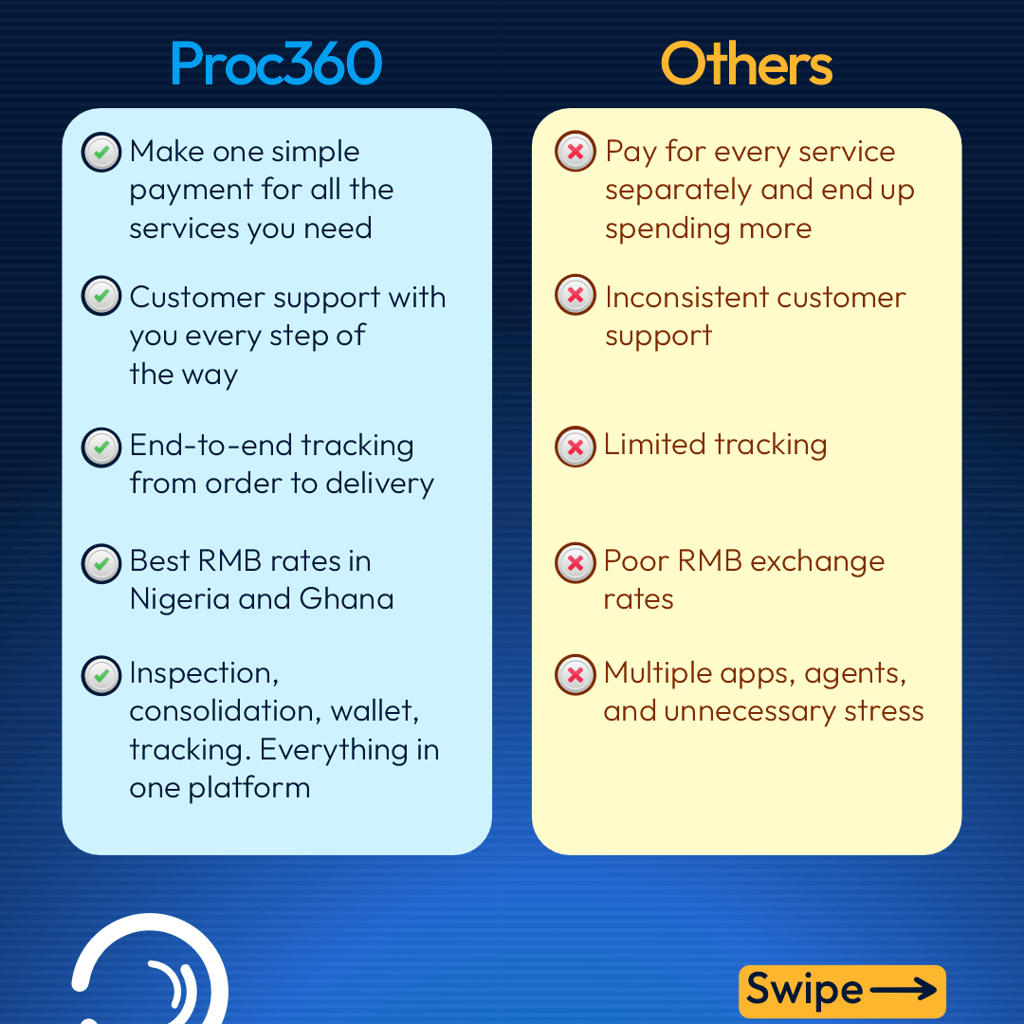
✅ Source from Verified Suppliers: All suppliers on the platform have established export track records
✅Real-Time Product Browsing: Compare suppliers across 1688, Alibaba, Pinduoduo—find compliant alternatives fast
✅ Direct Supplier Communication: Message suppliers about export requirements before ordering
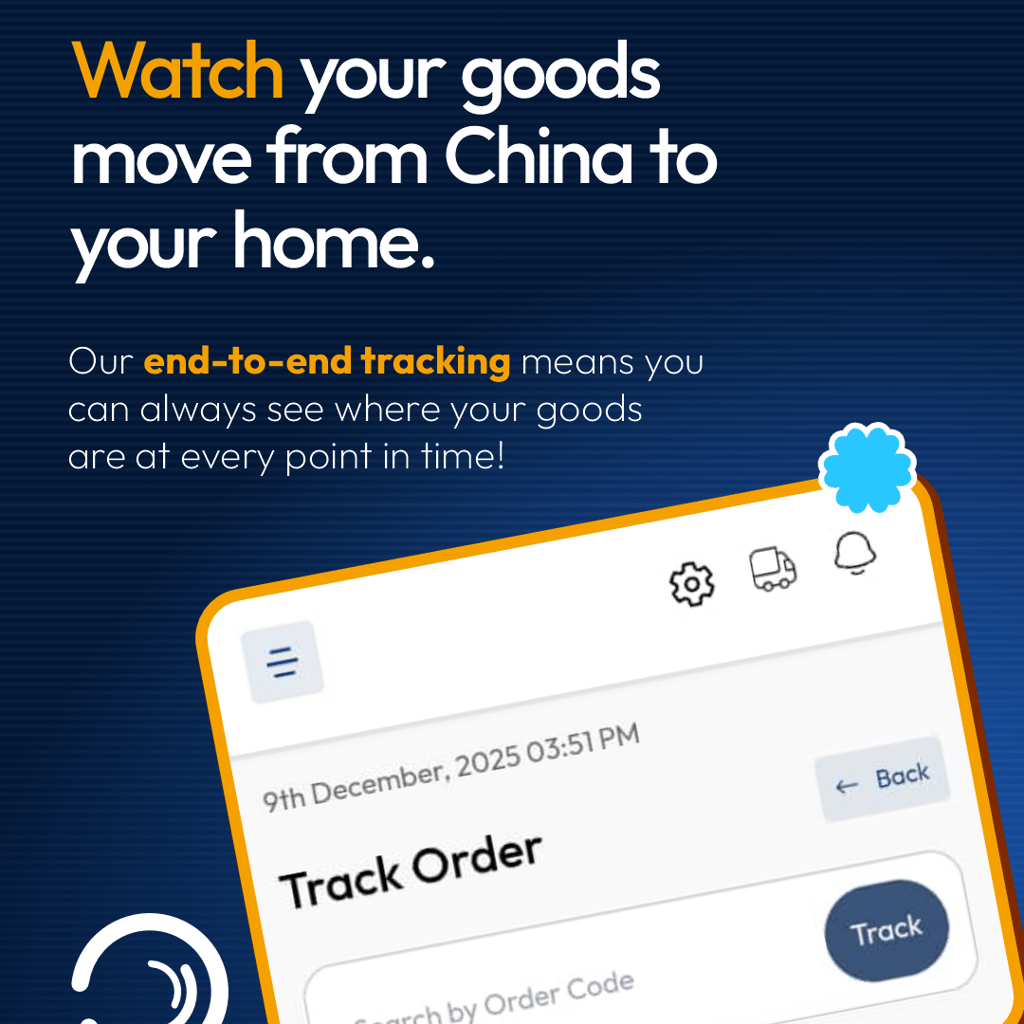
✅ Transparent Tracking: Monitor shipments from China to your doorstep—if customs holds goods, you know immediately
✅Order Consolidation: Pivot mid-order by combining shipments from multiple suppliers
You're not relying on an agent to tell you if there's a problem. You see everything, control everything, and can act fast when regulations shift.
Ready to take control of your imports? Sign up with Proc360 today and source with confidence—even when export rules change.
Real Search Questions Answered
"Can I Ship Power Banks from China?"
YES—if they have 3C certification and are under 100Wh.
Most consumer power banks fall under 100Wh. Here's how to calculate:
Formula: (mAh × Voltage) ÷ 1000 = Wh
Example:
20,000mAh power bank × 3.7V ÷ 1000 = 74Wh ✅ (Can ship)
50,000mAh power bank × 3.7V ÷ 1000 = 185Wh ❌ (Exceeds limit)
Critical: Power banks MUST be shipped via carry-on baggage for air freight, never checked luggage. For sea freight, they ship normally.
"Are Electronics Banned from Export China?"
NO—consumer electronics are NOT banned.
Finished products like wireless earbuds, Bluetooth speakers, LED lights, and smartwatches are fine to import. Export controls target:
Battery MANUFACTURING technology (not finished batteries)
High-energy-density batteries for industrial use (not consumer products)
Dual-use components with military applications (not everyday electronics)
"What Products Are Restricted from China Right Now?"
As of March 2026, most consumer products have NO restrictions. The November 2025 suspension removed controls on lithium batteries, rare earths, and super-hard materials.
However, these controls return November 10, 2026 unless China extends the suspension.
How to Check If YOUR Products Can Be Exported (Step-by-Step)
Don't wait for your supplier to tell you there's a problem. Here's how YOU verify yourself:
Step 1: Know Your Product's HS Code
The Harmonized System (HS) code classifies your product for customs.
How to find it:
Ask your supplier directly
Search "HS code for [product name]"
Check AliExpress/Alibaba listings (often show HS codes)
Use World Customs Organization database
Example HS codes:
Power banks: 8507.60
Wireless earbuds: 8518.30
Smartwatches: 8517.62.00
Step 2: Cross-Check Against China's Export Control Lists
Three main lists to check:
1. Catalogue of Technologies Prohibited or Restricted from Export Updated July 2025—added lithium battery manufacturing tech (currently suspended).
Where to check: China's Ministry of Commerce (MOFCOM) website
2. Dual-Use Items Export Control List Items with civilian AND military applications.
Are consumer electronics dual-use? No—unless they contain advanced encryption, high-performance semiconductors, or military-grade imaging.
3. Administrative Catalogue of Import/Export Licenses: Products requiring licenses before export (updated annually).
Where to check: MOFCOM announcements, China Customs website
Step 3: Verify 3C Certification (For Battery Products)
If importing power banks, battery packs, or rechargeable batteries, verify 3C certification:
How to check:
Ask supplier for 3C certificate number
Look for 3C mark on product images (圆形标志 with "CCC")
Verify certificate authenticity on China's certification website
Why this matters: Without 3C certification, Chinese customs may refuse export, OR your goods could be confiscated at airports during transit.
Step 4: Ask Your Supplier Directly
Questions to ask:
"Can you export this product to Nigeria/Ghana right now?"
"Does this product require an export license?"
"Do you have 3C certification for this item?" (if battery product)
"Have you shipped this product internationally in the past 30 days?"
Red flags:
Supplier hesitates or says "need to check with factory"
Can't provide 3C certificate for battery products
Says "we'll try to ship and see what happens"
With Proc360: You source from verified suppliers directly through the app—suppliers with established export track records who know current regulations.
Step 5: Have Backup Products Ready
Even if your product is clear today, China can impose temporary controls with 2 weeks' notice (like they did in October 2025).
Smart strategy:
Identify 2-3 alternative products in case restrictions hit your main product
Test samples of backup products before committing
Monitor MOFCOM announcements monthly
Platform advantage: With Proc360, you browse verified suppliers across multiple product categories from one app. If restrictions change, you pivot quickly without starting from scratch.