Air Freight From China to Nigeria: Types, Costs, and How to Calculate Your Shipping Bill
Learn how air freight from China to Nigeria works, including types, costs, and how to calculate your shipping bill accurately.
GROWING BUSINESSGETTING STARTED
Jacob Ehigie
4/17/20267 min read
Air freight gets your goods to Nigeria in 7 to 14 days, sometimes faster. But without understanding how it’s priced, you can easily pay far more than you should. Most importers get their first air freight bill and are surprised. The number is higher than the rate they were quoted, and they can’t figure out why.
The answer almost always comes down to chargeable weight. Air freight isn’t billed on what your goods actually weigh on a scale. It’s billed on what the airline decides they weigh, which can be significantly more if your goods are bulky or your packaging is oversized.
This guide explains the different types of air freight available for China-to-Nigeria shipments, how chargeable weight is calculated, current 2026 rate ranges, and exactly when air freight makes business sense versus sea freight.
Importing from China by air? Start your order on Proc360 and ship with full tracking. Sign up for free →




The 3 Types of Air Freight from China to Nigeria
Not all air freight is the same. Understanding which type applies to your shipment affects both your cost and your transit time.
1. Standard Air Freight (Normal Goods)
This is the most common and most affordable air freight option. Normal goods are items with no import or export restrictions — things like clothing, accessories, footwear, home goods, electronics without batteries, and general merchandise. Standard air freight from China to Nigeria currently takes 7 to 10 days, with goods arriving at Murtala Muhammed International Airport in Lagos (or Abuja/Port Harcourt for inland deliveries).
On Proc360, standard air freight is priced at $11.40 per kg. This is the rate most importers use for everyday product shipments.
2. Special Goods Air Freight
Special goods are items that require additional handling, documentation, or regulatory checks before they can be cleared for air transport. These include lithium batteries and power banks, liquids and aerosols, cosmetics, food items, glass, and certain types of electronics. Because of the extra compliance requirements, special goods take longer — typically 14 to 21 days — and cost more.
On Proc360, special goods air freight is priced at $13.00 per kg. If you’re unsure whether your product qualifies as special goods, check the product category before booking. Getting this wrong causes delays and can result in your shipment being held at the airport.
3. Express Courier (DHL, FedEx, UPS)
Express courier services are the fastest option, typically delivering in 3 to 6 days door-to-door. They’re best suited for shipments under 100–200 kg — samples, test orders, urgent small parcels, or high-value items where every day of transit has a real cost. Express rates run significantly higher than standard air freight, often $12–$14 per kg or more depending on the carrier and shipment size, but they offer the most comprehensive tracking and handling.
For most SME importers placing bulk restocking orders above 100 kg, standard air freight through a freight forwarder is more cost-efficient than express courier.
How Long Does Air Freight from China to Nigeria Take?
Transit time depends on the type of goods, origin city in China, and how efficiently Nigerian customs processes your shipment on arrival. Here are realistic timelines:
Normal goods (standard air freight): 7–10 days to Lagos
Special goods (batteries, liquids, restricted items): 14–21 days to Lagos
Express courier (DHL, FedEx, UPS): 3–6 days door-to-door
There are no direct cargo flights from China to Nigeria: Most air freight transits through hubs like Dubai, Addis Ababa, or Doha before landing in Lagos, adding 1–2 days to the journey.
The most common cause of delays is not the flight: it’s Nigerian customs clearance. Incomplete documentation, incorrect HS codes, or goods flagged for inspection can add several days to your delivery. Working with a forwarder that handles clearance as part of the service removes this variable from your hands.


When Does Air Freight Actually Make Sense?
When should I use air freight instead of sea freight from China to Nigeria?
Air freight costs 5–10x more per kg than sea freight. So the question isn’t “is air freight expensive?” — it obviously is. The real question is whether the speed justifies the cost for your specific situation. Here’s when it does:
Your goods are high-value relative to their weight. Electronics, jewellery, branded fashion, and mobile accessories all have high value-per-kg ratios. The extra air freight cost is small compared to the value being shipped.
You’ve run out of stock and can’t wait 35–45 days for sea freight. Every day out of stock has a direct cost in lost sales. If the lost revenue from being out of stock for 6 weeks exceeds the air freight premium, air freight is the right call.
Your shipment is small — under 150–200 kg. At low volumes, the per-kg difference between air and sea narrows considerably once you factor in LCL consolidation fees on sea freight.
Your goods are time-sensitive. Seasonal products, event merchandise, or items tied to a specific launch date can’t afford sea freight timelines.
You need to verify quality before a large sea freight order. Sending samples by air first is standard practice.
Sea freight remains the right choice for most bulk restocking orders where timing is flexible, goods are heavy or low-value per kg, and you’re shipping more than 150 kg.
How Air Freight Works on Proc360
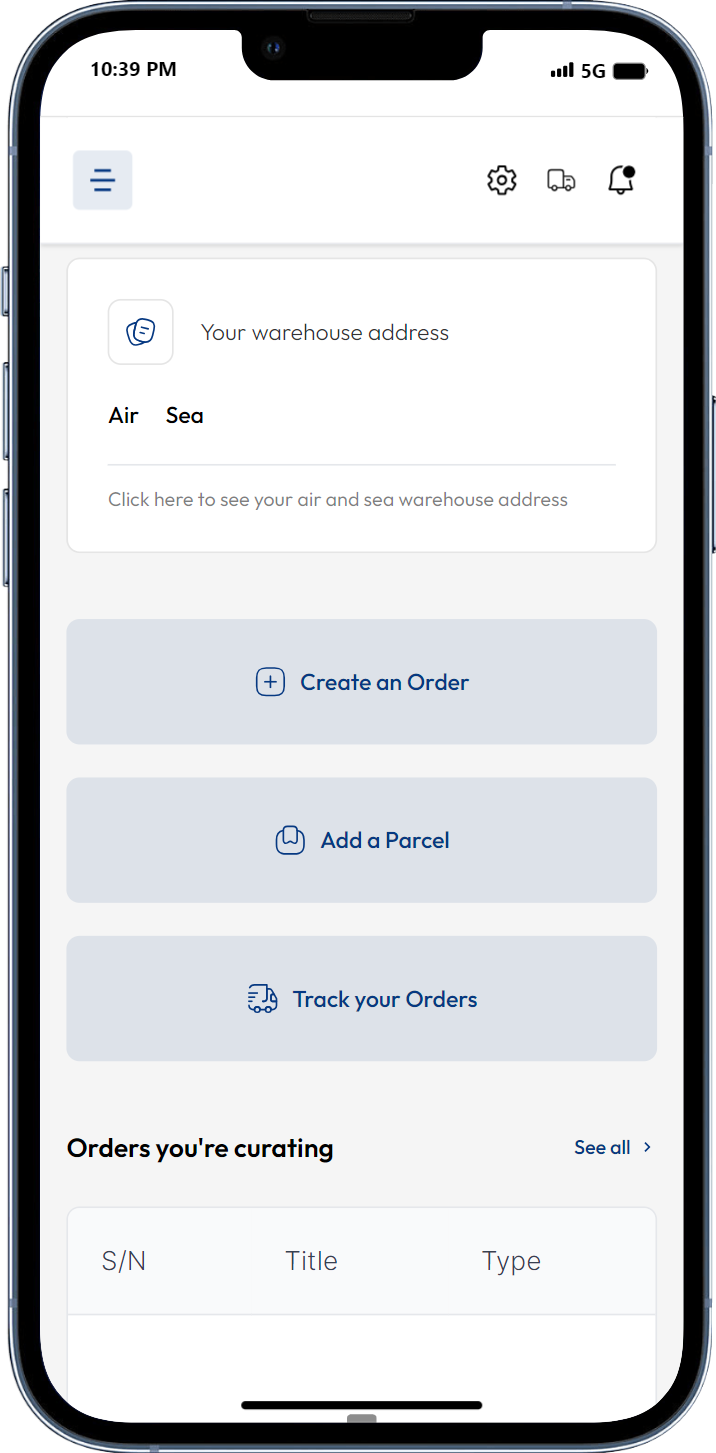
When you place an order through Proc360, your goods are first received at your personal warehouse in China. Once you’re ready to ship, you apply for air freight directly from your dashboard. Here’s what happens:
Packing: Your goods are packed and excess packaging is removed to reduce your chargeable weight
Freight type: You choose normal goods or special goods air freight based on your product type
Export clearance: Your shipment is cleared for export in China and loaded onto a flight to Lagos
Transit: Your goods transit through a hub (typically Dubai or Addis Ababa) and land at Lagos Airport
Import clearance: Customs clearance in Nigeria is handled as part of the service, included in the rate
Delivery: Your goods are delivered to the Lagos warehouse for pickup or arranged for doorstep delivery
Air rates: $11.40/kg (normal goods), $13.00/kg (special goods)
Transit time: 7–10 days (normal), 14–21 days (special)
Customs clearance: Included
First order: 100% free with no service charge
Your first Proc360 order ships free. Start importing by air today. Create your free account →
Chargeable Weight: Why Your Air Freight Bill Is Higher Than You Expected
This is the concept that surprises most importers. Air freight is never billed purely on actual weight. It’s billed on chargeable weight — which is the higher of two figures: your actual (gross) weight, or your volumetric (dimensional) weight.
Volumetric weight exists because airlines have to account for space, not just load. A shipment of foam pillows might weigh 10 kg on a scale, but it takes up as much aircraft space as 40 kg of dense electronics. If the airline only charged for actual weight, they’d lose money on every bulky-but-light shipment.
The Volumetric Weight Formula
Volumetric Weight (kg) = Length (cm) × Width (cm) × Height (cm) ÷ 6,000
This divisor of 6,000 is the IATA industry standard used by freight forwarders globally.
Worked Example
You’re shipping 20 cartons of fashion accessories. Each carton weighs 3 kg and measures 50 cm × 40 cm × 30 cm.
Actual weight: 20 cartons × 3 kg = 60 kg
Volumetric weight per carton: (50 × 40 × 30) ÷ 6,000 = 10 kg
Total volumetric weight: 20 × 10 kg = 200 kg
Chargeable weight: 200 kg (the higher figure)
Estimated air freight cost: 200 kg × $11.40 = $2,280
If you had only budgeted based on actual weight (60 kg × $11.40 = $684), you’d be looking at a bill nearly four times higher than expected. This is why understanding volumetric weight before you order, and optimising your packaging, is essential.
How to Reduce Your Chargeable Weight
Ask your supplier to use the smallest carton size that safely protects your goods
Remove excess packaging, air pockets, and unnecessary filler material
Compress or flat-pack items like clothing, bedding, or soft goods where possible
Check your volumetric weight calculation before confirming your shipment
Current Air Freight Rates: China to Nigeria (2026)
Air freight rates from China to Nigeria vary by forwarder, route, cargo type, and season. Here are the current reference ranges as of 2026:
Standard air freight (general cargo): $5–11 per kg depending on volume and forwarder
Special goods (batteries, liquids, restricted items): $10–15 per kg
Express courier (DHL, FedEx, UPS): $12–14+ per kg for smaller shipments
DDP (Delivered Duty Paid, includes customs): $5.50–15 per kg depending on service level
Proc360’s current air freight rates for Nigeria:
Normal goods: $11.40 per kg
Special goods: $13.00 per kg
These rates include shipping from the Proc360 warehouse in China to the Lagos delivery point, with customs clearance included. There are no hidden surcharges layered on top.
Rates rise during peak periods: expect higher pricing in the 4–6 weeks before Chinese New Year (January/February) and during Q4 when import volumes surge ahead of the holiday season in Nigeria.
See the full Proc360 pricing breakdown before you ship. Visit the Pricing Page →


Final Thoughts
Air freight from China to Nigeria is one of the most effective tools in an importer’s logistics toolkit — when used at the right time, for the right shipment. The key is understanding the pricing before you commit. Calculate your chargeable weight, not just your actual weight. Know whether your goods fall under normal or special categories. And factor the full landed cost before comparing air freight to sea freight.
When those numbers work, air freight isn’t just fast, it’s a competitive advantage. The importer who can replenish stock in 10 days instead of 45 never loses a sale to being out of stock.
Ready to ship by air? Visit proc360.app to explore the Ship feature, or sign up for free and place your first air freight order today.