7 Ways You're Overpaying for Shipping (And How to Stop)
Learn how to reduce shipping costs from China to Nigeria by avoiding 7 common mistakes, including volumetric weight, wrong freight methods, and hidden fees.
GROWING BUSINESSGETTING STARTED
Jacob Ehigie
3/19/20267 min read
Shipping costs are the most common silent profit killer in Nigerian import businesses. You calculate your product cost, add a markup, and feel confident about your margin — then the freight bill arrives and quietly wipes out 30% of what you planned to make.
The frustrating part is that most of it is avoidable. Hidden shipping costs — volumetric weight charges, peak season surcharges, duplicate handling fees, fuel surcharges, and wrong freight method choices — are responsible for the bulk of what importers overpay every cycle.
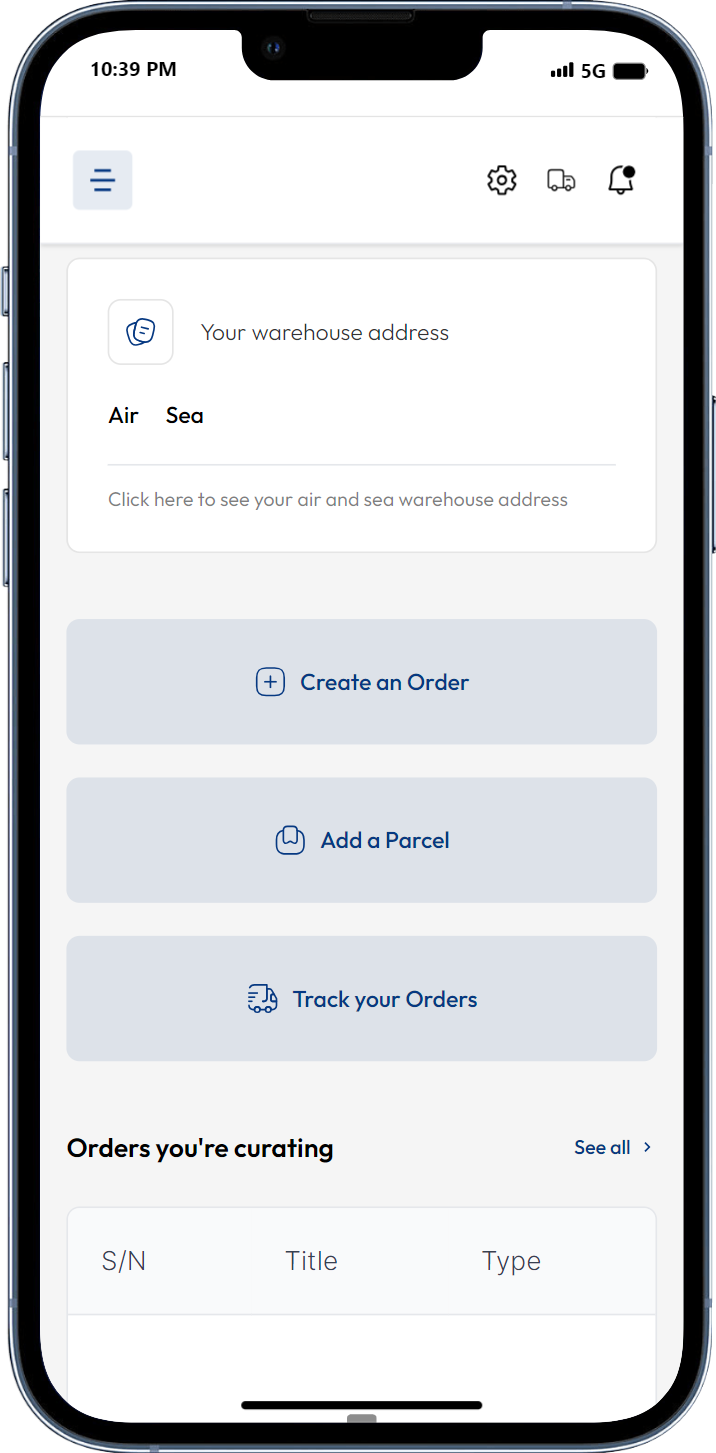
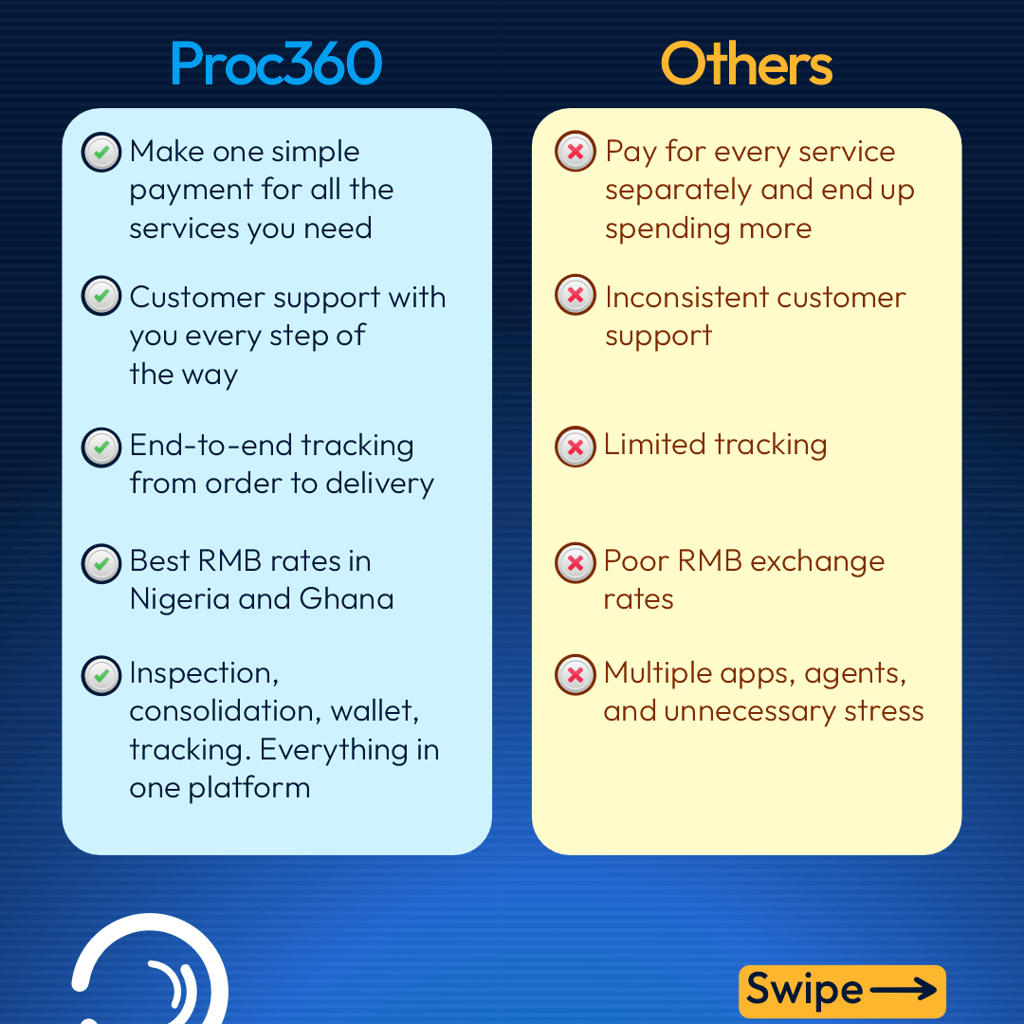
With Proc360, you get a real-time shipping cost calculator, free consolidation that strips excess packaging before your goods are weighed, transparent air and sea rates with no surprise charges, and 30 days of free storage in China so you control when goods ship. Each of those features directly addresses one or more of the seven mistakes in this guide.


1. You're Getting Charged for Volumetric Weight Without Knowing It
This is the single most expensive mistake Nigerian importers make on air freight, and most people only discover it when the invoice arrives. Carriers do not always charge by actual weight — they charge by chargeable weight, which is whichever is higher between your actual weight and your volumetric weight. Volumetric weight is the space your shipment takes up in the aircraft, converted to kilograms.
The formula: Length (cm) × Width (cm) × Height (cm) ÷ 6,000 = Volumetric weight in kg.
If your goods weigh 12kg but arrive packed in a large box with a volumetric weight of 40kg, you are billed for 40kg. At Proc360's air freight rate of $10.40/kg, that phantom 28kg costs you an extra $291.20 — on a single shipment. Scale that across four or five orders a year and you have paid over $1,400 for air that was inside your boxes.
How to stop it: Ask your supplier to strip outer cartons, polystyrene inserts, and any excess filler packaging before goods leave the factory. Request compact repacking. On Proc360, packaging removal and smart repacking is included in the Ship feature — your goods are repacked at the China warehouse before they are weighed, measured, and invoiced. You only pay for what is actually in the shipment.
2. You're Using Air Freight When Sea Freight Would Cost Far Less
Air freight from China to Nigeria costs $10.40/kg on Proc360's standard rate. Sea freight costs $355 per CBM — which for most standard consumer goods works out to roughly $10 to $14 per kg equivalent. For shipments under 100kg, air and sea are sometimes comparable once you factor in time value. But for anything heavier, the cost gap becomes dramatic.
On a 200kg shipment, choosing air over sea means paying roughly $2,080 in air freight versus $450 to $600 in sea freight for the same goods. That is a $1,500 difference on a single order. Most importers who default to air freight do so out of habit or impatience — not because their goods actually need to arrive that fast.
How to stop it: Use air freight only for genuinely time-sensitive goods — a new product launch, a restock you are hours from selling out of, or high-value goods where the holding cost of waiting 35 to 45 days outweighs the freight premium. For planned, regular restocks, sea freight is almost always the right call. Use Proc360's shipping cost calculator to compare both methods with your actual cargo dimensions before you commit to anything.
3. You're Shipping Multiple Supplier Orders Separately Instead of Consolidating
If you source from three suppliers and ship three separate orders, you pay three processing fees, three minimum freight charges, and potentially three customs entries. This is one of the most straightforward ways Nigerian importers overpay — and one of the easiest to fix.
Consolidation means combining goods from multiple suppliers into a single shipment that travels together. The savings come from two angles: you eliminate duplicate processing and handling fees, and by combining volumes you move into better pricing brackets on both air and LCL sea freight. According to industry data, surcharges and handling fees alone can account for 25 to 40% of a total freight invoice when orders are shipped piecemeal.
How to stop it: Use Proc360's Store feature to receive goods from multiple suppliers at your personal China warehouse address. Once everything arrives, consolidate into a single shipment going air or sea. Consolidation on Proc360 is completely free — no extra charge to combine orders before they leave China.
The Real Cost of Getting This Wrong
None of these seven mistakes is catastrophic on its own. But importers making three or four of them simultaneously routinely pay 25 to 40% more than they need to on every shipment. On a freight bill of ₦600,000, that is between ₦150,000 and ₦240,000 in avoidable costs — every single order.
The fixes do not require a freight consultant or a logistics degree. Remove excess packaging. Ship sea freight when urgency does not justify air. Consolidate from multiple suppliers. Plan around peak seasons. Verify your HS code. Check your invoice. These six habits, applied consistently, are worth more to your import business than almost any other operational change you can make.
Ready to stop overpaying on every shipment? Sign up on Proc360 and use the shipping cost calculator to compare air and sea freight rates before your next order — with free consolidation, free packaging removal, transparent pricing from China, and doorstep delivery to Nigeria or Ghana.
4. You're Shipping During Peak Season and Absorbing the Surcharges
Freight rates are not flat year-round. Carriers apply Peak Season Surcharges (PSS) during periods of high demand — and if you are shipping during those windows without planning for it, you are paying a premium that has nothing to do with your specific goods or route.
The two most expensive windows for importers shipping from China to Nigeria are October through December, when pre-Christmas demand pushes rates up by 15 to 20%, and the weeks immediately before and after Chinese New Year in January or February. During these periods, not only do base freight rates increase — fuel surcharges also spike and vessel booking lead times shrink, forcing last-minute importers into the most expensive slots. Port congestion at Apapa and Tin Can Island also tends to worsen in Q4, adding demurrage risk on top of the higher freight cost.
How to stop it: Plan your restocking calendar backwards from peak periods. If you need goods for December, ship in September or early October before rates climb. February and March consistently offer the lowest freight rates of the year as factories restart after Chinese New Year and shipping demand dips. Importers who ship during off-peak seasons can reduce their freight cost by 10 to 20% compared to peak-season equivalents — without changing anything else about how they source.
5. You're Paying for Unused Space in Your Sea Shipment
On LCL sea freight, you pay for the cubic metres your goods actually occupy in a shared container — your CBM. The problem is that many importers ship with supplier packaging that adds significant bulk without adding density. Oversized outer cartons, polystyrene blocks, air-filled cushioning, and loose inner packaging all inflate your CBM measurement and push your invoice up.
The CBM formula: Length (m) × Width (m) × Height (m) = CBM. At $355 per CBM, if poor packing inflates your shipment from 0.6 CBM to 0.9 CBM, you are paying for an extra 0.3 CBM — that is $106.50 of dead space on a single shipment. Over a year of regular orders, that number compounds quickly.
How to stop it: Request that your supplier removes all outer cartons, polystyrene inserts, and unnecessary inner packaging before goods go to the warehouse. On Proc360, the repacking step at the China warehouse ensures your shipment is measured and invoiced after excess packaging has been stripped — so your CBM reflects your actual goods, not your supplier's packing materials.
6. You're Using the Wrong HS Code and Overpaying Customs Duty
Import duty in Nigeria is calculated on your CIF value — cost of goods, insurance, and freight. The duty rate applied to that value is determined by your product's HS code. Using an incorrect HS code can quietly place your goods in a higher duty bracket, adding thousands of naira to your customs bill on every shipment.
It is also worth noting that lower sea freight rates directly reduce your CIF value, which in turn reduces your duty calculation. Importers who switch from air to sea freight for eligible goods often see double savings — lower freight cost and a lower customs duty base — without changing what they are importing at all.
How to stop it: Verify your product's correct HS code before you ship. Cross-reference it against Nigeria Customs Service classifications and confirm with your clearing agent. Ensure your commercial invoice, packing list, and HS code all match exactly. Errors in documentation cause delays at Apapa or Tin Can Island, and demurrage charges there run at around $200 per day — which means a two-day documentation hold costs you $400 before you have even paid your duty.
7. You're Not Auditing Your Freight Invoices
This is the mistake no one talks about. Freight invoices are complex documents with multiple line items — base rate, processing fee, fuel surcharge, peak season surcharge, insurance, and sometimes accessorial charges for special handling. Many importers pay these invoices without reviewing them line by line, trusting that the total is correct.
Billing errors in freight are more common than most people realise. Wrong weight calculations, misapplied surcharges, duplicate charges for services, and incorrect volumetric weight assessments all happen — and they are rarely corrected unless you catch them and raise a dispute. Industry analyses suggest that unaudited freight invoices contain errors in a meaningful percentage of shipments.
How to stop it: Before paying any freight invoice, compare it line by line against your original quote. Confirm the weight and dimensions match your packing list. Check that any surcharges applied — fuel, peak season, handling — are ones you were quoted in advance. If something does not match, raise it with your freight provider immediately. On Proc360, pricing is transparent and shown upfront before you confirm your shipment — so you know what you are paying before anything moves.