5 Ways to Fund Your Mini Importation Business (No Loans Required)
Discover 5 smart ways to fund your mini importation business without loans. Learn how to use pre-orders, partnerships, and small capital to start importing profitably.
GROWING BUSINESSGETTING STARTED
Jacob Ehigie
2/15/20267 min read
"You need money to make money."
That's what they told Amaka when she said she wanted to start importing phone accessories from China. Banks wanted collateral she didn't have. Her salary barely covered rent. Loan sharks offered ₦100,000 at 30% monthly interest—a trap she couldn't afford.
So she did something different. She posted product photos on WhatsApp, collected ₦120,000 in pre-orders from 15 customers, ordered her goods, and delivered within 6 weeks. Profit: ₦78,000. Three months later, she's clearing ₦300,000 monthly without touching a single loan.
How do I fund a business with no money? It's the question every aspiring mini importer asks. The truth is, bootstrapping your way into mini importation is not only possible—it's often smarter than taking debt you can't afford.
Is mini importation a good business? Absolutely. But success doesn't require a massive bank account. It requires creativity, strategy, and knowing where to get funds for your small business without drowning in interest payments.
This guide reveals what are 5 ways to fund your business specifically for mini importers—from pre-orders and partnerships to starting micro-small and scaling gradually. And if you want to stretch every naira further, Proc360 offers free consolidation and RMB payment solutions that save 5-8% on every order, making your limited capital work harder.
Let's break down exactly how to source for funds to start a business without traditional loans.
How Proc360 Maximizes Your Limited Capital
Whether you're using pre-orders, partnerships, or micro-starts, every naira counts. Proc360 helps your limited capital go further:
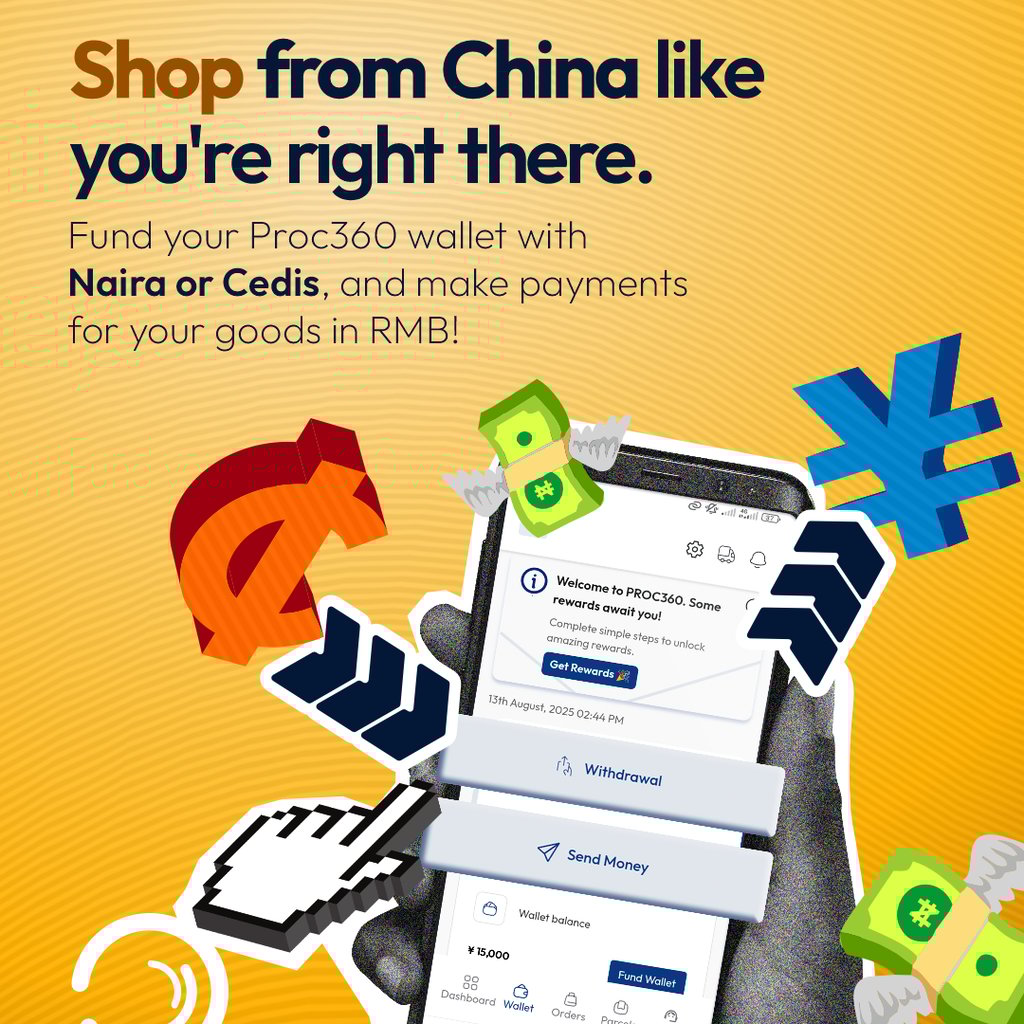
✅ RMB Wallet: Pay suppliers in Chinese Yuan, save 5-8% vs bank conversions (₦100,000 order = ₦5,000-₦8,000 saved)
✅ Free Consolidation: Combine orders from multiple suppliers, reduce shipping by 30-40% (₦60,000 freight becomes ₦35,000)
✅ Verified Suppliers: Avoid scams that wipe out your limited capital (we pre-vet all suppliers)
✅ Transparent Pricing: Know exact costs upfront—no surprises that destroy your budget
✅ Real-Time Tracking: Monitor goods from China to Nigeria—build customer trust for pre-orders
Example savings:
₦200,000 order through banks: Lose ₦15,000 conversion + ₦60,000 shipping = ₦75,000
₦200,000 order through Proc360: Save ₦15,000 conversion + ₦25,000 consolidation = ₦40,000 savings
You keep ₦40,000 extra (20% of your capital back!)
That ₦40,000 could fund your NEXT order or cover 2 months of marketing.
Common Funding Mistakes to Avoid
❌ Taking high-interest loans (20-30% monthly) → Debt trap ❌ Mixing personal emergency funds with business capital → Financial disaster if things go wrong ❌ Spending 100% of capital on products, forgetting shipping → Goods stuck in China ❌ Not testing with small orders first → Lose everything on unproven products ❌ Poor record-keeping → Can't track profit, can't reinvest smartly


Why Most Mini Importers Don't Need Loans
How much does mini importation cost? The answer depends on your strategy:
Minimum start: ₦50,000-₦100,000 (small batch, test products)
Comfortable start: ₦200,000-₦350,000 (diversified inventory)
Professional launch: ₦500,000-₦1,000,000 (bulk orders, sea freight)
Unlike businesses requiring expensive equipment or storefronts, mini importation has LOW capital requirements. This makes it perfect for bootstrapping—starting small with your own resourcesand reinvesting profits to grow.
The loan trap: Borrowing ₦500,000 at 20% monthly interest means paying ₦100,000/month just in interest. If your first shipment doesn't sell fast enough, you're stuck in debt before making profit.
The bootstrap advantage: Start with ₦50,000 of YOUR money (or creatively sourced funds). Make ₦80,000 profit. Reinvest ₦100,000 into next order. Repeat. No debt, no pressure, sustainable growth.
5 Creative Ways to Fund Your Mini Importation Business
1. Pre-Orders: Sell Before You Buy
What is pre order? It's collecting payments from customers BEFORE ordering goods from your supplier. This eliminates capital risk entirely.
Is pre order a good strategy? Yes, if done correctly. It's the #1 mini importation business strategy for zero-capital starts.
How it works:
Research hot-selling products (wireless earbuds, power banks, smartwatches)
Post product photos on Instagram/WhatsApp (get supplier's permission)
Set pre-order deadline: "Order now, delivery in 6 weeks"
Collect payments upfront (₦5,000-₦15,000 per item)
Once you hit target (e.g., ₦120,000 from 15 orders), order from China
Ship when goods arrive
What are pre order benefits? ✅ Zero capital risk (use customer money, not yours) ✅ Guaranteed sales (no dead inventory) ✅ Test product demand before committing ✅ Build customer base early
Challenges: ❌ Customers wait 6-8 weeks (manage expectations) ❌ Requires high trust (deliver as promised or lose reputation) ❌ Limited to patient buyers
Pro Tip: Offer "early bird discounts" (₦500-₦1,000 off) to incentivize pre-orders. Proc360 helps by providing accurate delivery timelines so you can set realistic customer expectations.
Example:
20 customers pre-order wireless earbuds at ₦10,000 each = ₦200,000 collected
Order cost: ₦3,000 x 20 = ₦60,000
Shipping + clearing: ₦50,000
Total spent: ₦110,000
Profit: ₦90,000 (82% ROI using OTHER PEOPLE'S MONEY)
2. Partnership: Split Capital, Split Profits
How to get funding for your small business without loans? Find a capital partner.
How it works:
Partner A provides capital (₦200,000-₦500,000)
Partner B (you) handles operations: sourcing, marketing, sales, delivery
Split profits 50/50 or 60/40 depending on negotiation
Who to approach: ✅ Friends/family with savings ✅ Colleagues looking for passive income ✅ Local business owners wanting to diversify ✅ Online investor groups on Facebook/LinkedIn
Key to success:
Written agreement: Document capital amount, profit split, responsibilities, exit terms
Transparency: Share all receipts, invoices, profit calculations
Regular updates: Weekly reports on sales, inventory, challenges
Honor your word: Pay agreed profit shares on time
Example deal:
Partner provides ₦500,000 capital
You handle everything
First order profit: ₦350,000
Partner gets ₦175,000 (50%), you keep ₦175,000
After 3 cycles, buy out partner or continue partnership
Pro Tip: Use Proc360 for all transactions—transparent invoicing, tracking, and documentation builds trust with your capital partner.
Final Thoughts
How do I fund a business with no money? You don't need a bank loan to start mini importation. You need:
Creativity (pre-orders, partnerships)
Patience (start small, scale gradually)
Strategy (reinvest profits wisely)
Smart partners (Proc360 maximizes every naira)
Is mini importation a good business? Yes—especially when you bootstrap your way in without crushing debt.
Start with whatever you have: ₦50,000, pre-order deposits, a capital partner, or Ajo savings. Make profit. Reinvest. Scale. Repeat.
And use Proc360 to stretch your limited capital further with transparent pricing, verified suppliers, and cost-saving consolidation.
Ready to fund your mini importation business the smart way? Sign up with Proc360 today and turn limited capital into unlimited potential.
3. Start Micro-Small (₦50,000-₦100,000)
Where can I get funds for my small business if I have SOME savings?
Start with whatever you have: ₦50,000, ₦70,000, or ₦100,000. Don't wait for "enough" money.
Micro-start strategy:
Order 10-20 units of ONE proven product (not 5 different products)
Use air freight (faster delivery, start selling quickly)
Sell within 2-3 weeks
Reinvest ALL profit + original capital into next larger order
Repeat 3-4 cycles
Growth trajectory example:
Cycle 1: ₦50,000 → buy 15 items → sell for ₦120,000 → profit ₦70,000
Cycle 2: ₦120,000 → buy 40 items → sell for ₦320,000 → profit ₦200,000
Cycle 3: ₦320,000 → buy 100 items → sell for ₦850,000 → profit ₦530,000
Result: ₦50,000 becomes ₦530,000 in 4-5 months
Why this works: ✅ Low risk (only risking money you can afford to lose) ✅ Fast feedback (learn what sells, what doesn't) ✅ Builds confidence and skills ✅ Sustainable growth without debt pressure
Pro Tip: Proc360's free consolidation lets you order from multiple suppliers and combine shipping—saving 30-40% on freight costs even with small orders.
4. Savings Groups (Ajo, Esusu, Contribution)
How to source for funds to start a business using traditional Nigerian savings methods.
Ajo/Esusu is a rotating savings system where members contribute fixed amounts weekly/monthly, and one person collects the lump sum each cycle.
How it works for mini importation:
Join or create a group of 10 people
Each contributes ₦20,000 monthly
Total pool: ₦200,000
One person collects ₦200,000 each month
Your turn comes, you use it for your order
Example:
10-person Ajo, ₦30,000/month contribution
Your collection month: ₦300,000 lump sum
Order goods, sell, make profit
Continue monthly contributions from your profit
Where to find Ajo groups: ✅ Workplace savings groups ✅ Church/mosque fellowship contributions ✅ Facebook community groups ✅ Family/friends savings circles ✅ Online platforms (PiggyVest, Cowrywise group savings)
Pro Tip: Time your collection month to avoid peak shipping seasons (Chinese New Year, Golden Week) when freight costs spike.
5. Gradual Scaling: Profits Fund Growth
This is bootstrapping in its purest form—using profits from each sale to fund the next level.
The reinvestment formula:
Take 70% of profits → reinvest into inventory
Keep 20% as personal income
Save 10% as emergency buffer
Example:
Month 1: Start with ₦100,000 → Make ₦60,000 profit
Reinvest ₦42,000 (next order = ₦142,000 capital)
Personal: ₦12,000
Buffer: ₦6,000
Month 2: ₦142,000 capital → Make ₦95,000 profit
Reinvest ₦66,500 (next order = ₦208,500)
Personal: ₦19,000
Buffer: ₦9,500
Month 3: ₦208,500 capital → Make ₦145,000 profit
Reinvest ₦101,500 (next order = ₦310,000)
Personal: ₦29,000
Buffer: ₦14,500
Result: ₦100,000 becomes ₦310,000 inventory capacity in 3 months, PLUS you've earned ₦60,000 personal income.
Why this beats loans: ✅ No interest payments eating profit ✅ Organic, sustainable growth ✅ Build business credit and reputation ✅ Sleep peacefully (no debt stress)